
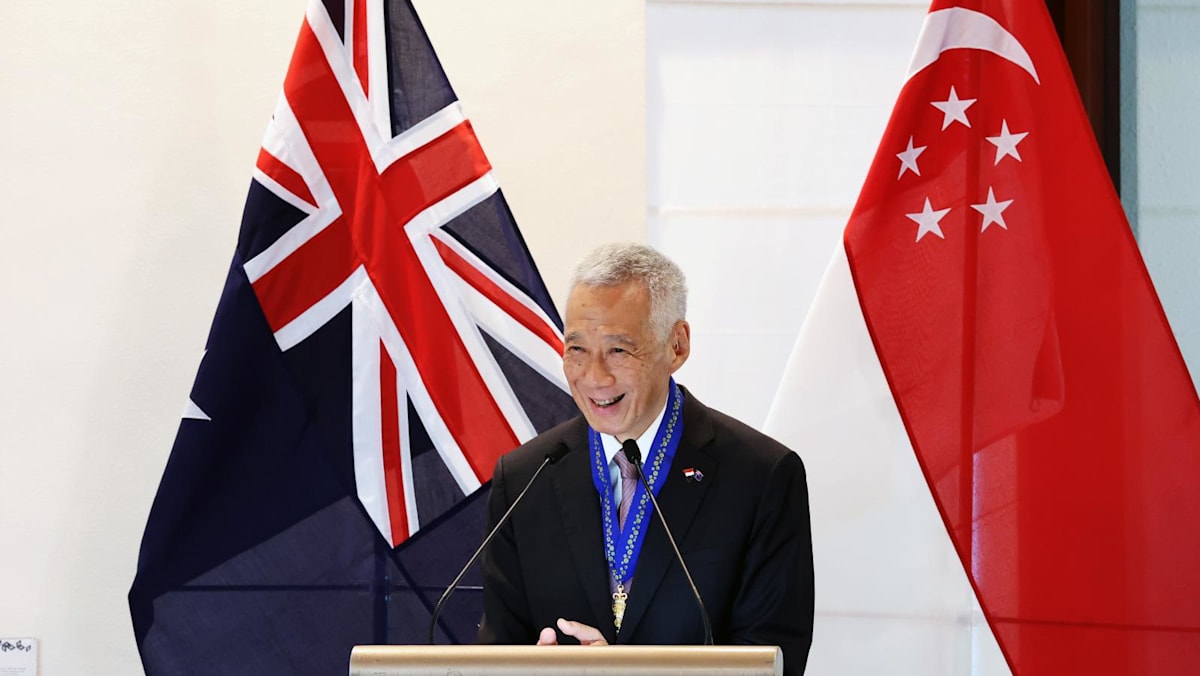
SINGAPORE: Australia should deepen its economic, security and people-to-people ties with Southeast Asia, in order to strengthen its own competitiveness and resilience in an increasingly fragmented world, said Senior Minister Lee Hsien Loong on Sunday (Nov 8).Speaking during the 2026 ABC Boyer Lecture Series, Mr Lee said: “Australia is not a Southeast Asian country, but it should be a very close partner of ASEAN, especially in an age where small and medium-sized powers need to work together more than ever.”Mr Lee noted that the global environment has changed significantly, with great power rivalry intensifying and multilateralism breaking down.The United States, which Mr Lee called “the erstwhile anchor of the global order”, is reassessing its global role on security and trade, while China’s growing strategic and economic weight is increasingly being felt by other countries, he said.Many countries are now working out how best to advance their ties with the US, while becoming more self-reliant and protecting their strategic interests, said Mr Lee.“However, self-reliance needs to be complemented by friends and partners,” he said, citing the recent warming of “historically difficult” ties between South Korea and Japan.“Australia’s regional partners, beyond New Zealand, are in Asia, and especially Southeast Asia. The deeper your relationships are across Asia, the more space you will have to pursue your own interests.”Mr Lee said that there are opportunities for “win-win projects” between Australia and Asian countries, including in the digital and green economies, public health and counterterrorism.Such cooperation would help countries see one another as “partners in development” rather than solely through the prism of US-China rivalry.STAYING PRESENT IN REGIONOn defence and security, Mr Lee called for Australia to stay present in Asia and grow and enhance partnerships with like-minded countries.“With countries where ties are more complicated, we hope you will nevertheless maintain contact and pragmatic working arrangements,” he said.“Both sides will naturally want to safeguard your respective interests. Security and trust issues will inevitably arise from time to time.“Yet the reality is, these countries include your most important export markets, and the trade benefits both sides. These countries also have a major influence in regional affairs, which will likely grow over time.”Both sides should therefore strive to understand each other better and keep relations stable, said Mr Lee.Maintaining working channels of communication between armed forces is also important, especially if any incidents occur, he said.“It is impossible to keep major power rivalries entirely out of the region. But it is possible for countries to work together to manage the rivalries and avoid miscalculations and mishaps,” he said.Mr Lee said Australia has the “diplomatic weight, economic resources and longstanding relationships across the region” to bring countries together, citing its role in building the Asia-Pacific Economic Cooperation (APEC) and the Comprehensive and Progressive Agreement for Trans-Pacific Partnership (CPTPP).“In a fragmented world, this role will become even more valuable – building practical arrangements on trade, pandemic preparedness, and climate change,” he said.Mr Lee also called for Australia to keep its economy open and connected to Asia.While its trade with Southeast Asia is substantial and growing, its investment footprint is “more modest”, he noted.“ASEAN is the fifth largest economy in the world, a market of 700 million people with a growing middle class. Yet Australia invests no more in the ASEAN countries put together than it does in New Zealand,” he said.Southeast Asian firms could complement Australian projects in critical minerals, agri-business, renewable energy, and digital and deep tech, areas where Australia has strong capabilities, Mr Lee said. “By investing more in the region, Australian businesses can strengthen their competitiveness and supply chains,” he said.He also emphasised that Australia and its regional partners should not give up on the multilateral trading system, and should do their best to uphold, reform and strengthen the World Trade Organization (WTO) framework where possible.“But we must also be pragmatic. Where global consensus is not possible, we should pursue next-best solutions,” said Mr Lee.This means making full use of existing trade agreements, updating and extending them, and linking them up with other major economic groupings, such as the European Union, he said.Mr Lee pointed to a recent Singapore-Australia agreement to keep essential supplies such as diesel, petrol and natural gas flowing during crises and disruptions as an example of how cooperation could strengthen resilience. Similar arrangements could also be explored for food supplies, he said.Mr Lee also called on Australia to nurture stronger people-to-people ties with Asia.He noted, for instance, that the original Colombo Plan of 1951 and the New Colombo Plan in 2014 – education programmes that assist in the movement of students between Australia and Asia – have gained Australia “many friends and lasting goodwill”.Over the years, a large Asian community has also grown in Australia, said Mr Lee.“When you opened your doors, immigrants flowed in, settled down and built lives down under. People born overseas now make up one-third of Australian residents. Many came from Asia, including 70,000 from Singapore,” he said.Such human connections draw Australia and Asia closer, he said. Mr Lee noted, however, that immigration has become a bitterly contested issue in many countries.“Speaking from Singapore’s own experience, immigration requires sensitive political handling. The pace of inflows; the mix of the new arrivals; their commitment to national ideals; and integration into the broader community − all these must be closely watched and managed,” he said.Citizens need to feel that their interests are being looked after and that they continue to have a stake in their own society, Mr Lee said. Otherwise, public support can quickly erode.SINGAPORE-AUSTRALIA TIESMr Lee noted that Australia and Singapore are physically very different places. The former is a huge continent rich in natural resources, while the latter is a tiny island with none, he said.“But our two peoples and societies are very similar. Our social ethos is egalitarian and informal. Our cultures are open and direct. Our countries have compatible strategic perspectives,” he added.However, both sides also differ in areas such as their social mores and norms, said Mr Lee. He cited the example of Singapore’s strict drug laws which contrast “Australia’s more tolerant attitudes”.“Each society strikes its own balance between individual liberties and collective interests,” he said.“Nevertheless, through frank and sincere exchanges sustained over six decades, we have come to appreciate and understand each other, developed mutual respect and warmth, and built a deep reservoir of trust and goodwill.”Singapore and Australia upgraded their Comprehensive Strategic Partnership last year, with their shared outlooks and close friendship giving them the confidence to do more together, Mr Lee said. “Australia is less similar to many other Asian countries than to Singapore. Yet it is possible, and necessary, for Australia and Asia to understand each other better, and make common cause in an uncertain world,” he said.He added that Australia’s successful partnership with Singapore points the way for its broader regional engagement, and that it will find many willing partners keen to work with it to build a stable, peaceful and prosperous Asia for all.
Australia should deepen economic, security ties with Southeast Asia in a fragmented world: SM Lee
Full Article
Original Source
Read the full article at Channelnewsasia →KhanList aggregates and links to publicly available news content. We do not host full articles from third-party sources. Always verify important information with original sources.