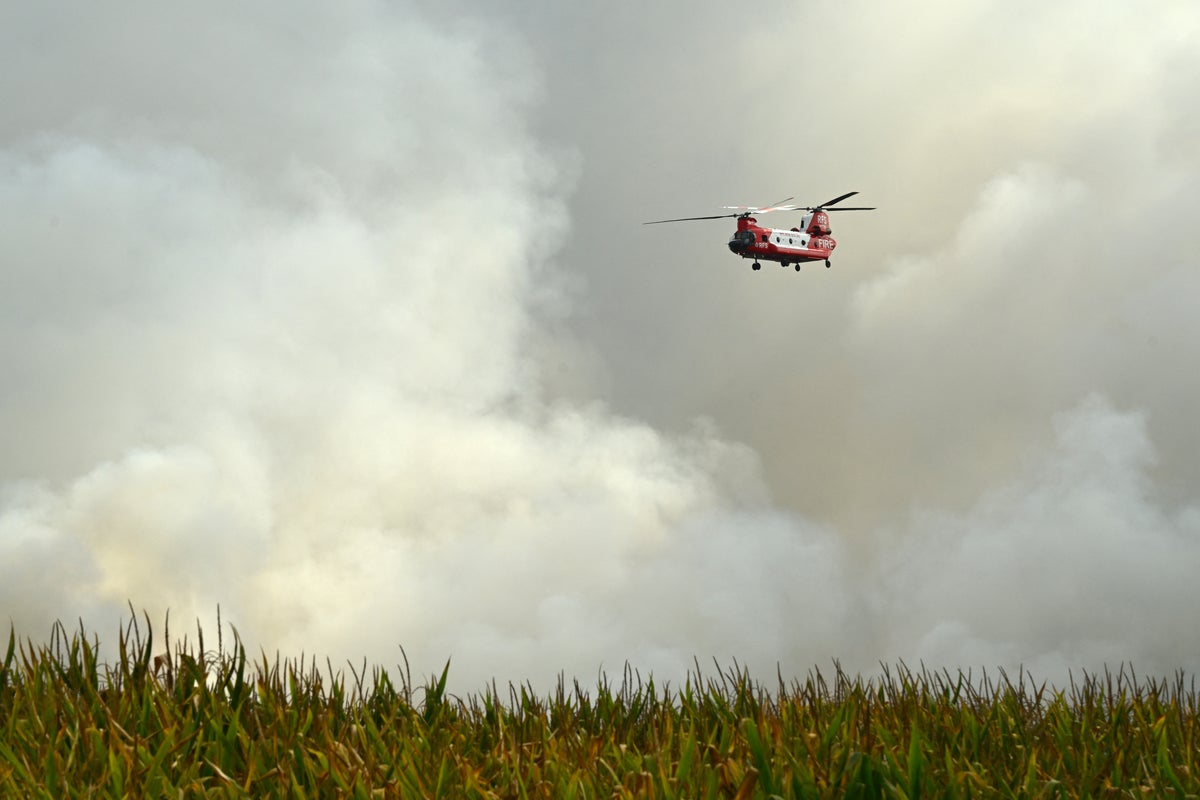
Australia is facing a heightened risk of bushfire in almost every state and territory this spring, the country’s fire authorities have warned, as an El Nino dries out the east of the country.The seasonal outlook published by the Australian and New Zealand Council for Fire and Emergency Services covers the three months from September, when the southern hemisphere spring begins, and identifies elevated risk everywhere except the Australian Capital Territory, the small district around Canberra.Dry conditions in the east and heavy fuel loads across central and northern Australia are driving the picture, the council said, with soil moisture deficits spreading across the east and deepening in Western Australia through July."The variety of risk factors across different regions reinforces the need for communities to understand their local conditions and prepare early," the council's chief executive, Rob Webb, said in the outlook. "While some areas are facing an elevated risk of fire this spring, bushfires can still occur in regions with a normal seasonal outlook."Australia's outlook follows a northern hemisphere summer of record heat and severe fires. Belgium has been fighting the largest wildfire in its history, which burned 3,000 hectares. In France and Spain alone, more than 320,000 people had been evacuated as of late July. Wildfires continue as heatwaves spread with mid-August approaching. Most of the Northern Territory south of Timber Creek and Borroloola faces heightened danger, the consequence of a wet season that produced heavy vegetation growth, particularly in the Barkly region and the south. Andrew Warton, commissioner of Fire and Emergency Services NT, said areas where grass had gone unburnt for a year or more were expected to be most at risk.The territory's fire risk is elevated even though forecasters expect above-average rainfall there this spring, because the grass that grew after this year's floods will dry out and burn regardless.A firefighter battles a wildfire in Deliblatska Pescara, Serbia (Reuters)"More intense rainfall, followed by accelerated drying conditions have left landscapes in the NT a tinderbox ready to burn," Alex Vaughan of the Arid Lands Environment Centre told the Guardian, calling it the climate and nature crises in action. He said the effect was worsened by buffel grass, a species brought in to improve pasture that now dominates large areas of inland Australia and burns readily.In New South Wales, the areas identified include country burned during the black summer fires of 2019 and 2020, in which 33 people died and more than 3,000 homes were destroyed."We do know that a lot of those areas have regrown since that time and the fuel loads are now able to carry fire once again," Ben Millington, deputy commissioner of the NSW Rural Fire Service, told the newspaper. "With the dry conditions we're seeing at the moment, they've been identified as high risk."Mr Millington said the state had come through an unseasonably warm winter with below-average rainfall in the north and south, and that forecasts pointed to more of both through spring. He urged people to clear gutters and overhanging branches and to draw up a bushfire survival plan, adding that this might be the first summer some people experience fire activity since the 2019-20 season.A drone view shows a wildfire burning in Deliblatska Pescara, Serbia (Reuters)The northern tablelands around Armidale and a stretch of the far south coast near Bega are among the areas named in New South Wales. Victoria faces what the council called one of its warmest and driest spring outlooks in some time, with East Gippsland, the far south-west, the Surf Coast and the country west of Geelong all flagged, alongside north-east and eastern Tasmania, south-east Queensland, parts of Western Australia and grassland in northern South Australia described as nearly ready to burn.The Bureau of Meteorology declared an El Nino in June, and it has the potential to become the strongest recorded. The pattern develops when ocean temperatures in the central Pacific run unusually high, and in Australia it is associated with reduced rainfall in the east and higher temperatures in the south, though its effect in any given year is hard to predict because other drivers, including the Indian Ocean Dipole and the Southern Annular Mode, also shape conditions. Models suggest a positive dipole could form before spring, which would compound the effect.David Bowman, professor of pyrogeography and fire science at the University of Tasmania, said forests recovering from the black summer had produced prolific growth that would not take much to dry out.A firefighter sprays water from a hose during operations against a wildfire at the Hautes Fagnes (High Fens) nature reserve near Baelen (AFP/Getty)"If we were to go into a summer under this El Niño where we had what we call flash droughts, which is really strong heatwaves, we can switch up landscapes into extraordinarily dangerous conditions," he told ABC News. "In eastern Tasmania, there's been a very sustained drying trend. We have had water, but basically it won't take much to nudge landscapes back into a deep drought."Professor Bowman said the heat that comes with a warming climate was particularly dangerous alongside El Nino, because plants that normally control their water use can be stressed and dried out rapidly by strong heating, leaving landscapes open to high-intensity fire."I have every reason to believe that we will see equally extraordinary fires. If it's not this summer, it's certainly going to be in the next," he said.
Australia braces for bushfires in almost every state as El Niño strengthens
Full Article
Original Source
Read the full article at Independent →KhanList aggregates and links to publicly available news content. We do not host full articles from third-party sources. Always verify important information with original sources.