
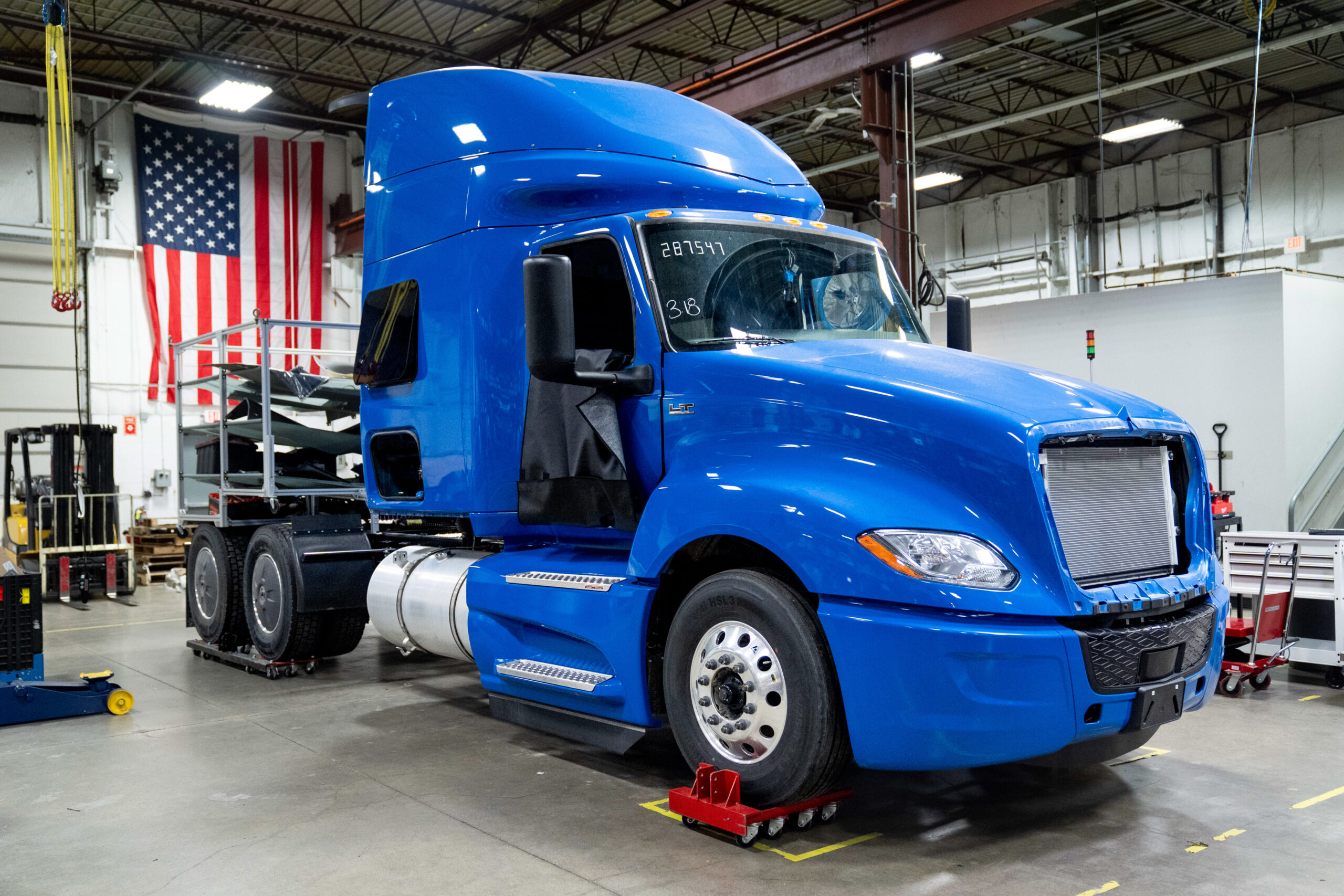
Self-driving trucking company Aurora Innovation Inc. expects to fall short of its production target for this year but said it’s on track to recover for 2027. Aurora said supplier issues caused constraints and the company won’t meet its goal of 200 trucks on the road until next February. That means Aurora will fall short of its revenue goal for 2026, the company said Wednesday as it reported quarterly results. The supplier issues have been resolved and production is now on pace to meet its previously stated goal of 1,000 trucks on the road by the end of 2027, Chief Financial Officer David Maday said in an interview with Bloomberg News. Going forward, the company has more demand than it can handle from nine different customers. “We really think we’re at a commercial inflection point,” Maday said while walking along the truck’s assembly line in a Roush Enterprises Inc. plant in suburban Detroit. Roush handles the final assembly of Aurora’s rigs. Aurora aims to shift its business model as it inches closer to its target of 30,000 trucks on the road by the end of 2030. Instead of owning and operating driverless trucks for clients, it plans to manage fleets that its shipping customers will own. The company should hit positive cash flow in 2028 with more revenue and fewer assets on its books, according to Maday. Trucking Companies Confront Mounting Diesel, Insurance, Debt Costs To get there, Aurora needs to fund its expansion to add trucks and build revenue. The company could issue more shares. It ended the third quarter with more than $1 billion in liquidity and said management may opportunistically raise additional capital to buffer the balance sheet. Aurora has worked through a string of pitfalls since going public via a Special Purpose Acquisition Company in 2021. It enacted cost cuts in 2022, when investors had soured on funding self-driving firms. At the time, Chief Executive Officer Chris Urmson sent a memo to staff that listed ways to preserve cash. Urmson even floated the idea of selling the company to a tech giant like Microsoft Corp. or Apple Inc. The company held on and raised money in 2024, but also delayed going fully driverless with its commercial trucks to 2025. Co-founder Sterling Anderson left in May of last year to become chief product officer at General Motors Co. Aurora’s stock reached a high of more than $17 after going public and now sits at around $5 a share. The road to production has been bumpy. Aurora took the driver out of its trucks last year, only to have its manufacturer Paccar Inc. request that a human remain behind the wheel. The company is working with Paccar to remove the driver in a future generation of rigs. Its current trucks are built by International Motors, a subsidiary of Germany’s Traton Group. Driverless Trucking Firm Aurora Puts Human Back in Driver’s Seat “Paccar is risk averse,” Maday said. “They looked at it from a liability perspective and wanted someone in the cabin.” With many challenges behind it, Aurora is now pushing to boost production and get its trucks on the road and with more customers. Some supplier issues set the company behind on its goals for this year. Workers at the Roush plant tinker away at a dozen different stations removing parts from human-driven International Class 8 rigs so they can install the hardware that replaces truckers and makes decisions on the road. From there, they complete the final steps, upgrading the trucks with the suite of cameras, lidar and sensors that can see the road. The factory will produce up to 20 self-driving Class 8 trucks a week in December. Maday said they may double that capacity as demand grows. Assembly is largely done manually. At such low volumes it doesn’t make sense to automate, Maday said. Aurora was able to take out the human driver in July. Customers including Hirschbach Motor Lines, McLane Co. and Detmar Logistics are running driverless operations. As production ramps up, Aurora thinks it can add more highway routes pretty easily. The company is driving select routes in the Southwest but its autonomous system doesn’t require a lot of time and adaption to traverse new roads. “Our story is now pretty straightforward,” Maday said. “We’re driverless, we’re producing trucks and we have plenty of demand for this year and next. Top Photo: An International LT truck is outfitted with Aurora hardware at a Roush Enterprises Inc. CleanTech facility in Livonia, Michigan. Photographer: Sarah Rice/Bloomberg Copyright 2026 Bloomberg.
Aurora’s Driverless Trucks on Pace for 2027 Expansion Target
Full Article
Original Source
Read the full article at Insurancejournal →KhanList aggregates and links to publicly available news content. We do not host full articles from third-party sources. Always verify important information with original sources.