
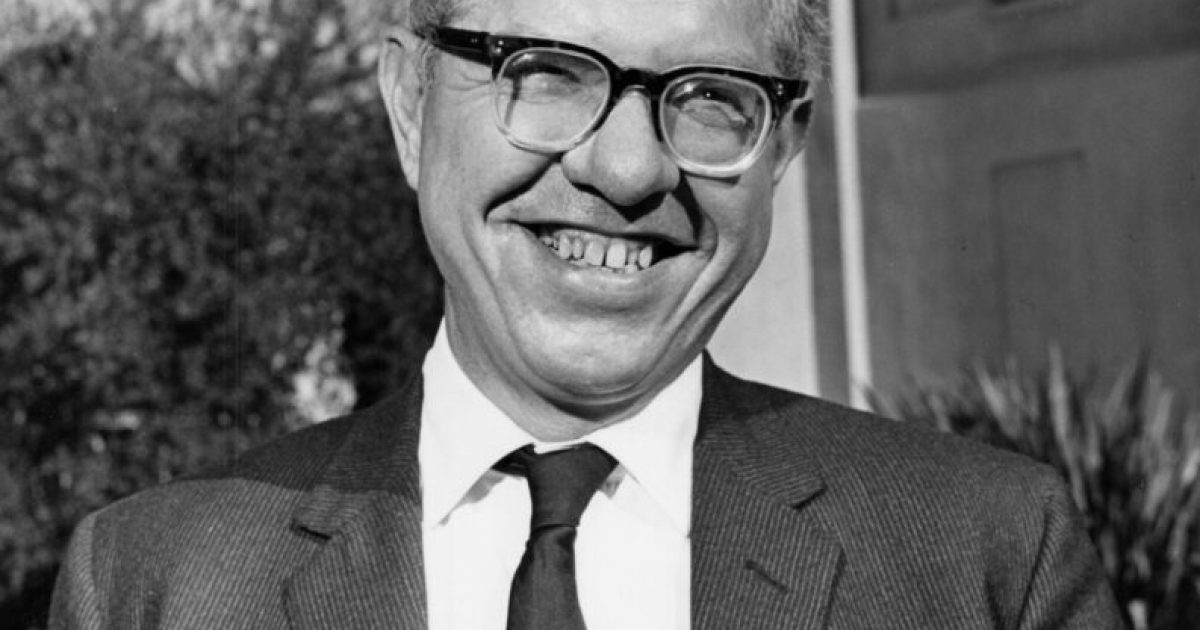
Today in the history of astronomy, one of the Big Bang’s biggest critics passes away. | Published: August 20, 2026 Fred Hoyle, seen here in 1967, coined the term "big bang" -- and also didn't believe that the Big Bang happened. Credit: AIP Emilio Segrè Visual Archives, Clayton Collection/Wikimedia Commons Born in 1915 in England, cosmologist Fred Hoyle attend Cambridge University, where he would later become a professor. Among other things, Hoyle would become known as the man who coined the term big bang – but, ironically, he used the phrase in his criticism of the theory. Instead of believing that the universe originated in a giant explosion, Hoyle and collaborators Hermann Bondi and Thomas Gold were proponents of the Steady State Theory: that the universe has no beginning and no end, with new galaxies continuously filling in the gaps as it expands. While the Steady State Theory was disproven in 1964 with the discovery of the cosmic microwave background, Hoyle made significant contributions to our understanding of nucleosynthesis. And though he was often outspoken and unconventional, Hoyle was nonetheless recognized with numerous honors and publications before his death on Aug. 20, 2001. Elisa Neckar is senior production editor of Astronomy magazine, and the editor of the Today in the History of Astronomy feature on Astronomy.com.
Aug. 20, 2001: Cosmologist Fred Hoyle dies
Full Article
Original Source
Read the full article at Astronomy →KhanList aggregates and links to publicly available news content. We do not host full articles from third-party sources. Always verify important information with original sources.