
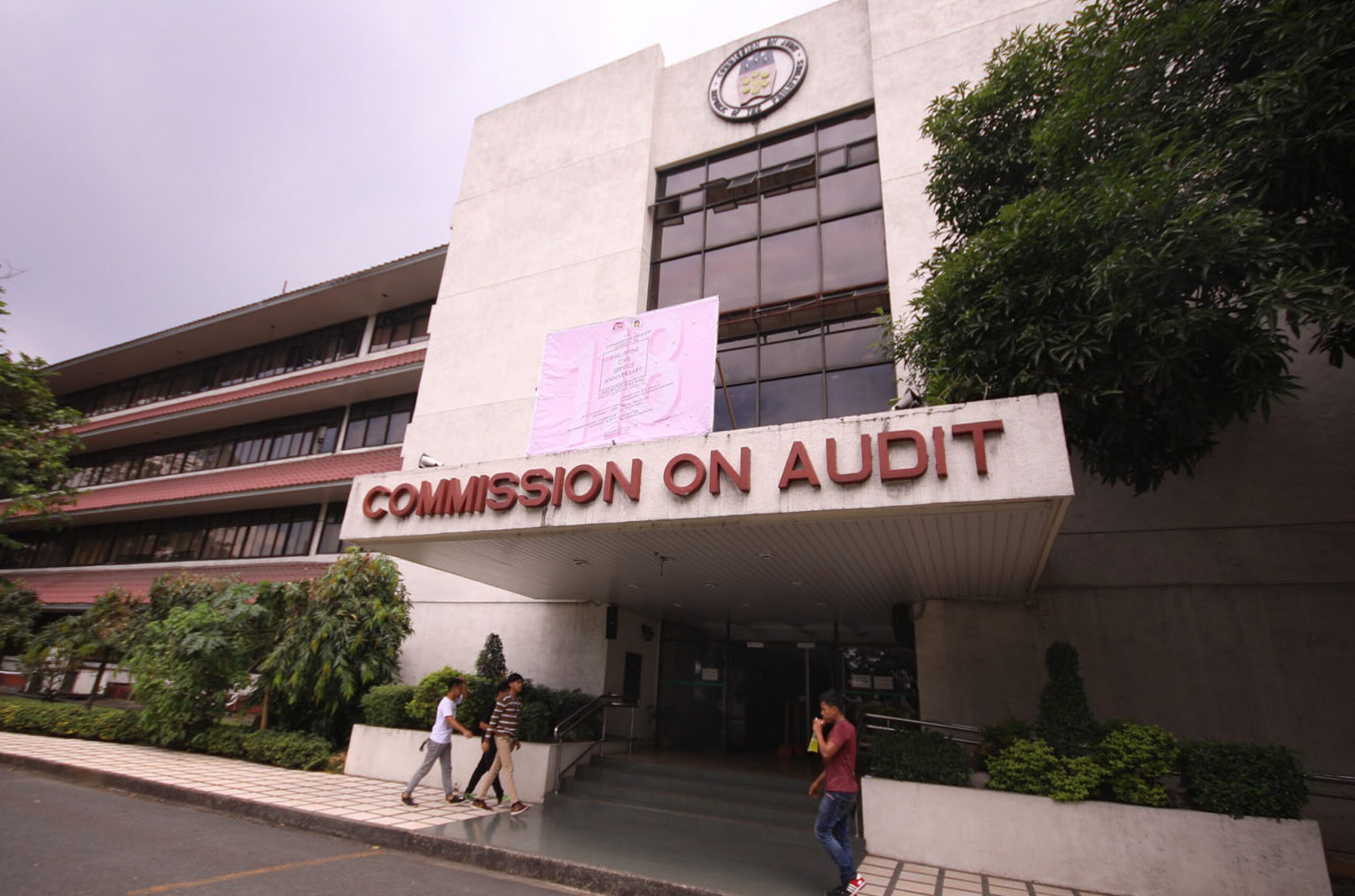
The Commission on Audit in Commonwealth Ave., Quezon City. Rappler The auditors say the discrepancies hinder the ability to verify whether aid reached the intended recipients and raise concerns about the overall effectiveness and accountability of the relief operations The Office of the Vice Presidentspent over P168 million on disaster relief, but a government audit revealed significant documentation issues, including missing records and mismatched beneficiary lists. The Commission on Audit found that many relief distributions lacked specific target beneficiaries and that actual distributions often deviated from approved mission orders without proper documentation. This is AI-generated. Read the article for full context. Report any errors. MANILA, Philippines – The office of Vice President Sara Duterte spent nearly P170 million for disaster relief aid, but a government audit found missing records, mismatched beneficiary lists and departures from approved distribution orders that made it difficult to establish who received the aid and whether they were entitled to it. State auditors have flagged discrepancies in the documentation of P168 million in disaster relief operations conducted by the Office of the Vice President (OVP) in 2025, saying the deficiencies made it difficult to verify the distribution of aid. The findings were contained in a special audit report made public by the Commission on Audit (COA) on September 16 on the use of the 2025 Disaster Risk Reduction and Management Fund. A copy of the report was submitted on August 28 to the National Disaster Risk Reduction and Management Council. COA said eight mission orders covering over P84 million in relief distributions did not identify specific target beneficiaries. They referred only to “affected or displaced families.” The OVP said it responded flexibly to changing conditions during emergencies. Auditors said, however, that without specific beneficiary targets, it was harder to establish the basis for the amount of relief goods requested and distributed. Auditors also examined 24 relief operations involving P39 million in welfare goods where the actual distributions differed from the OVP’s mission orders without documented approval. The changes involved schedules, distribution sites, quantities of relief items and the amount of rice distributed, the report said. The OVP again cited changing field conditions. COA said such changes should nevertheless be documented to show that they had been properly authorized. Another P25.2 million in relief goods, reportedly distributed to 33,980 beneficiaries, was supported by incomplete documents. The COA said some were unsubmitted or missing. The auditors said the OVP’s accomplishment reports were not consistently backed by situation reports, mission orders or verified master lists. In one case, a relief distribution sheet was unavailable because records were reportedly lost during Typhoon Kristine (Trami). It was replaced with explanatory and certification documents, the report said. COA also found differences between situation reports prepared by the OVP and validation reports from local government units covering over P19.6 million in welfare goods. The number of affected families differed in some cases, while some local government reports did not give a beneficiary count. The OVP attributed the discrepancies to changing disaster conditions, according to the report. Other problems were found in operations that had supporting documents. Auditors cited master lists without agency certification, distribution sheets with names that did not match the master lists, incomplete recipient information, duplicate entries and unsigned distribution sheets. Some submissions also did not meet documentation requirements for the Relief for Indigents and Individuals in Crises and Emergencies program, the report said. COA said the various documentation problems and departures from procedures and liquidation requirements hampered its ability to validate the relief operations. The auditors said the deficiencies meant they could not establish with assurance whether the aid reached its intended beneficiaries or whether recipients were actually in need. “The use of different documentary requirements resulted in inconsistent application of established procedures and reduced assurance on the completeness, accuracy, and verifiability of beneficiary records and the propriety of relief distributions,” the report said. – Rappler.com How does this make you feel? Loading
Auditors flag gaps, missing docs in OVP’s P168-M disaster aid
Full Article
Original Source
Read the full article at Rappler →KhanList aggregates and links to publicly available news content. We do not host full articles from third-party sources. Always verify important information with original sources.