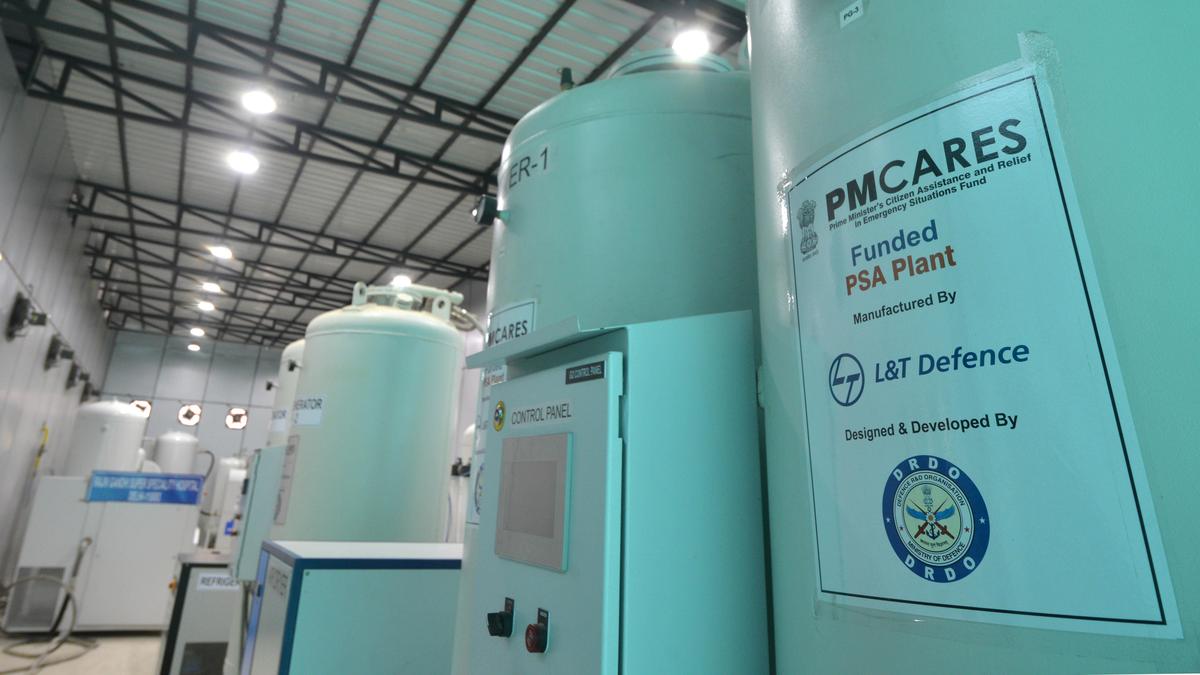
The Prime Minister’s Citizen Assistance and Relief in Emergency Situations (PM CARES) Fund has not made public any audited financial statements since its last disclosure for Financial Year 2022-23.The PM CARES Fund, a public charitable trust established in March 2020 to support relief efforts during public health emergencies and other disasters, is chaired by the Prime Minister and funded entirely through voluntary contributions, according to information released by the Central government.The last publicly available audited financial statements, for FY 2022-23, show an opening balance of ₹5,415.65 crore, voluntary contributions of ₹909.64 crore, total receipts of ₹6,723.07 crore, total payments of ₹439.38 crore, and a closing balance of ₹6,283.68 crore as on March 31, 2023.Audited financial statements for FY 2019-20, FY 2020-21, FY 2021-22, and FY 2022-23 are available on the PM CARES website. The PM CARES Fund has primarily financed India’s COVID-19 response and emergency health infrastructure. According to the audited accounts, the fund has spent about ₹7,900 crore on various initiatives, including the procurement of 50,000 ‘Made in India’ ventilators (₹2,146.6 crore); installation of PSA (pressure swing adsorption) oxygen plants in hospitals (₹1,703.15 crore); procurement of COVID-19 vaccine doses (₹1,393.45 crore); assistance for migrants’ welfare during the nationwide lockdown (₹1,000 crore); support for COVID-19 vaccine development (₹100 crore); establishment of temporary COVID-19 hospitals (₹50 crore); procurement of oxygen concentrators (₹91.87 crore); and the PM CARES for Children scheme, under which ₹346 crore was allocated for children who lost their parents or legal guardians during the COVID-19 pandemic.The absence of publicly available audit statements after FY 2022-23 raises concerns over transparency, Anjali Bhardwaj, co-convenor of the National Campaign for People’s Right to Information, told The Hindu.“PM CARES was announced three days before the close of the 2019-20 financial year through a Central government communication. Several thousand crores of rupees were contributed under the Corporate Social Responsibility (CSR) provisions by public sector undertakings, which is public money. The fund was presented as having been set up by the Central government, making it appear to be a public authority. Government employees also contributed from their salaries. The Prime Minister chairs the fund in his ex officio capacity, and Union Cabinet Ministers are its trustees,” Ms. Bhardwaj said.“However, when information regarding the funds collected and spent was sought, the government maintained that the trust is not a public authority under the RTI Act. The Ministry of Corporate Affairs also retrospectively amended the relevant rules under the Companies Act. The audit reports of the PM CARES Fund have not been made publicly available since FY 2022-23. At present, PM CARES remains outside the ambit of the RTI Act, parliamentary scrutiny, and audit by the Comptroller and Auditor General,” she said.The lack of transparency surrounding the fund is “extremely concerning”, Ms. Bhardwaj said.“There is apprehension that the secrecy surrounding PM CARES could create conditions similar to those seen in the electoral bonds case, where lack of transparency enabled quid pro quo, regulatory inaction, and extortion. The trust is operating in a completely opaque manner,” she said.Information relating to the PM CARES Fund should be made available to the public, former Central Information Commissioner and RTI activist Shailesh Gandhi said.“Legally speaking, the PM CARES Fund falls within the ambit of the RTI Act. Information relating to it should be shared with the public. In fact, anything associated with the Prime Minister, except matters affecting national security, should be open to public scrutiny. The trustees of the PM CARES Fund are Union Ministers and the fund is headed by the Prime Minister. They are public servants and should be accountable. The PM CARES Fund comprises public contributions and its accounts should be made public,” Mr. Gandhi said.The RTI framework in India is being “systematically dismantled by the legislature and the executive,” Mr. Gandhi said.The PM CARES Fund is registered as a public charitable trust under the Registration Act, 1908, according to information released by the Central government. The Trust deed was registered in New Delhi on March 27, 2020.The government has maintained that the fund consists entirely of voluntary contributions from individuals and organisations, and receives no budgetary support. It has also stated that the Prime Minister serves as the ex officio Chairperson of the Trust, while the Union Ministers of Defence, Home Affairs, and Finance are its ex officio trustees.Under the Trust deed, the Chairperson may nominate three eminent persons from various fields, including research, health, science, social work, law, public administration, and philanthropy, as trustees. All trustees serve in a pro bono capacity.Donations to the PM CARES Fund qualify for 100% deduction under Section 80G of the Income Tax Act, 1961 and are also eligible to be counted as CSR expenditure under the Companies Act, 2013.The Fund has also been granted exemption under the Foreign Contribution (Regulation) Act (FCRA), enabling it to receive donations from individuals and organisations based overseas through a designated foreign contribution account.Since the PM CARES Fund is registered as a public charitable trust, its accounts are audited by the private independent auditor, M/s SARC & Associates, Chartered Accountants, according to public records. The Comptroller and Auditor General audits the accounts of Central government Ministries, departments, and their subordinate offices.
Audited financial statements for PM CARES Fund have not been made public since FY 2022-23
Full Article
Original Source
Read the full article at Thehindu →KhanList aggregates and links to publicly available news content. We do not host full articles from third-party sources. Always verify important information with original sources.