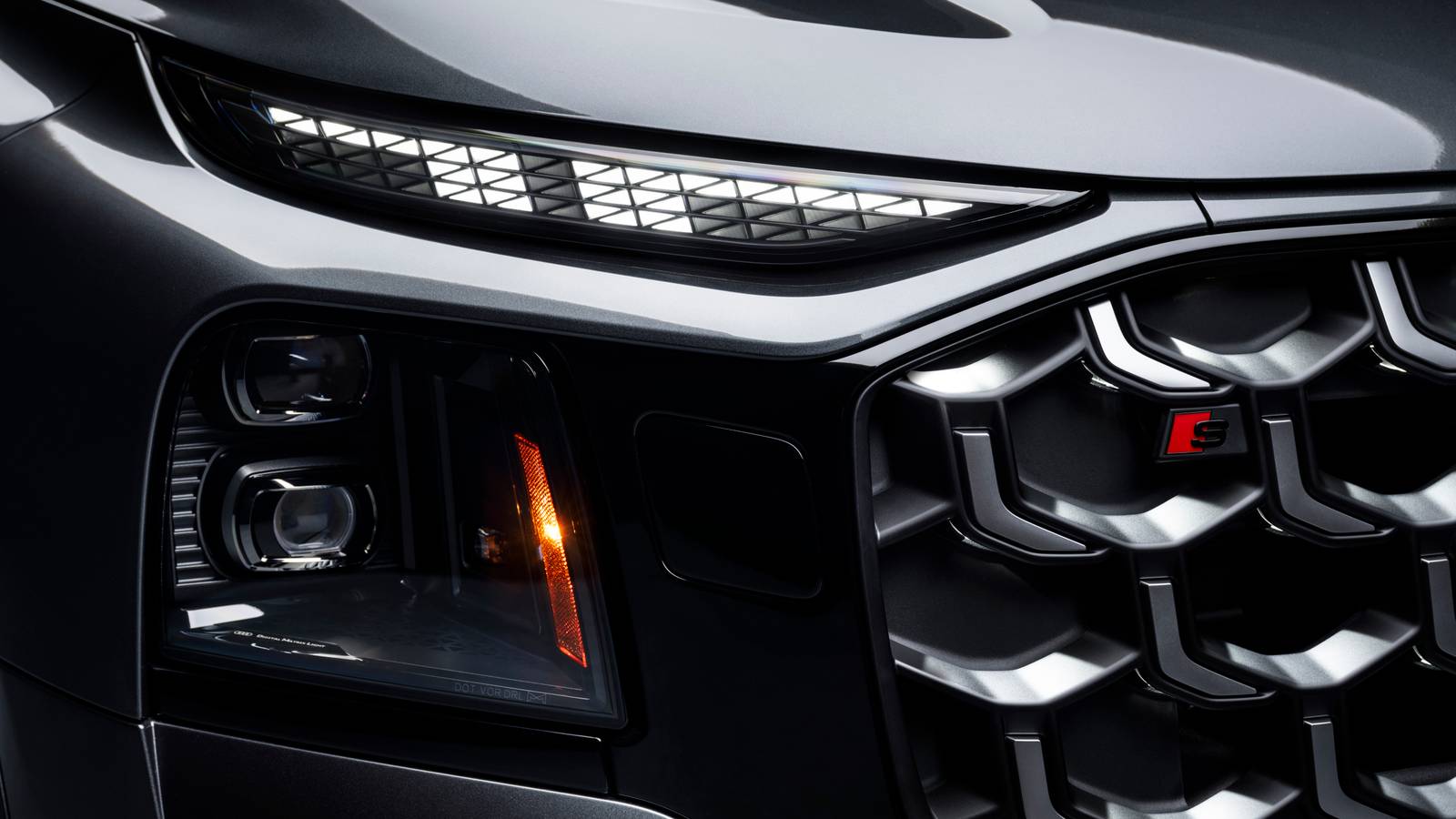
Published Jul 30, 2026, 8:00 AM EDT Based in the Motor City, Carl Anthony is the Automotive Lead at How-to-Geek and the host of AutoVision News Radio, a podcast that focuses on future vehicle technology, including next-generation ADAS innovations, electrification, and software-defined cars. A broadcaster by nature, he has appeared on popular podcasts and radio shows, including Wrench Nation, Cars Yeah, The Car Doctor, and Digital PR Explained. Carl’s frequent appearances on MotorMouth Radio (WHPC 90.3 FM) over the last decade have made him a trusted resource for car enthusiasts, while his hosting of the AutoSens Insights series continues to spotlight the latest automotive technologies. Prior roles include serving as a new vehicle launch and dealer trainer for Ford, Honda, Mercedes-Benz, and Volvo. Carl was a senior product specialist on Chevy's National Truck Team, an experiential marketing program that travels the United States, and a respected member of the FCA (now Stellantis) national auto show team, where he served as the resident expert for consumers on the Dodge Charger and Challenger. Before the automotive industry, Carl was a disc jockey, producer, and programmer at several popular Midwest radio stations, including KIWR, KEZO, KJAN, and KELO-FM. He is a graduate of Iowa Western Community College in Council Bluffs, where he dual-majored in the Electronic Media studies program, earning an Associate of Applied Sciences degree in both radio and television broadcasting. Six in 10 drivers say headlight glare is a problem after dark, and nearly three-quarters of those affected believe it has worsened over the past decade, according to a survey done by AAA in February 2026. Among those who experience glare, 92% identify oncoming headlights as the primary cause, and about one-third of respondents report being blinded by glare reflected in their rearview or side mirrors. Audi has had an answer to that problem on European roads since 2013, but it couldn't sell it here in the United States, at least not until now. The 2027 Q9, Audi's new full-size flagship SUV, along with its high-performance SQ9 sibling, brings Digital Matrix LED headlights to American customers for the first time, paired with a taillight design Audi says has never appeared on any production vehicle. The lighting technologies will cap off a journey more than 10 years in the making for Audi as the 2027 Q9 arrives at U.S. dealers later this year. Matrix LED headlights, a production-car milestone Audi TT RS was the first to use OLED taillights Audi first brought Matrix LED headlights to the European A8 in 2013. The system split the high beam into individually controlled segments, letting the headlight stay in high-beam mode while dimming around other cars. It worked on the autobahn and on narrow, winding roads across the continent. American drivers couldn't get the same feature because U.S. testing requirements for headlight glare differed from the standards used elsewhere. The Department of Transportation didn't clear a legal path for adaptive driving beam headlights until 2022, and even then, automakers found the federal glare requirements hard to meet. In 2016, three years after the European A8, Audi's TT RS became the world's first car to use OLED taillights. An LED shines from a single point, while an OLED lights up as a flat panel, producing a softer, more even glow across its surface while using less power. Beyond the efficiency gain, OLED panels can also be divided into individually controllable segments, allowing Audi to create custom lighting effects rather than a single uniform glow. The TT RS and its original module had up to four of those segments. The Q9's panels now use hundreds each, letting Audi build far more detailed and personalized light signatures than that first four-segment design ever allowed. "Audi has always been a leader in lighting technologies,” said Filip Brabec, Audi of America's senior vice president of product planning, adding that Audi pioneered the LED daytime running light, a signature now found on virtually all cars. “We are very excited to be able to offer Digital Matrix LED lighting functions to our U.S. customers for the first time. It's a technology that will benefit all road users by providing better lighting and less glare for all." A second-generation digital OLED system with an active light signature and a communication light landed on the Q6 e-tron in 2024, and micro-LED technology reached digital Matrix headlights on the Q3 in 2025. The 2027 Q9 represents the latest in Audi’s lighting technology, which the automaker maintains a full record of for anyone who wants to delve deeper into the design and engineering of its vehicular lighting systems. Half the width of a human hair How the system sees the road A conventional high beam works as a single unit, switching fully on or fully off. Automatic high-beam systems can help by dimming when they detect another vehicle, but they typically dim the entire beam at once, trading distance for reduced glare. Audi's Digital Matrix Light system works a little differently, keeping the high beam on and dimming only the specific areas that could cause glare. Front-facing cameras identify individual vehicles up ahead, whether they're approaching from the opposite direction or traveling in the same lane. The system then dims a precise area around each vehicle's mirrors and windshield, while keeping the rest of the road at full brightness without shining light directly at another driver. Audi's micro-LED module measures about 13 millimeters wide, yet packs a chip with roughly 25,600 individually controllable micro-LEDs, each about 40 micrometers across, half the width of a human hair. Dr. Michael Kruppa, Audi's head of front lighting development, described the result as a high-resolution, glare-free high beam that improves illumination for the driver while keeping other road users comfortable. Audi also tunes the color temperature to about 5,500 Kelvin (i.e., close to daylight), to help cut fatigue on long night drives. The benefits encompass a few key areas. Drivers get a longer field of view at night, since the system can leave high beams active far more often than a conventional setup allows. Oncoming drivers see something closer to a low-beam effect even while the Q9's high beams remain on, thanks to the aforementioned automatic masking. Because the adjustments happen smoothly rather than in sudden on/off jumps, eye strain is reduced on a long drive. The system also works when parked, which gives the Q9 an element of refined luxury. When entering or exiting the vehicle, the Q9 can project one of three selectable lighting scenes onto a nearby wall or driveway through the MMI, turning the headlights into a small welcome display before the driver gets in. Credit: Audi An exploded diagram Audi supplied above of the Q9's headlight assembly shows how much is packed behind the lens. Working from the outside in: a design trim cover, an LED side marker, and a side reflex reflector, followed by the multi-segment LED module that handles daytime running lights, position lighting, and turn signals in one unit. Behind that sits the Matrix LED module for low-beam duty, the turn signal module, the micro-LED module for the main beam, and an LED cornering and all-weather light. The wiring harness and control units connect everything to a housing that bolts the assembly to the body. Quick look at other Q9 high points The 2027 Audi Q9 has a twin-turbo 2.9-liter V6 producing 429 horsepower and 442 lb-ft. of torque, paired with an eight-speed Tiptronic transmission and standard quattro all-wheel drive. Under the hood of the performance-oriented SQ9 is a 4.0-liter twin-turbo V8 with 591 horsepower and 590 lb-ft. of torque, with a maximum towing capacity of 7,700 lbs. Inside, the Q9 seats six or seven, with power-adjustable seats throughout, an available Bang & Olufsen 4D sound system with seat-mounted actuators, and Audi's largest panoramic sunroof yet. As for the sunroof, it covers more than 16 square feet of glass and can be optioned with a switchable-tint feature that splits it into nine individually controllable segments, letting occupants dial in how much light comes through. If desired, the entire roof can become opaque when the Q9 is parked. Other luxury touches include Fine Nappa leather, real wood trim, heated front and rear armrests, and an available sport seat with ventilation and massage functions. In effect, the Audi Q9 has a cabin that can compete against its segment rivals, including the BMW X7, Mercedes-Benz GLS, Cadillac Escalade, Range Rover, and Lexus LX. The 2027 Q9 starts at $87,700, while the SQ9 begins at $118,000 before destination charges, competitive starting prices relative to others in the segment. Deliveries are scheduled to begin during the fourth quarter of 2026.
Audi's new Q9 headlights use 25,600 tiny LEDs to stop blinding other drivers
Full Article
Original Source
Read the full article at Howtogeek →KhanList aggregates and links to publicly available news content. We do not host full articles from third-party sources. Always verify important information with original sources.