
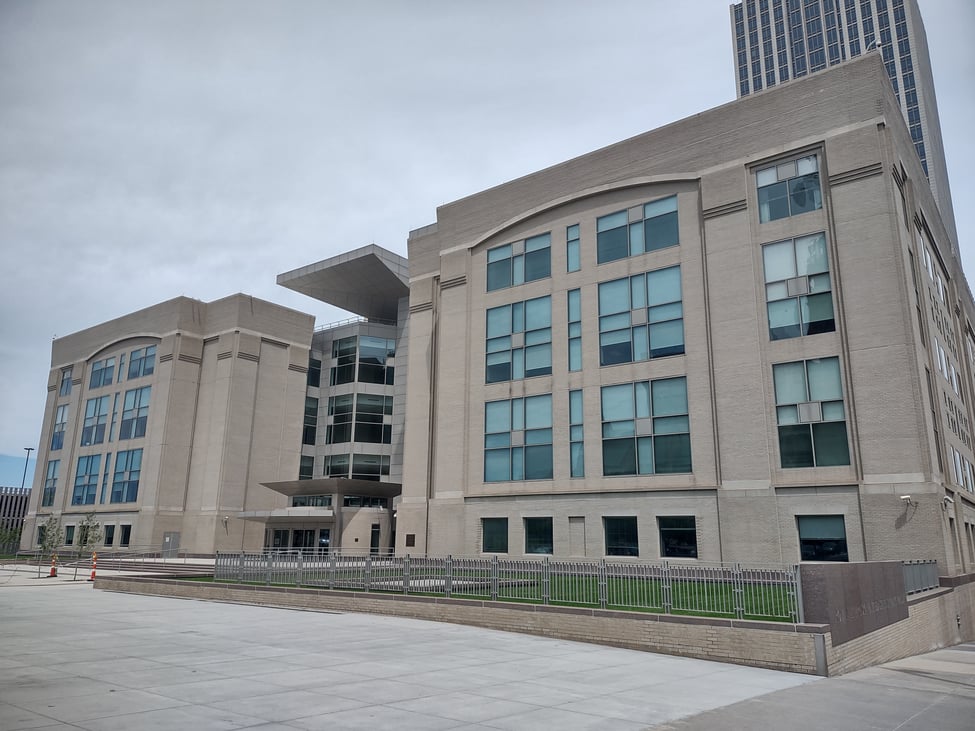
Omaha-based National Indemnity sued after reinsurance company TIG did not cover its losses. National Indemnity insured the state of Montana, which was found to have failed to warn about the asbestos danger in and around the small city of Libby.OMAHA, Neb. (CN) — A local jury’s decision in a reinsurance case connected to the mass asbestos exposure at Libby Mine in northwest Montana may come down to whether it believes a company under the umbrella of hometown business hero Warren Buffett lied to its reinsurer.Nearly two weeks of arguments in the Libby Mine reinsurance case came to a close Thursday at the federal courthouse in downtown Omaha, with the case going to the eight-person jury late in the Nebraska afternoon as the sky outside darkened and commuters hurried home. Jurors did not render a verdict, and deliberation will begin Friday morning.Omaha-based National Indemnity Insurance Company is suing TIG Insurance Company, one of its reinsurers, after, it says, TIG did not pay its claim after National Indemnity and Montana agreed in 2022 to resolve all coverage claims over widespread asbestos contamination from the mine since the 1960s for $157 million. National Indemnity insured Montana for two years in the 1970s.TIG claims National Indemnity did not provide adequate evidence and billed amounts not covered by the reinsurance agreement, essentially finagling the numbers to make TIG cover part of the massive bill.“It lied," said Scott L. Davis, a Dallas-based attorney for the Spencer Fane firm, representing TIG, speaking of National Indemnity during closing arguments. “It hid. It moved around numbers. It abused this process to the detriment of its reinsurers.”In his closing argument, Michael Knoerzer, a New York-based attorney for Clyde & Co., representing National Indemnity, said TIG never took advantage of its opportunities to associate with National Indemnity on the case, but criticized how National Indemnity handled it.“TIG sometimes said we could have done it better. They are second-guessing. They could have helped; they didn’t," he said. “It’s undisputed in this case they never asked.”In 2004, the state of Montana was found liable for asbestos risk to miners and residents near Libby, a small city in northwestern Montana.From 1963 to 1990, W.R. Grace & Co. extracted vermiculite at the mine, about seven miles outside of Libby.Vermiculite, once commonly used for fireproof roofing, insulation and wallpaper, itself was not dangerous. But the asbestos the mining stirred up was.Decades of widespread asbestos contamination from the mine caused the U.S. Environmental Protection Agency to declare its first-ever public health emergency during a 2009 Superfund cleanup.Thousands of W.R. Grace workers, their families and residents since the 1960s have been injured or died from lung disease related to working at or living near the mine.The fight over who should be held liable started about 2000, shortly after reports of workers falling ill sparked an emergency cleanup. Contamination has since been blamed for hundreds of deaths.National Indemnity insured the state of Montana from July 1, 1973, to July 1, 1975. During that same period, TIG provided it reinsurance coverage.Reinsurance is dubbed “insurance for insurance companies” by the Reinsurance Association of America. Under reinsurance, one insurance company indemnifies another for a loss the company buying the policy cannot handle alone — something that National Indemnity claims TIG Insurance Company did not fully do.In 2022, National Indemnity and Montana agreed to resolve all coverage claims over widespread asbestos contamination from the mine since the 1960s for $157 million.National Indemnity billed its reinsurers more than $101 million. They did not pay. Since first filing the lawsuit in 2022, all other reinsurers have been dropped from the suit, but TIG remains. TIG has paid National Indemnity what it believes it owes — $12.7 million.According to National Indemnity, the insurance contract required National Indemnity to pay as much as $3 million per loss. At first, the state said 21 occurrences involved state inspectors not warning miners about the asbestos risk.But National Indemnity feared that, with potentially thousands of miners and locals affected by asbestos exposure, the number of occurrences could multiply as the matter moved again through Montana courts, with the state Supreme Court telling the parties to litigate the number of occurrences.Ultimately, National Indemnity and the state settled at 27 occurrences. At $3 million apiece, that number came to $81 million. The roughly $76 million remaining largely came from past and present defense costs.Under their contract, TIG was responsible for one-third of National Indemnity’s costs. So, according to National Indemnity, it would have to pay $1 million for each occurrence.At issue in the case is whether individual deaths could count as an occurrence. National Indemnity has argued that it could have found itself on the hook for “billions” if individual deaths were counted, which led it to settle at 27.TIG, in its critique of the settlement, says Montana consistently argued 21 occurrences for years. Davis went so far as to say the settlement wasn’t a settlement.“You have to have a signed document to have a settlement. You have to have an agreement to have a settlement. They didn’t have any of that,” Davis told the jury. “An unconditional payment is not a settlement.”National Indemnity is owned by Berkshire Hathaway, whose chairman until recently was Buffett. On the first day of trial, National Indemnity President Donald Wurster testified he felt the need to tell Buffett when the Montana Supreme Court found the state responsible for not warning the miners, and that the state requested that National Indemnity take over defense of the claim.Subscribe to our free newslettersOur weekly newsletter Closing Arguments offers the latest about ongoing trials, major litigation and rulings in courthouses around the U.S. and the world, while the monthly Under the Lights dishes the legal dirt from Hollywood, sports, Big Tech and the arts.Additional Reads
Attorneys make closing arguments in Libby Mine reinsurance case
Full Article
Original Source
Read the full article at Courthousenews →KhanList aggregates and links to publicly available news content. We do not host full articles from third-party sources. Always verify important information with original sources.