
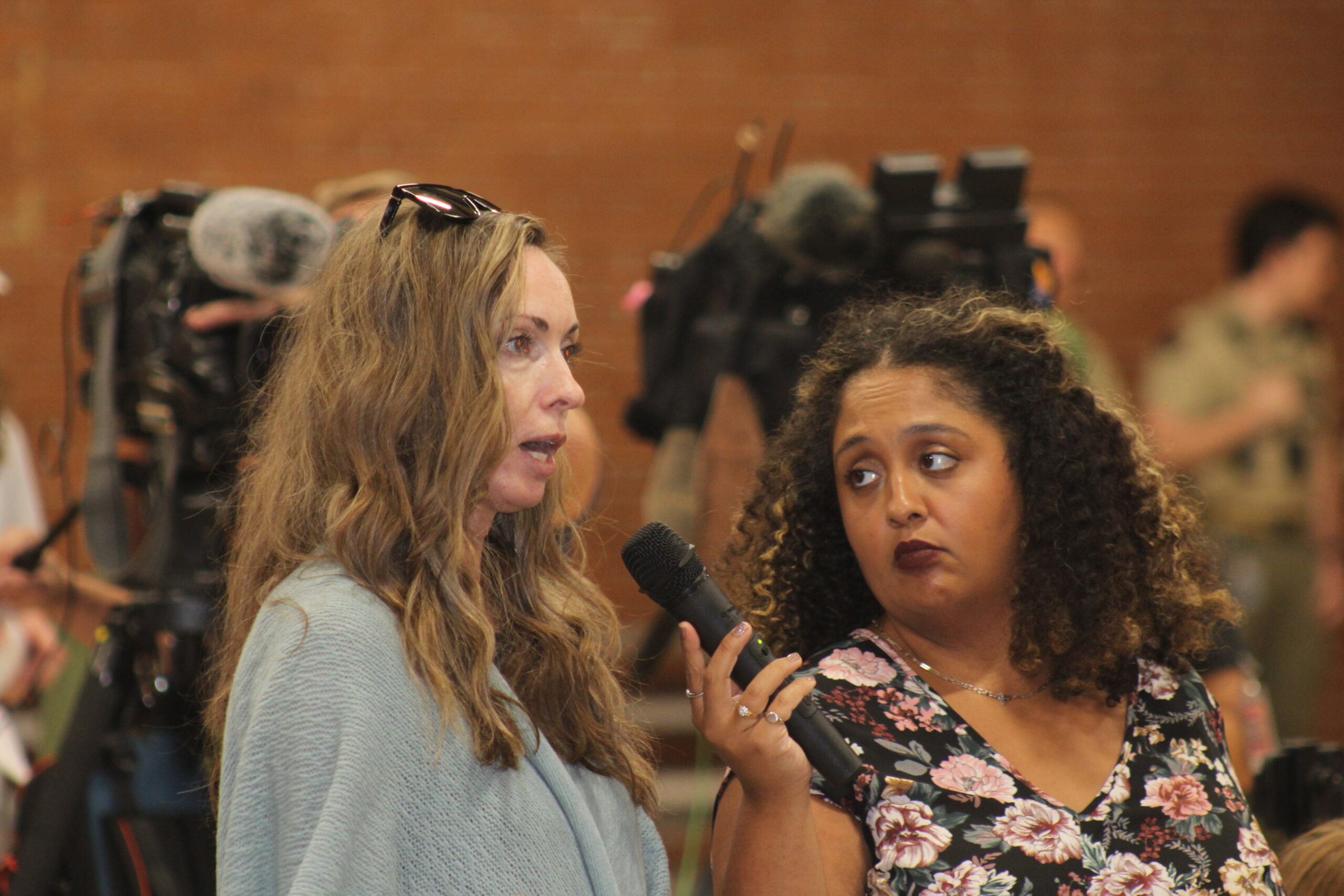
As Arizona faces a loss of nearly one third of its Colorado River water supply, an analysis of data centers across the state estimates water demand could surge by more than 450% if all planned data center projects in the greater Phoenix area are built.MESA, Ariz. (CN) — Arizona’s attorney general threatened to sue an AI data center developer during a Wednesday town hall held to address the concerns of Phoenix valley residents.The MenLo Digital AI hyperscale project in Ahwaktukee, a neighborhood in south Phoenix, is just one of nearly 50 new data centers under construction or in development across Arizona. If those centers are built and operated, Democratic Attorney General Kris Mayes says they will exacerbate rising energy costs and increase stress on local water supplies by at least 32%.“I do not believe that Arizona has in place what it needs to adequately protect our communities from the negative impacts of the data center build up that is on the way,” Mayes said. “We need a time out to get our house in order.”About 150 Phoenix valley residents gathered in the Eagles Community Center gymnasium in Mesa, Arizona, Wednesday night to voice their concerns. More than half of them were concerned over the Menlo Digital data center under active construction in Ahwatukee.“We have been woken all hours of the night,” Ahwatukee resident Ana Marshall, who lives just 150 feet from the construction site, told Mayes. “It’s kind of equivalent to being tortured.”Marshall said she has recorded noise as loud as 110 decibels inside her son’s bedroom. She said she’s taken her kids to the doctor for sinus infections several times since April thanks to the dust kicked up by construction.In August, Mayes urged the Legislature and Democratic Governor Katie Hobbs to impose a moratorium on new data center approvals. She acknowledged Wednesday that she alone doesn’t have the power to impose the moratorium but said: “I have not been shy about using nuisance laws.”Arizona’s public nuisance law allows Mayes to take legal action against any act or condition that interferes with the health, safety, peace or property rights of a community. It’s what she used to sue Fondomonte, the Saudi Arabian megafarm sucking up water in the west valley to grow alfalfa. In May 2024, state Republicans tried to impeach Mayes over what they called a weaponization of the public nuisance law and overuse of town halls.On Wednesday, Mayes said she is investigating the data center in Ahwatukee.“It seemed to us like an obvious investigation to launch,” she said.Residents have opposed the data center for months. The city of Phoenix has already stationed inspectors at the million-square-foot construction site and has negotiated commitments from the contractor to reduce noise and other disturbances following community complaints. Those measures include moving construction traffic farther from homes, restricting early-morning deliveries, relocating employee parking and monitoring noise levels around the property.City staff says it’s investigating complaints filed between Sept. 12 and Oct. 2 to determine whether enforcement action was warranted.However, some attendees said they fear Arizona’s Proposition 207 will prevent the city from taking meaningful action.The constitutional amendment, enacted in 2006, legally requires cities, counties, and state agencies to compensate landowners if a new land-use or zoning regulation reduces the market value of their property. Property owners can file Prop 207 claims against municipalities if new ordinances block planned data center developments.Mayes said she won’t opine on the legality of Prop 207 but said it can’t stop her from taking legal action.Though attendees were concerned for Ahwatukee, there are nine other data centers under construction and nearly 40 more in the planning and development phase in Arizona.Mayes said the state needs to consider five guiding principles before approving developments:Ensure total transparency in planning, development and financingEnsure construction and daily use don’t disturb citizensEnsure raised utility costs aren’t shifted onto the communityEnsure data centers don’t harm natural resourcesEnsure data centers give back to the communityIn her push for a development moratorium, Mayes said data centers can use tens or even hundreds of millions of gallons of water each year for cooling. New power plants built to provide electricity to new data center customers may also use significant amounts of water to operate. One 2025 analysis estimated that data center-related water demand could surge by more than 450% if all planned data center projects in the greater Phoenix area are built.Already, Arizona is facing a loss of nearly one third of its share of the Colorado River over the next two years.Data centers that instead use air to cool their operations can raise temperatures in nearby neighborhoods. A recent Arizona State University study found data centers can raise nearby temperatures by as much as four degrees Fahrenheit. Even a one-degree increase can increase air conditioning demand and power bills, Mayes said.Sam Wyvern is an elementary school teacher in Ahwatukee. He said he fears his students, many of whom already receive accommodations for disabilities, will be further disrupted by the constant noise, both during and after construction.“Koreen school district is already beginning to rot with school closures and empty seats,” he said. “This kind of feels like a kick into an open grave.”Mayes said she can’t confirm exactly what action she will take or when, but she said she is conducting a “robust investigation.”She added she expects bills in next year’s legislative session to address community concerns. Democratic legislators in attendance nodded their heads.Community members remained in the gymnasium for hours discussing plans for future resistance.MenLo Digital has not replied to a request for comment.Subscribe to our free newslettersOur weekly newsletter Closing Arguments offers the latest about ongoing trials, major litigation and rulings in courthouses around the U.S. and the world, while the monthly Under the Lights dishes the legal dirt from Hollywood, sports, Big Tech and the arts.Additional Reads
Attorney General threatens lawsuit over south Phoenix data center
Full Article
Original Source
Read the full article at Courthousenews →KhanList aggregates and links to publicly available news content. We do not host full articles from third-party sources. Always verify important information with original sources.