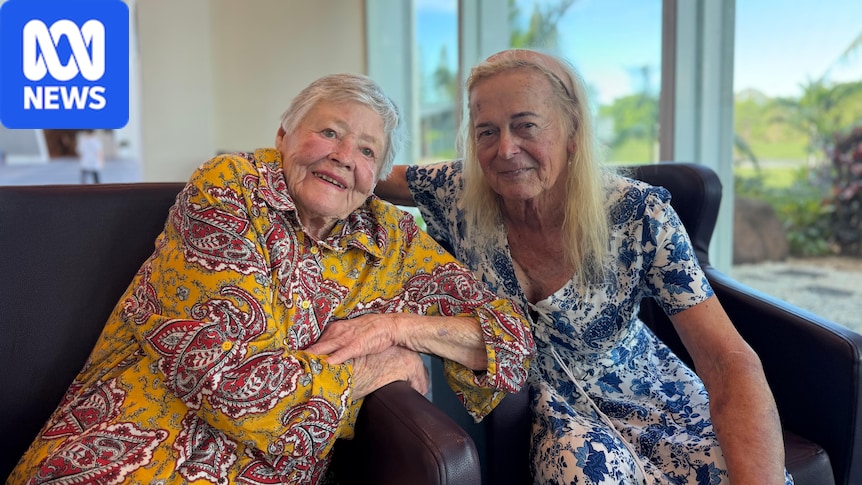
After decades of financial abuse, Judy Guyton credits the training she received through an advocacy organisation for helping her stay alive.What began as occasional requests from her late son for help to cover unexpected expenses — including a cancer treatment — turned into money being used as a tool of coercive control."At first, it was domestic abuse, then … it went on to financial abuse and senior abuse," the 86-year-old said."It was like, 'If you don't do this, Mum, you won't be able to do that.' It might be that they needed money: 'I'll pay you back. If you don't help us out, you won't see the kids or the grandchildren.'"When Ms Guyton finally stopped giving in to her family's financial demands, she knew she would be cut off from seeing her grandchildren ever again.Joining the Older Voices for Change program at the Council on the Ageing (COTA) Tasmania has helped her cope with the loss."I don't have many years left. The training has given me a better quality of life so that my last years will be OK," she said.Ms Guyton is a passionate advocate for elder-abuse awareness, and spoke at the 2026 Australian Elder Abuse Conference on the Gold Coast this week, with the hope of empowering others.Victim-survivor wants elder abuse to be federal crimeThe conference heard a debate on whether the abuse of older Australians needed to be made a standalone criminal offence in Queensland.In 2021, the ACT became the first Australian jurisdiction to enact laws specific to the mistreatment, abuse and neglect of "vulnerable" people, including those aged over 60.Proponents, including the Domestic Violence Prevention Centre Gold Coast and Relationships Australia Queensland, have argued similar laws are needed to address the unique patterns of coercive control in elder-abuse contexts.But a Queensland parliamentary inquiry last year found the state's justice system already sufficiently captured offences related to elder abuse.Francene Jacques, also a COTA advocate and elder-abuse survivor, said she supported the reform."Elder abuse should be a national crime," the 84-year-old said."We have varying punishments between the states [for domestic violence] … it should be a federal offence. It should come under the auspices of the Commonwealth."A study commissioned by the federal government in 2021 found one in six Australians over the age of 65 experienced abuse in a relationship of trust, but that most victims did not report it.Co-chair of Elder Abuse Action Australia Rebecca Edwards said the conversation needed to shift from criminalisation to prevention and awareness."It's not the law that needs to change, it's attitudes that need to change," she said.Rebecca Edwards says increased investment in elder-abuse support services will help target under-reporting. (ABC Gold Coast: Heloise Vyas)Ms Edwards said there had been no criminal cases brought under the ACT's elder-abuse legislation in the first few years after its implementation, despite thousands of complaints to the ACT's safeguarding authority."The fact that that legislation wasn't being used shows that criminalisation is not necessarily the way to go," she said, adding that having a stronger and more accessible support system for elder-abuse victims was needed."It's a huge problem that the elder-abuse sector is so poorly funded. It's this massive poor cousin to the family-violence sector as a whole."Very little family-violence money has gone through to the elder-abuse services."Reluctance to involve legal systemData from Queensland's Elder Abuse Prevention Unit shows adult children are the most common perpetrators of elder abuse, with psychological and financial abuse making up the bulk of cases.Colette Bots, director of the Caxton Community Legal Centre's family, domestic violence and elder law practice, said almost all people who reported their abuse wanted help, but not at the expense of family bonds."They tell us that they want someone to help their adult child, they want their children's behaviour to change and they want support," she said.Colette Bots says most people who report abuse want help, but not at the expense of family bonds. (ABC Gold Coast: Heloise Vyas)"This is the relationship dynamic of mother and father, to son and daughter, and that love never goes away."Ms Bots said holistic support services, including lawyers, social workers and counsellors, helped reduce barriers for those seeking help."Older people don't want police screaming down the door. They want support," she said.For Ms Guyton, speaking up is the first step to creating change."Don't stay at home and don't hide yourself," she said."You're a valuable person, even if you are older. Get the help you need to lead the life you should."
'Attitudes need to change' to protect older Australians from abuse
Full Article
Original Source
Read the full article at Abc →KhanList aggregates and links to publicly available news content. We do not host full articles from third-party sources. Always verify important information with original sources.