
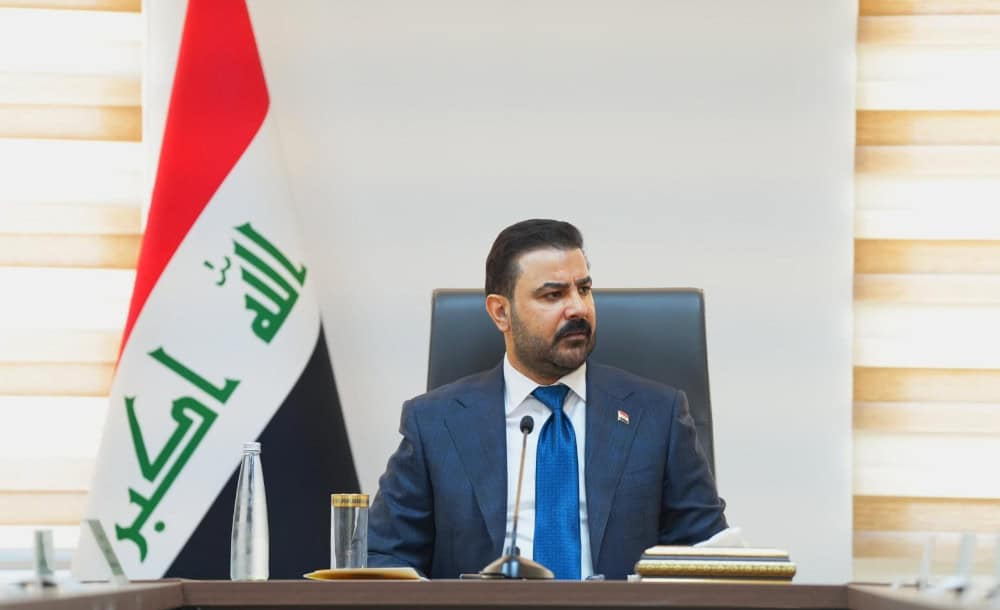
The Khor Mor gas field in the Kurdistan Region of northern Iraq was hit by a “suspected drone attack” on November 8. Dana Gas, a UAE-based company that operates the field, said that the incident caused a fire. Videos showed smoke and flames at the facility. “The blazes have now been extinguished and no injury was recorded among personnel, the company said,” Rudaw Media Network reported on the morning of November 9. The site has been attacked numerous times in the past, and Iran-backed Iraqi militias have been blamed for the operations. The attack on the energy facility came as Iraqi Prime Minister Ali al Zaidi is embroiled in a growing dispute with Iran-backed militias in the country. “Iraqi Prime Minister Ali al-Zaidi’s efforts to dismantle the economic networks of powerful Iran-aligned armed factions have triggered an escalating confrontation with Kataib Hezbollah (KH), which has retaliated by questioning the origins of his personal wealth and scrutinizing his family’s business interests,” Rudaw noted on November 9. Kataib Hezbollah mentioned the Khor Mor gas field in a statement on November 7. “We do not want to air dirty laundry in public, nor open the files of (Khor Mor) and the incitement to target it for the purpose of extorting the UAE; for whoever’s house is made of glass should not throw stones at people,” KH security chief Abu Mujahid al Assaf wrote on Telegram. He did not explain what he meant by the allegations. However, a day later the gas field was attacked. Zaidi ordered an investigation into the incident. “We condemn the attack on Khor Mor, which was an attack on the Iraqi people. We support Prime Minister Zaidi and the Kurdistan Regional Government in finding those responsible and holding them to account,” US Envoy to Iraq and Syria Tom Barrack wrote in a statement. The Kurdistan Regional Government noted that electricity generation had been reduced due to the attack, straining the electric grid. In another development, the Iraqi prime minister canceled contracts with three companies involved with Mosul airport. The Iraqi News Agency said the contracts were ended because the firms were linked to “armed groups.” The term usually refers to various Iranian-backed militias, but the report did not name a specific organization. In another sign of tensions between Baghdad and the militias, the Iraqi judiciary “issued an arrest warrant and investigation order against the son of the leader of Kataib Hezbollah in the country, Abu Hussein al-Hamidawi,” The New Arab reported. Zaidi has vowed to rein in armed groups, including the country’s numerous Iranian-backed militias, and set a June 2027 deadline to place their weapons under state control. The prime minister made several comments on November 8 and 9, emphasizing that the state would fulfill its goal of collecting the arms. Amid the tensions with militias, the US has also asked Iraq to close most of its border crossings with Iran. The announcement came a day after US Central Command launched a new task force called “Iron Gate” to disrupt Iranian ground transit routes. The Sheeb crossing in Maysan Governorate in southern Iraq had already been closed since early November. There are at least eight major crossings from Iraq to Iran. The Badr Organization, which is both a political party and a large armed militia, rejected the border closure initiative. “The Badr parliamentary bloc in Iraq stated on Sunday that Foreign Minister Fuad Hussein’s statement regarding American demands and dictates reveals agendas targeting the south and interfering in Iraqi sovereign decision-making,” Iran’s state-run Islamic Republic News Agency (IRNA) noted. On November 10, Iraq reopened the Sheeb crossing while temporarily closing the Mandali crossing in Diyala Governorate. As tensions within Iraq appear to be growing, Zaidi made an unannounced visit to Iran, where he met with Iranian Parliament Speaker Mohammad Bagher Ghalibaf, the New Region reported on November 9. Other recent diplomatic developments underscore the ongoing engagement between Iran and Iraq. On November 8, Kurdistan Region President Nechirvan Barzani met with an Iranian delegation in Erbil. Separately, Iraq and Qatar have continued efforts to mediate US-Iran tensions. Iran also appointed Abdolreza Masgarian, an Islamic Revolutionary Guard Corps-Qods Force commander, as its new ambassador to Iraq, according to Iran International, a website critical of the Iranian regime. Reporting from Israel, Seth J. Frantzman is an adjunct fellow at FDD and a contributor to FDD’s Long War Journal. He is the senior Middle East correspondent and analyst at The Jerusalem Post, and author of The October 7 War: Israel’s Battle for Security in Gaza (2024).
Attack targets Khor Mor gas field in Iraqi Kurdistan
Full Article
Original Source
Read the full article at Fdd →KhanList aggregates and links to publicly available news content. We do not host full articles from third-party sources. Always verify important information with original sources.