
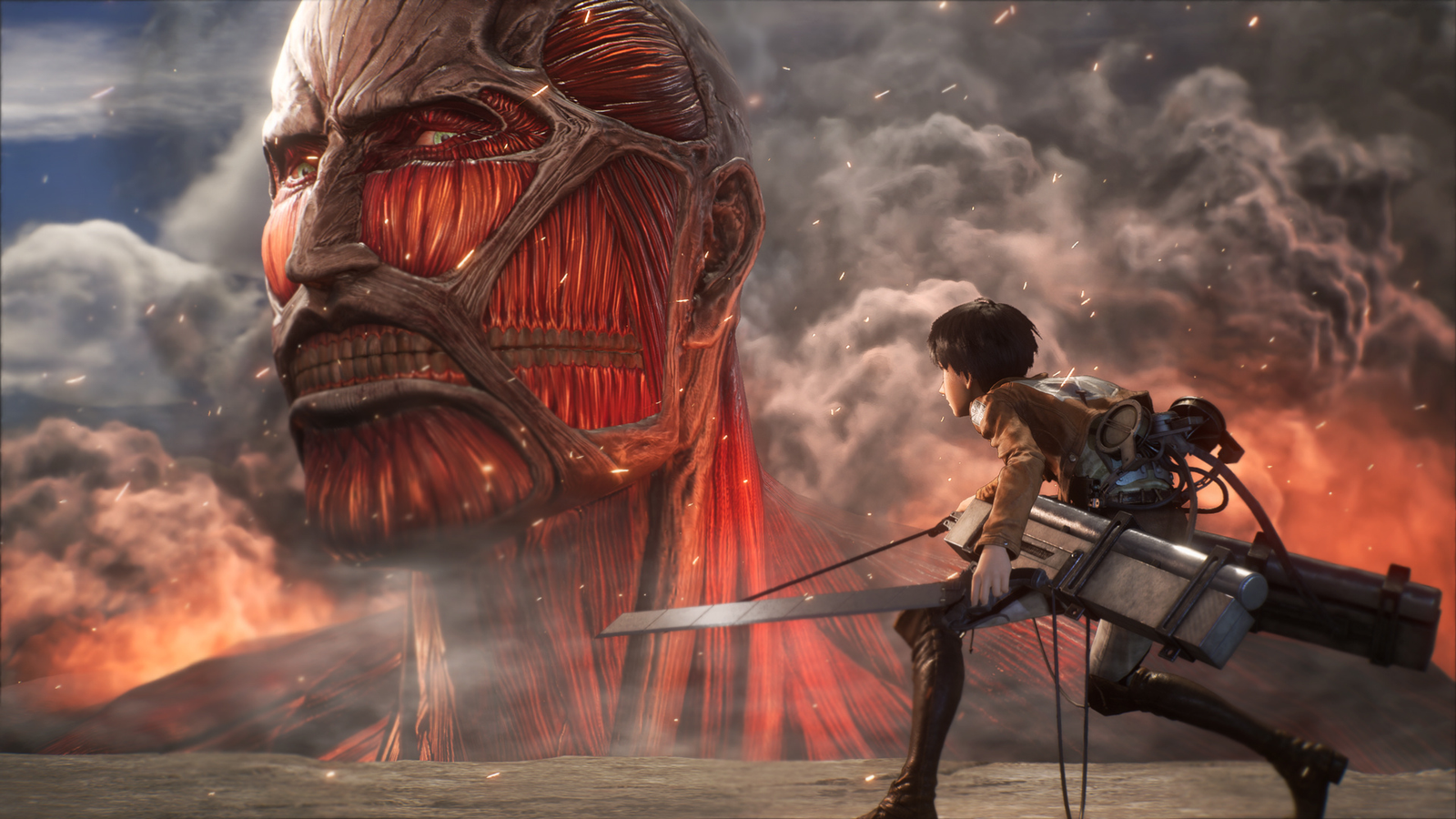
Koei Tecmo is taking the Attack on Titan series to the next level with the upcoming AOT 3. The game will cover the story from all four anime seasons, with plenty of tweaks along the way. Ahead of its launch, we spoke with the game's director, Hideo Suzuki, who shared everything from why it took so long to how they condensed such an epic story into a video game. You can read the full chat below, and while you're there, check out our preview of AOT 3. TheGamer: Almost eight years have passed since the previous game launched, whereas there were only two years between the first two titles. Why did this one take so long? Hideo Suzuki: The main challenge was adapting the final season of the anime, which covers the story after the previous game. We needed time to understand how best to translate that material into a game. We watched the final season at the same time as everyone else. As I watched it, I was thinking about how we could adapt it. We could have made a game focusing only on the final season, but we weren't confident that this would provide enough content for players to fully enjoy. Once the anime had finished, we felt it made more sense to bring the entire story arc together in one game, including the final season. This would give players a more complete experience. Reaching that decision took time. TG: So you initially considered making a game about the ending, then decided to include the earlier story as you needed more content? HS: Yes, you could describe it that way. TG: How much freedom were you given to create original stories in this established world, and how strictly did you have to follow the manga and anime canon? HS: The manga and the main anime adaptation tell a consistent story. From the beginning, we never intended to change events simply because we were making a video game. However, if we simply reproduced the anime's main story, players could just watch the anime instead. The game's original element is that players experience the story through the perspective of their own character, or avatar. We hoped this would provide a fresh and enjoyable way to experience the same story, even for people who already knew it well. TG: Did the rights holder, Kodansha, impose restrictions on what characters such as Eren could do or say? HS: We already understand that certain characters would never behave or speak in particular ways. Rather than waiting for Kodansha to tell us what we couldn't do, we would propose ideas and work with them to make adjustments where necessary. This is our fourth game developed with Kodansha, following three previous titles. We know the characters well, and we have built a relationship of trust with the publisher. The process is collaborative: we propose something, and they either approve it or suggest how it could be changed. TG: Did you work directly with Isayama-sensei on this game? HS: No, we had no direct communication with Isayama-san during the development of Attack on Titan 3. However, we communicated directly with the editorial team that had worked closely with him while the manga was being published. We asked that team for opinions on various elements, including whether particular gameplay systems were appropriate and whether certain dialogue worked. TG: From a game development and narrative perspective, how difficult was it to condense the entire Attack on Titan story into one game while adding original story elements? HS: It was extremely difficult. One particularly important decision was to introduce an avatar as the central character. The original anime moves between different locations, timelines, and characters, which can make the story complicated to reconstruct in a single game. By introducing one main character, we could bring the entire story together in a simpler, more accessible way. We believe we managed to overcome that challenge successfully. The avatar also interacts with the established characters, creating new events, conversations, and situations. This adds original content and gives even people who are very familiar with the original story a fresh perspective. TG: Some scenes appear to have been removed, but their dialogue still appears when you walk around the camp and speak to certain characters. Is this a way to preserve story moments without creating a full cutscene for everything? HS: Yes, that's part of the approach. Having cutscene after cutscene would make the game less enjoyable, because players would spend too much time watching rather than playing. We shortened some scenes to make the experience more suitable for a video game. Dialogue from scenes that aren't shown in full may appear in other settings or situations. When we shorten a scene, we also make sure the missing information is communicated in other ways. For example, another character might indirectly explain that something happened. Players can therefore understand the events through dialogue and second-hand accounts, even when the original scene isn't shown in full. TG: How have the relationship-building features evolved since the previous games? Did you take inspiration from other titles? HS: The previous game already had events that explored relationships between characters, and we continued that system in Attack on Titan 3. However, we expanded it with a new feature called Character Quests. Previously, players could watch events unfold alongside established characters. In this game, they can actually go on quests with those characters and do things together, allowing them to build their relationships through shared activities. Another new feature allows players to invite established anime characters into their room for conversations. The characters ask the avatar questions, and the player's responses help deepen their friendship. The game also brings the camera closer to the characters' faces, making their facial expressions easier to see and strengthening the sense of interaction. TG: The relationship-building features felt quite similar to Fire Emblem: Three Houses. Did you use that game as inspiration? HS: Yes, absolutely. I personally know the development team behind Fire Emblem: Three Houses, because it was developed by Koei Tecmo. We were aware that its tea-time activities and conversations with characters had been very well received. Those interactions appealed not only to fans of the series but also to people who weren't as familiar with it. We recognized that this was an effective way to engage players with characters, so we wanted to incorporate a similar approach into our own game. It was a very powerful and attractive device . TG: Given Omega Force's experience with the Musou series, have you ever considered making an Attack on Titan Musou game? HS: No, I can't say I have. HS: Yes, players will battle all nine Titans. Each Titan has unique abilities, characteristics, and behaviors. They also have different AI and attack patterns, so players will need to adapt their strategies depending on which Titan they're facing. The way players dodge attacks and counterattack may vary from one Titan to another. All nine are extremely powerful, but their differences are intended to make the battles varied and enjoyable. Released December 10, 2026 ESRB Mature 17+ / Violence, Blood and Gore, Partial Nudity, Language Developer(s) Koei Tecmo Publisher(s) Koei Tecmo Prequel(s) Attack on Titan 2, Attack on Titan
Attack On Titan 3: The Big Director Interview
Full Article
Original Source
Read the full article at Thegamer →KhanList aggregates and links to publicly available news content. We do not host full articles from third-party sources. Always verify important information with original sources.