
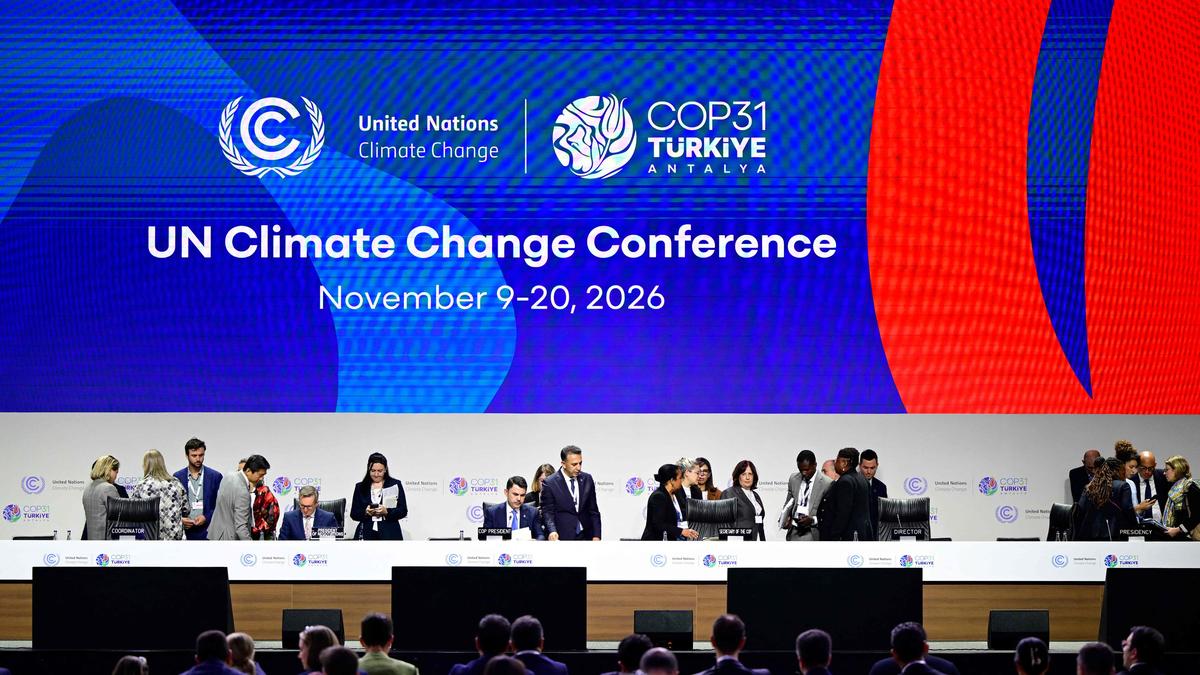
At COP31, India supported adaptation measures to reduce greenhouse gas emissions in agriculture, calling for their implementation in a nationally determined manner, respecting national priorities and food security. | Photo Credit: AFP The Antalya talks ended without a cover decision titled the Antalya pact. But the drafts show why India’s insistence on historical responsibility, climate finance, and adaptation belongs at the centre of any credible plan to cut emissions.The priorities of the CoP31 Presidency from the beginning were some signals to the world for climate action which included the target of “35 by 35 electrification”, or raising electricity’s share of global final energy consumption to 35% by 2035. A percentage can make climate diplomacy look deceptively simple. But without a nuance to the conversation, it is difficult to grasp what it takes to, for example, electrify a factory where the grid is unreliable, or to make electric cooking affordable for a low-income household.Given the different starting points for different nations, the same global percentage can look starkly different. India’s nuanced approach brought those differentiations which ensue directly from the Convention and its Paris Agreement back to the centre of the conversation. As Parties worked through the various iterations of what came to be called the draft Antalya pact, the contextualisation within the finance, technology, and different capacities of countries to deliver it came front and centre.With disproportionate focus on the Presidency-led cover text and abysmal focus on mandated agenda items, the political package eluded consensus at the closing plenary on November 22. Parties’ divergences emerged on key elements of top-down quantified targets, disregard for overshoot of 1.5 degrees Celsius, and absence of any serious consideration of adaptation needs and climate finance that is disbursed.Parties did adopt separate decisions, including on the Global Goal on Adaptation, Adaptation Fund, and Just Transition Work Programme. India’s constructive role was to provide bridging language and eventually get a text which addressed these concerns at the closing plenary. Published - November 23, 2026 09:22 pm IST
At COP31, India asked who gets to develop on a warming planet
Full Article
Original Source
Read the full article at Thehindu →KhanList aggregates and links to publicly available news content. We do not host full articles from third-party sources. Always verify important information with original sources.