
There was just one occasion when Pedro Almodovar got into trouble with a friend for turning a real event in her life into a plot point in one of his extravagantly fanciful films. She had spent a week in thrall to a Basque terrorist. “She had met this man, she didn’t know he was a terrorist,” he says equably. “He kidnapped her, more or less, for a week in her house and despite that horror, they f---ed all the time and that went very well.” At the end of the week, they emerged from the house and were both arrested; his friend spent nine months in jail.“What I found so fascinating was that she felt betrayed by him, because he had not told her he was a terrorist. I always found this comical,” he says. “So I used this in Women on the Verge of a Nervous Breakdown.” In the 1988 film, Almodovar turned the Basque terrorist into a Shiite and his friend into a naive model called Candida; nobody, he says, would ever have recognised her.Of course, she recognised herself. He thought she should find it healing. “I said: ‘I took all the bitterness of this really terrible event out of it and turned into something comedic!’” And yet – fairly predictably, at least to anyone other than Almodovar – she was not happy. “And she said something to me then that I used in this film: that what really upset her was that he would also recognise himself.”Leonardo Sbaraglia stands in for the director in Bitter Christmas.Sony Pictures Classics via APEvery writer, said Graham Greene, must always have a splinter of ice in the heart. Almodovar says he has always tried not to offend anyone, but the bedrock truth of the matter is obvious: the film comes first. Bitter Christmas, his new film, confronts this dilemma, which he scarcely seems to feel as a dilemma: what you can take from other people’s real lives. “The writer by nature is selfish,” Almodovar acknowledged in an interview with The Guardian. “Which makes us dangerous to the people around us.”From his frothy early films celebrating the carnivalesque atmosphere in Spain’s cities as a new generation erupted with glee from the shackles of Franco’s dictatorship, Almodovar has indefatigably mined his own life for material. His first films were immediately feted for showing a highly coloured version of a real Madrid – a gay, transvestite, dancing and snorting Madrid – that nobody had seen before.“I started working when there was a new democracy in Spain and there was a new way of living, especially among young people,” he says. “That atmosphere was very inspiring. And I was also at the centre of all that, because I was very young.”As he has grown older – he is 77 – he has retreated from clubland to more intimate reflections on the life of the artist; his work can be read as an extended autofiction. Bitter Christmas is based on his own short story, written in 2003 but not published until 2020 in a collection called The Last Dream. The film centres on a director called Elsa (Barbara Lennie), her adoring younger boyfriend Bonifacio (Patrick Criado) – a firefighter with a side-hustle as a stripper – and Elsa’s friend Patricia (Victoria Luengo), whose marriage is splintering to pieces.Almodovar often identifies with his women characters; at the outset, he thought of Elsa as the protagonist and that he was Elsa. As he worked on the script, it became clear to him that Elsa was fictional within the world of the film, a character in the process of being written into existence. Her creator is Raul (Leonardo Sbaraglia), a writer-director in his 60s with a younger lover at home and a long-suffering manager, Monica (Aitana Sanchez-Gijon).Their “real” story is told alongside that of Elsa and her coterie. But as Raul is clearly Almodovar’s avatar, we are aware of a third layer in this stack of stories – Almodovar himself, the moving finger writing them all into existence.Barbara Lennie and Victoria Luengo in Pedro Almodovar’s Bitter Christmas.Transmission FilmsWhen we meet him, Raul is grappling with writer’s block – as Almodovar has sometimes felt himself to be – which is unlocked only when Monica announces she is off to take care of an old friend, Natalia (Milena Smit), whose son has died.When Raul writes this tragedy into his script, Monica is wounded and outraged. She confronts him and he tries to sound contrite, but he isn’t letting that story go. Neither would Almodovar. “About 80 per cent of what the director says are things I would have said or have actually said,” he says.That doesn’t stop him from acknowledging Raul as “something of a villain”. As is usual in his films, the women – Elsa, Patricia and Natalia – are warm and vibrant, even when they are behaving badly.Barbara Lennie and Milena Smit play women in mourning.Transmission Films“It’s a story of various women in mourning,” says Almodovar. “You have Elsa mourning her mother, Patricia mourning her husband whom she has left, you have Natalia who has lost a young son.” Their story culminates in Lanzarote, a holiday island in the Canaries that looks like a moonscape.“Lanzarote is a volcanic island and therefore entirely black,” says Almodovar. Colour, always so crucial in his films, here becomes a metaphor. “It becomes this ideal place, especially for the women to live out their mourning. There is this one shot, a wide shot when Milena first arrives and she sees all that black sand. I said to her in my directing notes to think of that place as a good place to die. And in fact, I think Lanzarote is a good place to die.” A fractional pause as he slides down the keyboard from melodrama to irony: a quintessential Almodovar move. “It also photographs very well.”His own life, he says, has been transformed in recent years. He can’t go out dancing every night any more; around 15 years ago, he realised he had a choice to make.“I really would like to do exactly the same things that I did when I was young,” he says. “But there is a moment when you have to make a decision whether you keep on working or if you prefer that excitement. I renounced the excitement. At the beginning, you miss it. But I chose to live like a nun. And you can get excitement in writing, in creation, all that – and it’s very strong excitement. There is no time to do both. The biology is very real.”Pedro Almodovar on the set of Bitter Christmas.Sony Pictures Classics via APThat biological barrier is something he has explored before. Bitter Christmas is a kind of companion piece to Pain and Glory (2019), an overtly autobiographical piece with Anthony Banderas – once upon a time, his beautiful young muse – as an ageing director racked by such bad back pain he is afraid to take on another film. Although, says Almodovar, he knows that making films is his own best medicine.“I have discovered when I shoot, while I normally have some difficulty standing up, I can stand up for many hours,” he says. “And during the process, not before or after, all my ailments disappear. There is no physical or mental pain, but when I finish filming, the next day everything comes back – the back and all my little problems. Filming cures everything.” Art is transformative; art is transcendent. It is what he told the friend with the terrorist lover.“I tried to do something for her that film can do, which is to turn something that is tragic into something happy. And funny.” He is here to serve that power. And, at 77, he has no intention of stopping.Bitter Christmas opens in cinemas on November 26.More from the moviesRediscovered footage shows George Michael at his peakMove over Miranda Priestly, I Love Boosters has Demi MooreMarie Antoinette and the Coppola family project Sign up for our Screening Room newsletter.
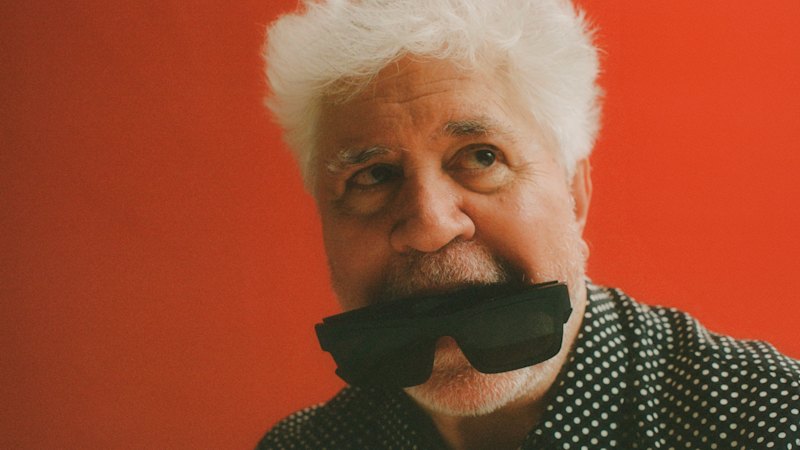
At 77, Pedro Almodovar lives ‘like a nun’. It hasn’t made him any less dangerous
Full Article
Original Source
Read the full article at Smh →KhanList aggregates and links to publicly available news content. We do not host full articles from third-party sources. Always verify important information with original sources.