
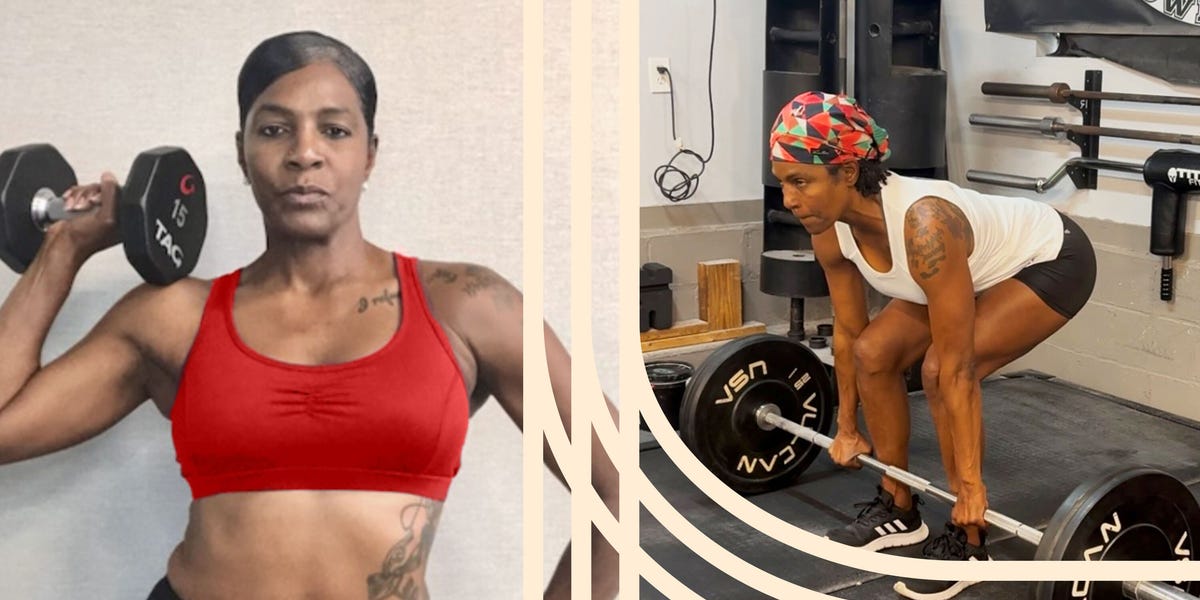
5 min readFor most of my life, exercise was primarily a way to stay physically fit—but today, it’s so much more than that. It’s become a way to take care of both my body and my mind.I served in the army for nearly 30 years, which was incredibly rigorous, but rewarding. Running, lifting weights, and structuring my workouts to meet the demands of the job became part of everyday life. However, when I returned home from my last deployment at 46 in 2012, I reached a point where I realized I needed help dealing with PTSD, anxiety, and depression. I started therapy, and my doctor suggested I reach out to the Wounded Warrior Project, a nonprofit that offers free mental and physical health services and programs to veterans.But exercise, particularly strength training, also helped me take care of myself mentally. It brought structure to my days and gave me something positive to focus on. Plus, I felt more clear-headed after working out, and having a consistent routine helped me feel grounded and in control.Over the next decade, movement continued to be medicine. I programmed my own workouts and trained five to six days a week—strength training, running, and taking long walks with my dog. But lifting with dumbbells and barbells remained the foundation of my routine. I typically split my workouts between upper- and lower-body days, performing four exercises per muscle group. This routine helped me build muscle and strength and feel my best inside and out.But I’ve always loved setting new goals. During my time in the army and in the years since, I’ve run multiple half-marathons and competed in several bodybuilding and weightlifting competitions. So, in early 2026, after a colleague told me about her experience climbing Mount Kilimanjaro, I was immediately interested. I had never climbed a mountain before, and at 60, I wanted to see if I could actually do it. It was a chance to step completely outside my comfort zone, take on something new, test my endurance, and see what I was capable of.To prepare to summit Mount Kilimanjaro, I zeroed in on long walks and lower-body strength training.Since I already had a strong foundation in strength training and running, I felt confident. With the help of my partner, who also has a military background, I created my own six-month plan where I continued training five to six days a week. The plan gradually built my endurance so I could hike for hours on end, for eight days straight, with a heavy backpack.I started by walking for one hour every day without any weight on my back on local hilly trails in Florida, where I live. From there, I steadily increased the length of my walks up to 10 hours at once, eventually with a 35-pound backpack. (I’m retired, so I have the time!)Tonya OxendineI also continued resistance training three to four days a week, with an emphasis on lower-body strength and stability to handle the mountain’s uneven terrain. I performed three sets of 12 to 15 reps of exercises like weighted step-ups, deadlifts, calf raises, and squats. As I lifted, I focused on form, control, and the mind-muscle connection—actively thinking about the muscles working during an exercise. Getting my mindset right helped me stay intentional with each movement to get the most out of every rep and progressively increase the weight.With so much time on my feet, recovery became just as important as the training itself. So, I made daily stretching and mobility work part of my routine. I also regularly worked with a physical therapist to address lingering knee and hamstring pain from my time in the army.Additionally, fueling was a key part of my preparation. I’ve generally followed a Mediterranean-style diet, focusing on whole grains, fruits, vegetables, lean proteins, fish, nuts, and legumes. But on long training days, I was more deliberate about increasing my carbohydrate intake to maintain steady energy levels, while also prioritizing protein to support muscle repair and recovery.Tonya OxendineSix months later, in July, I set out to climb Mount Kilimanjaro with a group of 14 others through Sheep Dog Impact Assistance, a nonprofit dedicated to supporting military members and veterans. I felt strong and prepared when we started, but a few days into the climb, I could tell something wasn’t right. I kept going, but on day six, once we reached 15,000 feet (with only 4,000 feet left), I learned I’d been dealing with altitude sickness and a bacterial stomach infection. I had to be medically evacuated off the mountain, and I was absolutely devastated, since I’d come so far and felt strong. But I was still so proud of myself for taking on the challenge, sticking with the training, and pushing myself farther (and higher) than I ever had before.Maybe one day, I’ll return to Kilimanjaro and give the summit another shot. But for now, I’m proud of what I accomplished and everything I learned along the way.These three factors have been key to my athletic success:1. I don’t wait to feel motivated.Motivation comes and goes, so I’ve never made it the foundation of my training. Instead, I rely on routine and discipline. After nearly 30 years in the army, I learned that you don’t always feel like doing the work—but you can still show up, and 99 percent of the time, feel better for it. That mindset has stuck with me.Tonya OxendineSome days, I’m motivated to complete an intense, structured workout; other days, I’m not, but I still show up to take a walk with my dog. For me, consistency matters more than having the perfect workout or feeling inspired every time. Sometimes the best thing you can do is simply put on your shoes and get started.2. I set big goals—but I break them down into smaller, manageable steps.When I trained for Kilimanjaro, I began walking for one hour at a time and gradually built from there. I use the same approach with strength training—if I want to hit a new PR, I focus on form, gradually increasing the weight or reps, and giving my body time to adapt along the way. This strategy helps me stay focused, keeps a daunting goal from feeling overwhelming, and gives me plenty of opportunities to recognize my progress along the way.Tonya Oxendine3. I’ve learned not to measure everything by the outcome.I pushed myself harder than ever while training to climb Mount Kilimanjaro, and truly believed I was ready. So, it was difficult to accept that I didn’t reach the peak. But now, I know that success and strength sometimes mean not necessarily reaching a goal, but knowing when to put my ego aside and stop if it’s no longer safe. One unfinished goal does not erase the work, courage, or growth that came before it. Getting sick changed the outcome—but it didn’t change the work I put in or my determination to keep moving forward.And I’m still doing exactly that. I’m continuing to strength train, preparing to run the Army Ten-Miler this fall, and recently started taking boxing classes just for fun. At 60, I’m not done finding out just what else I can accomplish.Find the Perfect Women’s Health Training Program for YouJustin SteeleRona Ahdout//Hearst OwnedAndi Breitowich is a freelance writer who covers health, fitness, relationships, beauty, and smart living. She is a graduate of Emory University and Northwestern University's Medill School of Journalism. Her work has appeared in Women's Health, POPSUGAR, Food & Wine, What To Expect, Cosmopolitan, Men's Health, and elsewhere. As a former collegiate pole vaulter, she loves all things fitness and has yet to meet a group workout class she doesn't like.
'At 60, I Trained to Climb Mount Kilimanjaro. These Exercises Helped Me Build Strength and Endurance'
Full Article
Original Source
Read the full article at Womenshealthmag →KhanList aggregates and links to publicly available news content. We do not host full articles from third-party sources. Always verify important information with original sources.