
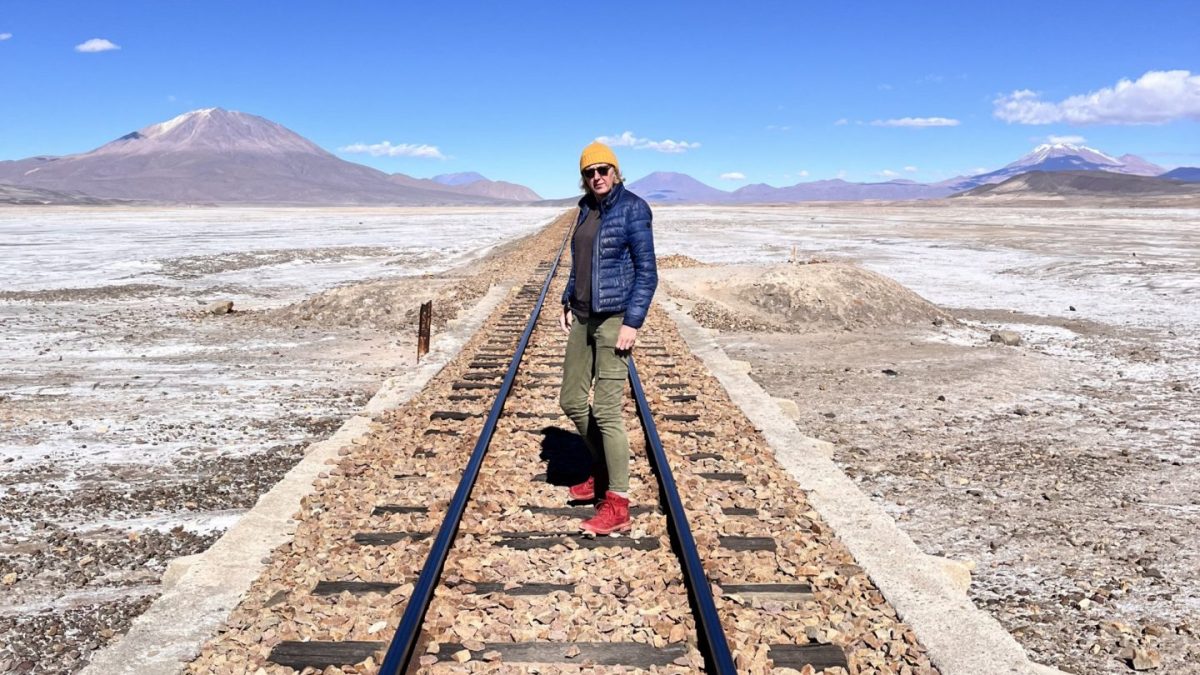
Sitting alone watching the sun rise over Lake Titicaca, the sleeping giant of the Andes glowering in the distance, I feel murmurs of my old self returning. It’s been a year since my divorce was finalised, and I’m feeling a little untethered. The last time I felt like this I was 23. Fresh out of university and overwhelmed by life’s endless possibilities, I chose to travel, winding through Asia and Australia for three glorious years. Now, at 54, with one divorce and three grown-up children under my belt, the urge is back. I don’t have the funds or freedom for a full-blown gap year, but I can get a taste of it on a whistle-stop tour of Peru, Bolivia and Chile – which have long been on my wish list. I’m one of a growing number of women choosing to travel solo in midlife. According to research by Saga, women over 50 are twice as likely to travel on their own than men. And UK travel company Intrepid says 62 per cent of its solo bookings are by women – most in the 45-60 age range. Shorts Landing in Lima, I’m thrown straight into the whirl of the Peruvian capital. Cobbled streets, ceviche vendors and pastel-hued buildings with ornate balconies buckling in the sun, it’s a vibrant introduction to South America. With eight days and three countries ahead of me, I’m calling this “gap year 2.0”. My travels in the nineties changed me. Arriving in Hong Kong and navigating a new country and culture alone, I felt my confidence grow. As I travelled around India, Australia and more of Asia solo, I became braver. I feel as adventurous as I did back then – more so, even, as I throw myself into South America.I booked with Viventura, which specialises in small-group trips of up to 12 people – the average age in my group was somewhere in the 50s. Our guide, Teresita, introduces us with a swift city tour, including a peek into the Basilica of San Francisco and its eerie catacombs, tunnels lined with centuries-old bones. Tracey enjoyed the area around Lake Titicaca Viventura prides itself on authentic local experiences, which is how I find myself sipping a pisco sour in the Miraflores home of Laura and Ricardo. With Raul Garcia crooning on vinyl, we eat calamari ceviche and causa – layers of mashed potato, avocado and langoustine – while chatting about life in Lima. Bolstered by pisco, I’m tempted by the Miraflores nightlife, but with an early flight ahead I decide to be responsible. After landing in Juliaca, we drive towards the Bolivian border and Copacabana. I rest my head against the window and watch life unfold: the tuk-tuks buzzing along dusty roads, cholitas (Andean women) in bowler hats selling popcorn and papaya, the occasional backpacker in a poncho. This is what I’ve missed. Copacabana reminds me of the waterside towns in Lake Toba, Indonesia. Dusty streets with shops selling alpaca jumpers and fake football shirts, low-key bars with faded Pepsi signs where sun-kissed travellers relax with iced coffee or beer. Spotting someone in tie-dye, I’m transported back to Thailand in 1996, when I lived in those unflattering Thai fisherman trousers. The colorful buildings ofo La Paz (Photo: February/Getty) After a night on Isla del Sol, where a local shaman performs a ritual to the Inca gods and blesses me with his cool, crepey hands, we’re back on the road to La Paz. Delayed by protesters and road blockades, sparked by a controversial land law that’s since been repealed, we finally arrive at dawn. Almost immediately, I’m swept up in the chaos of the Bolivian capital. Perhaps it’s the altitude, but everything feels heightened: horns blaring, stalls selling everything from avocados to lighters, shoeshiners grinning up from the pavement. My younger self would have dived straight in, now I’m grateful for our guide, Julio, who shepherds us through the chaos. Having missed breakfast, I grab a salteña – Bolivia’s take on a Cornish pasty – and follow Julio through the streets, stopping to gaze at cholita dress shops, and a potter around the Mercado de las Brujas, the witches’ market which sells curious ingredients such as dried snakes, aphrodisiac herbs and llama foetuses for spells and rituals. Later, we ride Mi Teleférico, the world’s largest cable car system, linking La Paz with twin city El Alto, which offers a condor’s-eye view of the city. Here, we’re introduced to Don Raul, another shaman who reads my fortune using coca leaves. Holding my hand in his, he grins and suggests marriage is in my future, which, with respect, I sincerely hope not. Flamingos feeding in a salt lake in Salar de Uyuni (Photo: Wildnerdpix/Getty) Back in La Paz, we catch up with Teresita and bag front row seats to the cholitas wrestling, where hard-as-nails Indigenous women dressed in traditional polleras (full skirts) slam-dunk each other to a hollering crowd. It started in early 2000s as a form of activism to draw attention to the domestic violence rife in local communities. Now, these formidable cholita luchadores are seen as feminist icons, drawing both locals and tourists to their matches. I could happily linger in La Paz, but it’s time to fly across the Altiplano, the plateau dividing the eastern and western flanks of the Andes. We land in Uyuni, a dusty desert town and the gateway to Salar de Uyuni. Stretching over 4,000 square miles, the world’s largest salt flat is vast, blindingly white and almost surreal. Formed by prehistoric lakes that evaporated long ago, it becomes a giant mirror in the rainy season and nothing could have prepared me for the beauty of it. Tracey in San Pedro de Atamaca Over three days, our 4×4 travels more than 500 miles across the stark landscape. We pass flamingo-filled lagoons, lakes tinted pink by algae, steaming geysers and smoking volcanos. I feel a million miles from home, revelling in the wild, the new and the unknown. Crossing the border into Chile, our final stop is San Pedro de Atacama, a bohemian desert town and the gateway to Valley of the Moon, one of the driest places on Earth. Staring out across its cratered, lunar-like terrain, I feel as insignificant as a grain of sand, yet mighty as a meteorite. Like it did in my twenties, travelling has infused and energised me and I return home ready to fully embrace my new chapter, whatever that turns out to be. Booking it The writer was a guest of Viventura, which offers a 23-day Andean Trilogy tour of Peru, Bolivia and Chile from £2,599pp. Includes accommodation, internal travel and excursions. Flights extra. viventura.co.uk; lata.travel
At 54, a post-divorce gap year in South America took me back to my 20s
Full Article
Original Source
Read the full article at Inews →KhanList aggregates and links to publicly available news content. We do not host full articles from third-party sources. Always verify important information with original sources.