
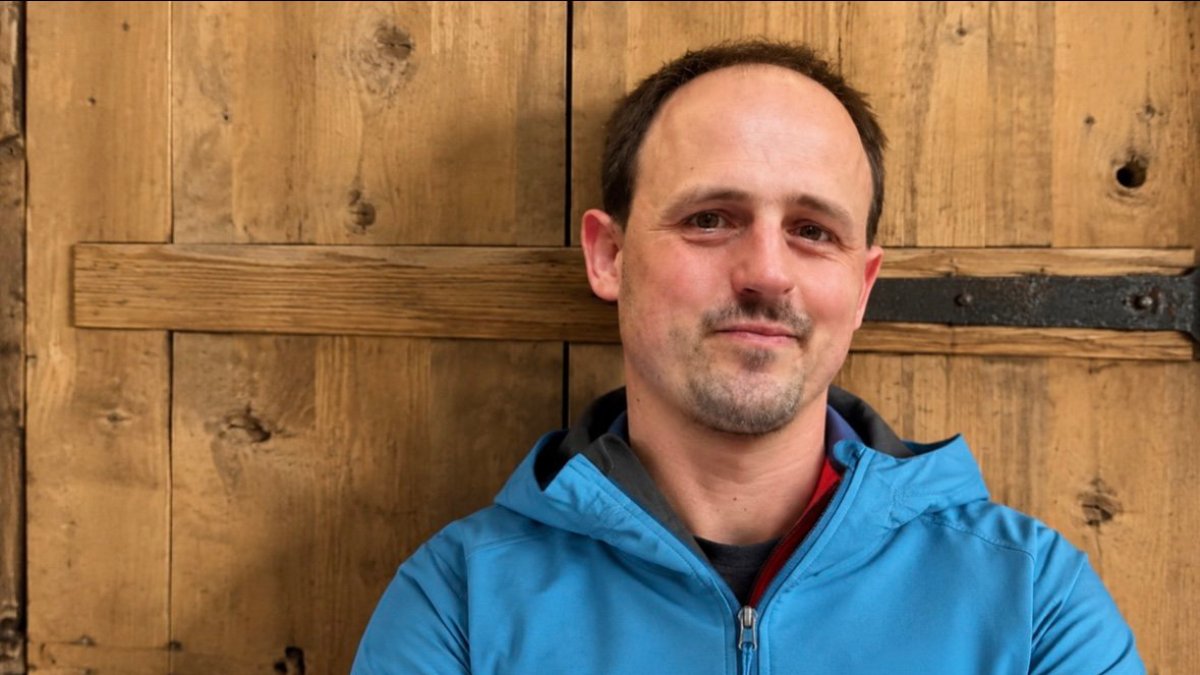
Workers aged 50 and over account for roughly one-third of all people in the UK workforce, with many considering the prospect of working well into their sixties. As a result, an increasing number is looking to retrain in midlife. A study by YouGov for Now Teach found that 20 per cent of Britons over 40 have switched careers in the past five years, and another 23 per cent are openly considering a change. At 50, Andy Greig, from West Sussex, gave up a stable career as an accountant to retrain as a plumber. Here, he explains what prompted the career change and his regrets about not leaving his old job sooner. At 51, I found myself handing tools to my brother-in-law Nick and watching closely as he worked under a customer’s sink. A year earlier, in November 2024, I quit my job as an accountant to retrain as a plumber, and I was now his apprentice. As my knees creaked as I knelt to get a closer look, I wondered if I’d made the right choice.I’d given up a dependable £45,000 salary a year, along with a job I knew inside out, to become the person who needed everything explained to them. But I’d reached the point where staying put frightened me more than leaving. There was no one awful day that made me leave. It was more a growing sense that I was spending my working week counting down to the weekend. I was in the office four days a week, and a two-hour daily commute was draining any energy I had. I could do my job without much thought, and I appreciated the security. Still, I struggled with the idea of carrying on until retirement simply because it was the sensible option. Shorts I also thought about AI making my job obsolete. In the year before I quit, the firm I worked for added more tools to make our lives easier, allegedly, but these tools really seemed to take away entry-level tasks. It felt like only a matter of time before jobs started to go, as AI tools became more sophisticated. I kept thinking about how many working years I might have left. Did I really want to spend them with the threat of potential redundancy hanging over me? I’d always enjoyed practical work around the house and loved teaching myself new DIY skills. Plumbing appealed because I liked solving problems and being able to see a tangible result. I married into a family of tradespeople; my father-in-law was an electrician, and my wife’s brother Nick has been a plumber since he was 19, so I had someone who could tell me honestly what the work involved. That helped enormously. I knew about the difficult days, demanding customers, the physicality of the job, and, of course, the messy side. There’s a lot less faecal matter in accounting, that’s for sure. When I told my wife I was thinking of quitting my job to start plumber training, I was surprised at how supportive she was. At first, I thought she’d tell me to grow up, or that I was having some sort of a midlife crisis! She’d seen her brother thrive in his plumbing career, and told me to go for it. She has a great civil service job that would be enough to support us during the retraining period, and we had some savings to tide us over while I undertook unpaid work to gain experience. I signed up for a plumbing training NVQ course through a City and Guilds training provider, and drained almost £6,000 from our savings in the process. I was lucky that I had access to practical opportunities through Nick’s company, because you can’t pass all your assessments without building a portfolio of evidence of practical, on-the-job assignments. I’d done lots of training in my previous career, but learning something completely new was daunting. On the first day, some of the other students mistook me for the instructor, who was at least 20 years my junior. There was a lot to take in; sometimes I grasped something straight away, and other times I needed to practise it repeatedly. Nick allowed me to work alongside him, and I am incredibly grateful. For the first six months, I worked unpaid while I trained. I was incredibly lucky to have the family connection, because older apprentices find it difficult to get work. If you hire a young apprentice, the hourly rate can be as little as £8 an hour, but as I was over 21, this was the minimum wage of £12.71 an hour. With profit margins squeezed more than ever, you can understand why so many businesses wouldn’t take on people who cost more. I went into the apprenticeship knowing I was there to learn. I helped carry equipment, fetched tools, watched how jobs were approached, and gradually took on tasks under supervision. Even being useful took practice. There’s a difference between knowing a tool’s name and finding the right one quickly when someone needs it. The financial change has been considerable. I’ve gone from unpaid work experience to earning minimum wage. That’s progress, but it’s still a world away from the dependable income I had before. My wife and I haven’t been on holiday since I left my old job, but we’re still managing to pay our bills, despite the rising cost of living. That’s one of my regrets about starting at my age: I will never be able to earn huge figures, because by the time I build up the years of experience to justify a great wage, I will be nearing retirement.But I really enjoy what I am doing now, and I couldn’t have said the same about my previous job for many years. Nick has said I can stay with his company as long as I like, which is great, because I’m not confident enough to strike out on my own. I will say that the physical work has taken some getting used to. Kneeling, carrying equipment and working in cramped spaces leave me tired in a way sitting at a desk never did. I’m finding muscles I never knew I had! I have since ditched the two-hour commute and work 35 hours a week instead of 40. Gradually, I’m becoming more useful and more confident. Tasks that once needed constant guidance are starting to feel familiar. I still ask plenty of questions, but I can see that I’m improving. I do miss aspects of my old job, particularly the salary and the comfort of being experienced. Starting again hasn’t been easy, but I enjoy learning the trade. When we finish a job and everything works as it should, I feel a strong sense of achievement.At almost 52, being on a minimum wage may look like going backwards. To me, being interested in my working life again makes it feel worthwhile.
At 50, I quit accountancy to retrain as a plumber – I took a pay cut but it was worth it
Full Article
Original Source
Read the full article at Inews →KhanList aggregates and links to publicly available news content. We do not host full articles from third-party sources. Always verify important information with original sources.