
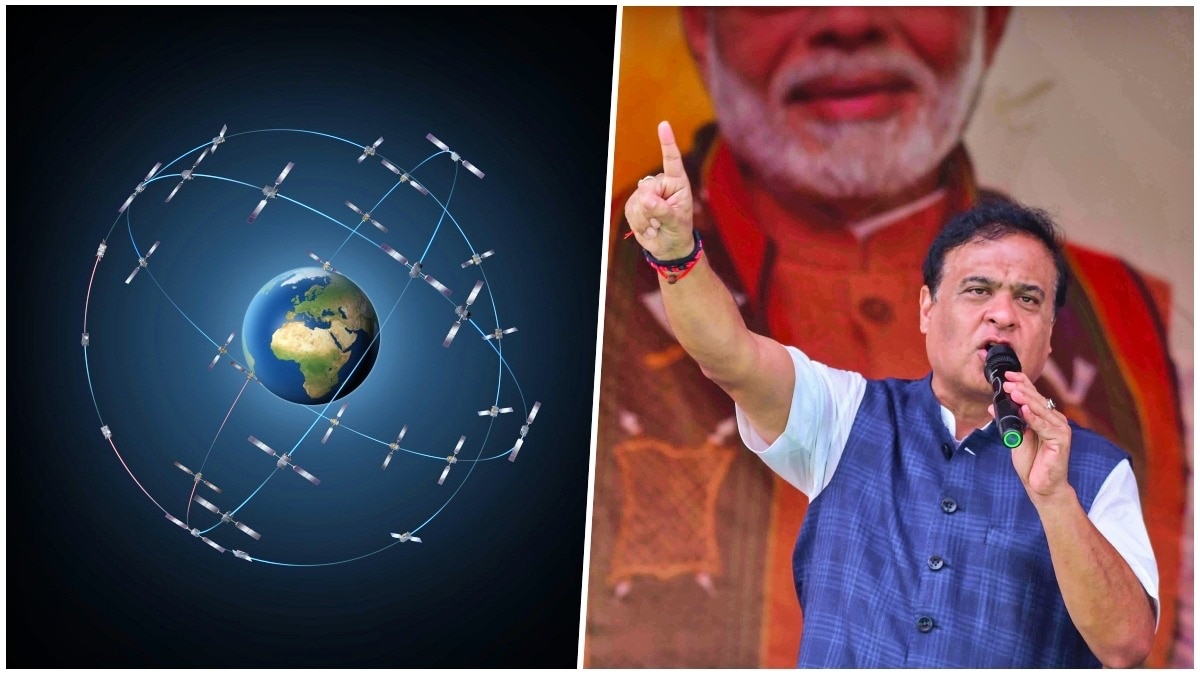
Chief Minister Himanta Biswa Sarma outlined Assam's plan for a dedicated satellite constellation. The project aims to cut data costs and strengthen disaster management, environmental protection and governance.The state is projecting that the satellite network could generate around Rs 900 crore in revenue over five years. (Photo: PTI)New Delhi,Nov 23, 2026 11:32 ISTAssam wants to build its own dedicated satellite constellation to monitor floods, track riverbank erosion, protect forests and improve governance, Chief Minister Himanta Biswa Sarma has said, outlining the state's ambitious AssamSAT project.The proposed satellite network is aimed at reducing Assam's dependence on commercially procured satellite imagery while creating a dedicated space-based monitoring system tailored to the state's geographical and administrative requirements.Explaining the rationale behind the initiative, Sarma highlighted the financial and operational advantages of having an independent satellite-data infrastructure. According to the projections shared by the state government, Assam currently spends around Rs 1,775 crore over five years on procuring satellite data and related services.In comparison, the proposed AssamSAT constellation is expected to cost approximately Rs 600 crore, potentially reducing expenditure by nearly 66 per cent. The state is also projecting that the satellite network could generate around Rs 900 crore in revenue over five years through the sale of satellite imagery, data and associated services.WHY ASSAM NEEDS ITS OWN SATELLITESAssam's geography makes satellite-based monitoring particularly important. The state experiences recurring floods, extensive riverbank erosion along the Brahmaputra and its tributaries, forest degradation and rapid changes in land use. A dedicated satellite constellation could help authorities monitor flood inundation, identify vulnerable riverbanks, assess agricultural conditions, track encroachment and map infrastructure development."Can Assam do it?” “Why does Assam need it?” Our proposed satellite constellation prompted plenty of questions. Fair enough. Space technology should prove its worth here on Earth, in people’s lives. Here’s how we intend to do that. PS: Keep an eye on 2027 https://t.co/PIXKNXhVNJ— Himanta Biswa Sarma (@himantabiswa) November 22, 2026The technology could also strengthen disaster-management operations by providing more frequent observations of affected areas, helping officials make quicker decisions during emergencies.The proposed constellation would operate in low Earth orbit (LEO), with multiple satellites observing the same geographical region at different intervals. This could offer more frequent coverage than relying on individual satellites.One important technological consideration will be the type of imaging instruments deployed. Synthetic Aperture Radar (SAR), for instance, can observe the Earth's surface through cloud cover and during nighttime, making it particularly useful for monitoring floods during Assam's monsoon season.However, the final sensor configuration and technical specifications have not yet been publicly established.PRIVATE COMPANIES TO BUILD ASSAMSATThe Assam government is pursuing a public-private partnership model under which private Indian space companies will design, build, launch and operate the satellites before transferring the capability to the state.The initiative follows a competitive selection process involving 11 Indian space companies. The government has indicated an ambitious timeline, targeting execution by mid-2027.If successful, AssamSAT could become an important example of how state governments can use India's growing private space ecosystem to develop dedicated satellite infrastructure.Beyond the technology, the project signals a shift in how governments approach space-based services, with satellite data increasingly being viewed as essential infrastructure for disaster management, environmental protection and economic planning.- Ends
Assam CM explains why the state needs Rs 600 crore satellite constellation
Full Article
Original Source
Read the full article at Indiatoday →KhanList aggregates and links to publicly available news content. We do not host full articles from third-party sources. Always verify important information with original sources.