
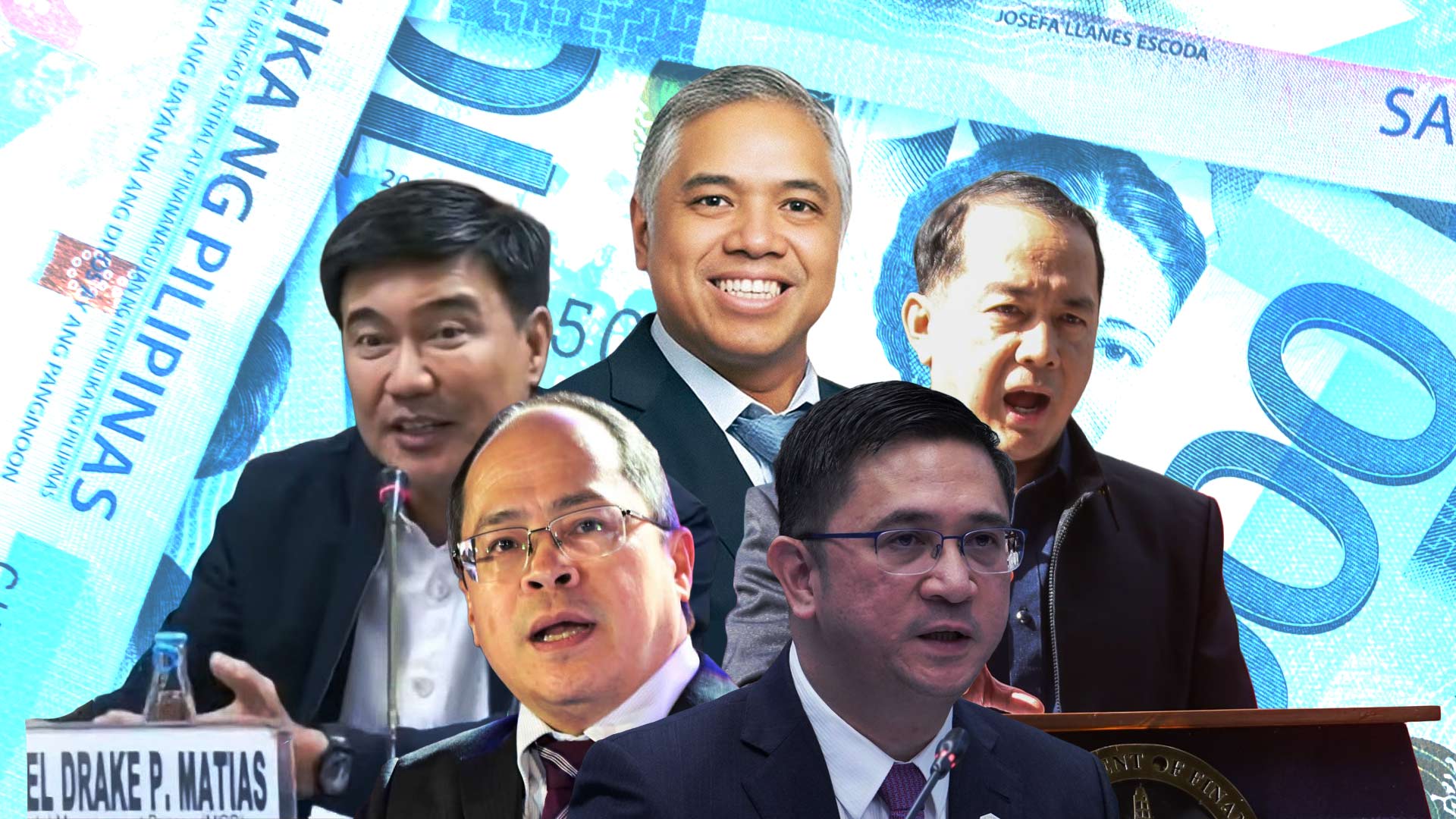
With foreign direct investment falling 19.2% and ASEAN leaders gathering in Manila, the reshuffle of key economic agencies raises a timely question: Will new leadership strengthen reforms and investor confidence—or disrupt progress when the economy can least afford it? Global investors are not surprised when governments change agency heads. They worry when the rules, services, and reforms they depend on change with them. President Ferdinand Marcos Jr. has every right to reshuffle his economic team. New appointments may bring fresh ideas. But presidential prerogative answers who has the authority—not what economic problem the reshuffle is meant to solve. And the timing deserves explanation. Philippine growth slowed to 2.1% in the third quarter, its weakest non-pandemic pace since 2009. Net foreign direct investment fell 19.2% to $4.77 billion in January–August. Meanwhile, Manila is hosting ASEAN leaders, presenting the Philippines as a destination for global capital. If there is a moment to demonstrate regulatory stability, this is it. Under Director General Tereso “Theo” Panga, the Philippine Economic Zone Authority (PEZA) approved a record ₱315.5 billion in investments by November 10; January–October approvals rose 76.6%. Under Joshua Bingcang, the Bases Conversion and Development Authority (BCDA) recorded ₱145.46 billion in approved investments in the first nine months, up 142.5%. Approvals are commitments, not realized FDI. Still, they are investment pipelines worth converting into factories, exports, and jobs. Having joined Panga on investment missions across Asia, Europe, and Australia, I witnessed his reform-driven leadership firsthand. PEZA’s one-stop-shop services and signature red-carpet treatment extend beyond registration, supporting locators through regulatory compliance and investor aftercare while addressing VAT refunds, unpredictable tax audits, and costly delays. That is how investor confidence is earned—one problem resolved at a time. Our proposal to modernize PEZA’s charter would institutionalize these services through integrated digital permits, enforceable processing deadlines, and effective investor grievance resolution. Investment promotion attracts capital. Investor aftercare keeps it. So why move Bingcang to PEZA and Panga to the Toll Regulatory Board? Was an exchange between PEZA and BCDA considered? What measurable improvements would justify the chosen arrangement? At Customs, Ariel Nepomuceno’s bureau collected ₱853.66 billion in January–October, ₱7.14 billion above target. During his tenure, it reported ₱50.93 billion in seizures of illicit goods. Seizures are not recovered revenues, nor do collection figures prove corruption has disappeared. But these results deserve evaluation alongside ongoing modernization reforms. I joined Nepomuceno at the Ease of Doing Business Economic Briefing, International IT-BPM Summit, and industry dialogues. I witnessed how he addressed complaints about bureaucratic delays, corruption risks, and cross-border compliance costs. He acknowledged institutional shortcomings while consistently pursuing practical improvements through digitalization, transparency, and stakeholder engagement. When I proposed an independent, digitally integrated National Revenue Authority combining BIR and Customs, he welcomed constructive dialogue. Such reform could integrate revenue intelligence, institutionalize AI-assisted risk-based enforcement, strengthen anti-smuggling efforts, and protect compliant taxpayers from unnecessary costs and arbitrary audits. Why reassign Nepomuceno to BCDA while moving BIR Commissioner Charlito Mendoza to Customs when both revenue agencies were implementing modernization programs? How will their successors preserve institutional progress? Questions for new BIR chief New BIR Commissioner Rolando Ligon Jr. faces equally consequential questions. Will BIR pursue unexplained wealth involving politically exposed persons, including politicians and political dynasties, where evidence warrants investigation? Will it clarify the collection status of the longstanding Marcos estate-tax assessment, including available legal remedies and disputed prescription issues? (READ: [ANALYSIS] The estate tax liability of the Marcos Estate) Tax enforcement should never depend on a taxpayer’s surname, wealth, or political connections. Malacañang assures the public that reforms will continue. I welcome that assurance. But Finance Secretary Frederick Go and Trade Secretary Cristina Roque should go further: explain the reshuffle’s strategic rationale and establish measurable targets for investment realization, customs clearance, VAT refunds, revenue integrity, and taxpayer services. With global minimum tax rules reshaping investment incentives, efficient administration matters even more. I am not suggesting that performing officials must remain indefinitely—or that their successors cannot deliver better results. The question is how the administration will demonstrate that these leadership changes actually improve economic performance. If officials serve at the President’s pleasure, economic policy must still serve the public interest. Ultimately, the world will judge the Philippines not by who occupies government offices, but by whether doing business becomes easier, taxes are collected fairly, and investment commitments become real jobs. – Rappler.com Mon Abrea, CPA, MBA, MPA (Harvard) is a global tax policy expert and Chief Tax Advisor of Asian Consulting Group (ACGlobal), an international tax and investment advisory firm. He advises governments, multinational enterprises, and international organizations on tax policy, investment competitiveness, and fiscal reform. He is the author of Reimagining the World Without Corruption and Why Invest in the Philippines? CREATE MORE Edition, and has represented the Philippines in policy dialogues at the OECD, World Bank, and other international forums. Below are some Ask the Tax Whiz columns you might have missed:
[Ask the Tax Whiz] As PH growth slumps, what will Marcos’ economic reshuffle do?
Full Article
Original Source
Read the full article at Rappler →KhanList aggregates and links to publicly available news content. We do not host full articles from third-party sources. Always verify important information with original sources.