
In 1967, Arab strongman Gamal Abdel Nasser made an extraordinary confession to the US ambassador in Cairo. “I sent a company to Yemen (around 200 soldiers) and ended up reinforcing it with 70,000 troops.” Egypt sent in fighter jets, tanks and nearly a third of its military to fight a civil war in Yemen against Saudi-backed forces, and failed.Nearly six decades later, Field Marshal Asim Munir is studying ‘Egypt’s Vietnam’. His ally Saudi Arabia is facing the gravest security crisis since Saddam Hussein’s 1990 annexation of Kuwait. Riyadh airport has been struck not once but twice by ballistic missiles fired by the Yemen-based Houthi rebels.The Houthis have paralysed Saudi oil supplies using drone and missile attacks. The rebels captured all of Yemen’s Red Sea coastline through a lightning ground offensive in early September and have declared a maritime blockade on the Bab el-Mandeb Strait, through which Saudi Arabia exports a bulk of its oil. Donald Trump, focused on the standoff with Iran, has declined to help Riyadh. Trump has his own worries—his approval ratings are at their lowest yet, at 29 per cent, with crucial midterm elections less than a month away.Munir heads the largest army in the Islamic world—over 600,000 soldiers—and is obligated to help Saudi Arabia through not one but two mutual defence agreements—the bilateral Strategic Mutual Defence Agreement signed in September 2025 and the tripartite Makkah Defence Agreement (MDA), which includes Turkiye, signed on August 7 this year. A key pillar of the MDA is a resolution treating ‘an armed attack on one as an attack on all’ might have seemed like a faraway scenario at the time, but now demands urgent action with the Houthi attacks on Saudi Arabia. After a month of flip-flops, on October 5, MDA partners Turkiye and Pakistan resolved to deploy troops to Saudi Arabia. Pakistan already has a squadron of fighter jets as part of the 2025 agreement. A New York Times (NYT) report on October 7 quoted Pakistani military officials as confirming Pakistan Air Force (PAF) strikes on the Houthis. It also quoted US military veteran David O. Smith as saying 8,000 Pakistani troops had already been deployed to Saudi Arabia. Pakistan’s information ministry termed the NYT report ‘fake and fabricated’ and termed as speculative a Reuters report that Pakistan would deploy 30,000 to 40,000 troops (around two infantry divisions).“Pakistan already has a substantial number of forces as well as resources in Riyadh. It is now up to the organisation to assess the threat perception and operate in accordance with its own mandate,” Islamabad’s foreign ministry spokesperson Sajjad Haider Khan said on October 9. Munir is facing serious internal troubles of his own. Pakistan is wracked by its worst insurgency in over a decade, with simultaneous insurrections in Balochistan and Khyber Pakhtunkhwa (KP), civil unrest in Pakistan Occupied Kashmir and mass protests by supporters of jailed former PM Imran Khan. On October 11, Pakistan’s federal government suspended the provincial government in KP and imposed an emergency. Pakistan’s economic quagmire, with high food and fuel prices, means it relies on IMF handouts for survival. It is sandwiched between two hostile neighbours, Afghanistan and India, both of whom accuse Pakistan of sheltering terrorists.In Riyadh, Munir faces an impatient Prince Mohammed bin Salman, the de facto ruler of Saudi Arabia, whose Saudi Vision 2030, which aims to transform Saudi society and the economy, is being chipped away at one attack at a time by the Houthis. Munir, the most powerful military figure in Pakistan’s history—who commands all three forces until 2030 and holds lifetime rank and immunity from prosecution—also needs Saudi aid to secure himself.In April 2026, Saudi Arabia and Qatar provided Pakistan with a $5 billion lifeline. But there are no free lunches. In 2015, Pakistan-Saudi ties hit a nadir when Islamabad declined to deploy troops to Yemen. Pakistan’s Parliament chose neutrality, promising to intervene only if its territory or the two holy sites at Mecca and Medina were under threat.A decade later, Munir needs no such parliamentary oversight. His October 8 agreement to deploy more forces to Saudi Arabia came without a parliamentary vote. It is not known how many fresh Pakistani troops have been deployed in Saudi Arabia. Munir has reason not to make these numbers public because he risks angering Iran, the main backer of the Houthis.On October 4, Iranian foreign ministry spokesperson Esmaeil Baghaei hoped the rumours of Pakistan military deployment were not true and warned that ‘any new intervention would only make the situation more complicated’.An October 11 Al Jazeera report quoted the Houthis as warning that ‘if Pakistan engages in any military activities against them on behalf of Saudi Arabia, then they will be treated in the same fashion as the Saudis are currently being dealt with’. The Houthis could, in theory, attack mainland Pakistan using a Palestine-2 ballistic missile with a range of 2,000 kilometres and the Shahed-136 kamikaze drone, with a range of 2,500 kilometres.They could choose proximate targets such as Pakistani merchant shipping in the Arabian Sea and Persian Gulf. The bigger worry for Munir is an unending quagmire, with Pakistani troops sucked in for a prolonged deployment, and particularly, what Yemen did to Nasser.In the 1960s, Nasser was at the peak of his form. He was the most popular leader in the Arab world—he had ejected the British from the Suez Canal and nationalised it, championed Arab unity and vied for leadership of the Third World with Jawaharlal Nehru.Nasser’s legacy was destroyed by the tenacious guerrillas hiding in the mountains of North Yemen. The war in Yemen cost billions of dollars, killed over 10,000 Egyptian soldiers and bankrupted the economy.Nasser’s weakened military lost the 1967 war against Israel, and the strongman died of a heart attack three years later, aged 52. Munir, a man of much smaller accomplishments than Nasser, would likely heed this warning from Yemen.- Ends
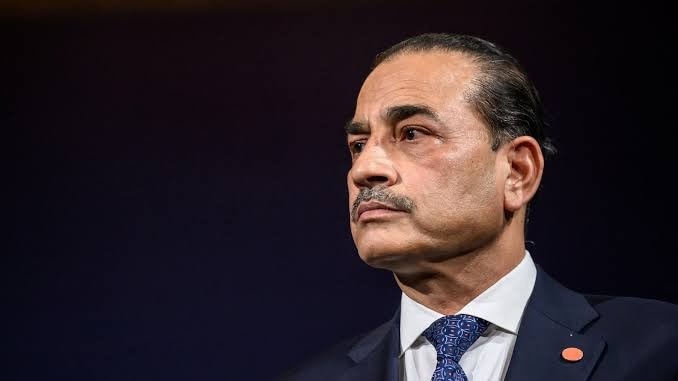
Asim Munir's Nasser-ian dilemma
Full Article
Original Source
Read the full article at Indiatoday →KhanList aggregates and links to publicly available news content. We do not host full articles from third-party sources. Always verify important information with original sources.