
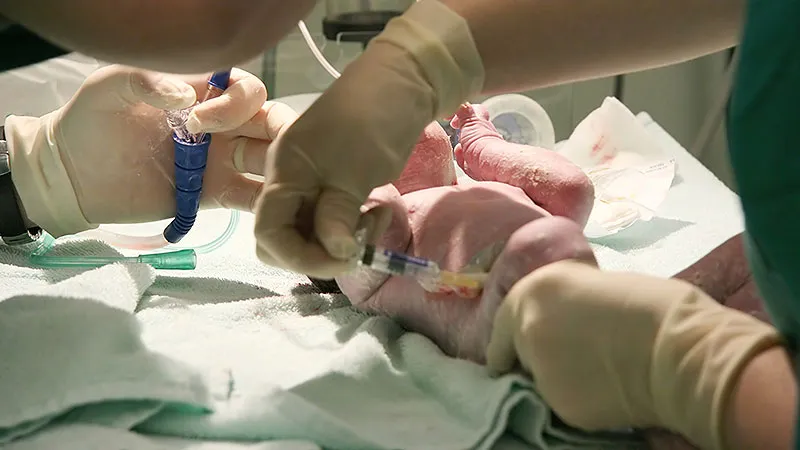
Babies who did not receive a vitamin K shot at birth were more than twice as likely to experience intracranial bleeding and death shortly after birth, according to a recent study published in JAMA. Previous research has shown rates of refusal for vitamin K by parents have risen over the past decade. For clinicians, the findings underscore the importance of educating parents about the value of vitamin K and its ability to prevent babies from suffering life-threatening bleeds within their first months of life. "Before the baby's born, after the baby's born, whether it's the obstetrician, the pediatrician, the neonatologist — it really is a group effort," to educate parents on the risks of not administering the vitamin K shot, said Kristan Scott, MD, a neonatologist at Children's Healthcare of Atlanta, who helped lead the study. "We don't know which babies are going to have bleeds, but we do know that babies that do not get vitamin K are at increased risk of bleeding." Vitamin K shots have been recommended by the American Academy of Pediatrics since 1961. The shot is usually administered within the first 6 hours following birth. The study included more than 5 million infants (50.9% male) born between 2017 and 2025 across the United States. Hospital codes pulled from the Cosmos dataset were used to analyze the association between receipt of the shot and vitamin K deficiency and bleeding. Rates of vitamin K refusal rose from 3.1% in 2017 to 6.8% in 2025. Newborns who did not receive the shot were more than twice as likely to experience intracranial bleeding and associated death while in the hospital compared with those who received the intervention. Even after infants were discharged home, risk remained elevated. Over the first 6 months of life, infants who did not receive the shot were still twice as likely to experience brain bleeding (adjusted risk ratio, 2.73; 95% CI, 2.20-3.39). In a research letter in JAMA Pediatrics, similar data were observed. Among babies who developed vitamin K deficiency bleeding, 80.8% had not received the shot. Similarly, among infants diagnosed with vitamin K deficiency, 60.3% had not received the shot. The numbers indicate that even in infants who received vitamin K, rates of bleeding and deficiency increased, said Heather Burris, MD, a neonatologist at Children's Hospital of Philadelphia, who co-authored the first study. "We don't know why bleeding overall is going up. Maybe we're just doing a better job of recording this and coding this, or babies are maybe a little sicker now than they used to be, their parents are a little sicker, or they're on different medications — we don't know," she said. Some of the hesitancy around vitamin K stems from a desire to have a natural birth experience, Burris said. "This goal to be natural and to avoid overmedicalization is understandable," Burris said. But "vitamin K is just that — it's a vitamin — and it's a lot less unnatural than all the things we would need to do for a baby after a bad bleed." Clinicians should discuss the importance of vitamin K during prenatal care, during a pediatric visit prior to birth, and in the hospital before and after delivery, wrote Laura R. Kair, MD, MAS, a professor of pediatrics at the UC Davis School of Medicine in Sacramento, California, and colleagues, in an editorial accompanying the studies. For "the small but growing number of parents who decline vitamin K, conveying the risks of nonreceipt can pose a significant communication challenge," Kair and colleagues wrote. "Refusal of vitamin K has real world consequences, including bleeding, and some of those bleeding episodes will go on to be stroke," said Elizabeth Wolf, MD, a pediatrician at VCU Health in Richmond, Virginia, who led the second study. The first study was funded by a grant from the National Institute of Child Health and Human Development. Various study authors reported receiving grants and personal fees from Pfizer and the National Institutes of Health outside the submitted work. No other disclosures were reported. Kelsey Mesmer, PhD, is a freelance journalist and journalism professor at Saint Louis University in St. Louis.
As Parents Reject Vitamin K, Deadly Infant Bleeds Rise
Full Article
Original Source
Read the full article at Medscape →KhanList aggregates and links to publicly available news content. We do not host full articles from third-party sources. Always verify important information with original sources.