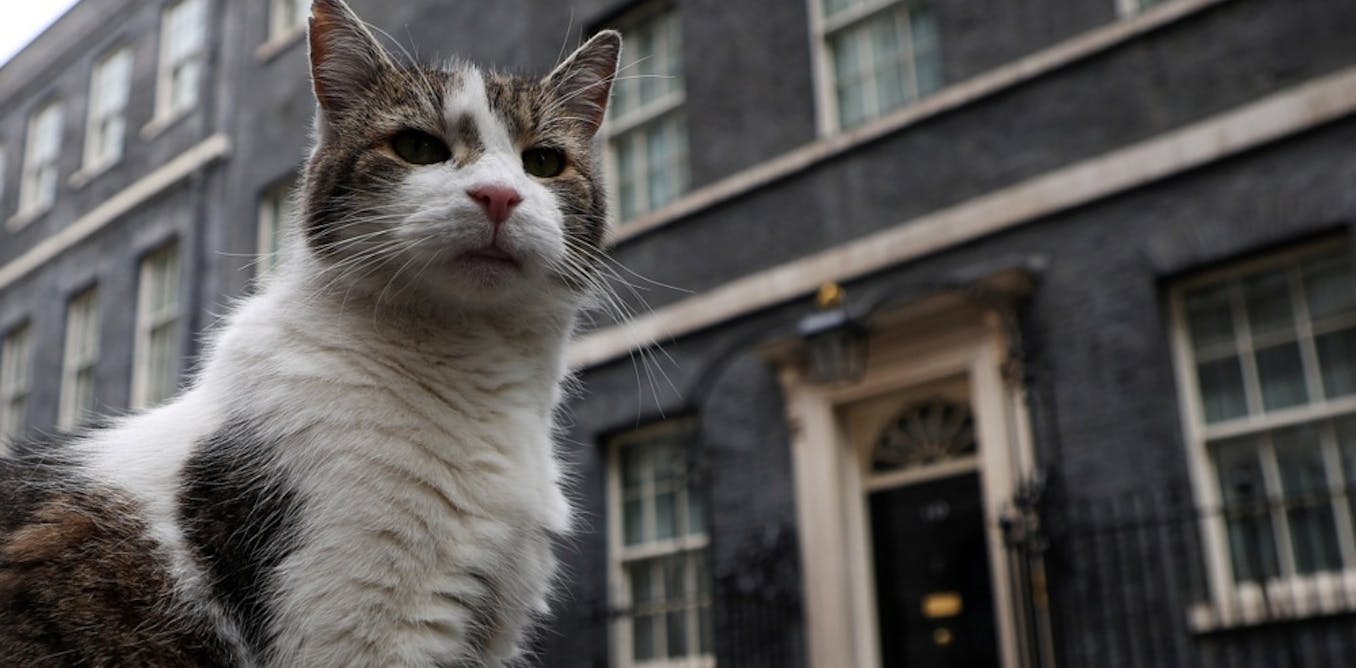
Larry, the Downing Street cat, has had to adapt to seven different prime ministers moving into No 10 over the past decade. Yet while the nation’s attention is fixed on the departing and incoming political leaders, who is thinking about the effect these upheavals might have on one of the property’s most enduring residents? Cats thrive on predictability and the consistency of their environment is important for their welfare. On the whole cats prefer an unchanging environment. Some cats cope with change better than others. Many cats are distressed by disturbances such as moving house, changes in familiar routines, people moving into or leaving the household, or even changes to the scent of their home environment. Unlike dogs, cats aren’t obligate social species, therefore may not have such a strong proclivity to form social attachments. However, in certain situations domestic cats can be found living in social groups, particularly in environments with a plentiful food supply. Some cats enjoy the company of people, while others prefer a more solitary life. This is determined partly by their early experiences. A young kitten that learns in the early weeks of their life that contact with people is associated with nice experiences is more likely to seek social interactions with people as an adult. Kittens raised by mothers who show friendly behaviour towards people can learn to value human company through the process of social learning. Genetics also influence a cats friendliness towards people. Researchers in a 1995 study found that the kittens of friendlier fathers were more likely to show friendly behaviour towards unfamiliar people even if they weren’t socialised as a new kitten. Some cats appear to suffer when separated from their caregivers, although some researchers question whether this can be described as a secure attachment (one that is necessary to maintain feelings of safety and security in threatening situations). Researchers have identified five different forms of cat-owner relationship, based on the level of emotional investment of the owner, the way the cat relates to others, their aloofness and their need to be in close proximity to their owner. These types range from open relationships (characterised by a lightly emotionally invested owner and an avoidant cat) to casual relationships, co-dependence and friendship. Although the Starmer family has moved out and the Burnhams have taken up residence, Larry’s main caretakers are civil servants, so his day-to-day care won’t change. Larry’s behaviour in recent days (strutting along Downing Street, nonplussed by the comings and goings and embarking on a successful hunting expedition) suggests that he takes such changes in cohabitants in his stride. You just try and come for his job. EPA/NEIL HALL Other animals The new prime minister has a dog called Axel, and although cats and dogs can live together harmoniously and even form close bonds, integrating Axel into Larry’s home might cause tensions if not handled well. However, not even the prime minster would dare to disturb Larry’s position as chief mouser. Andy Burnham has told the BBC he’s not bringing Axel to London with him because he doesn’t think the two animals will get on. If he changes his mind there are a few things he could do to help Axel and Larry get along. Introducing a dog into a household with a cat should be done gradually, with the aim to prevent any chasing or aggression between the pets. Before the dog arrives, settle the cat into a safe space, which the dog won’t have access to. This might be a bedroom, bathroom or any part of the house that the cat likes to relax in, ensuring the cat has access to everything they need such as places to hide, litter trays, food and water. Scent is incredibly important to both cats and dogs, so getting them accustomed to each other’s aroma in the home helps to smooth the introduction. This can be done by introducing bedding or toys used by the other pet, or gently wiping a damp cloth across the body of the pet to pick up their scent. It’s vital that the first meeting goes well and there are a few things that will help to ensure they get off on the right foot. Make sure the dog isn’t full of energy by exercising them before the meeting. Start with a barrier such as a baby gate between them. When they first meet give both pets plenty of their favourite food treats, to reward calm behaviour and so that they associate the presence of other with something nice happening. Signs of stress Cats can be difficult to read but there are known warning signs of stress in cats. More obvious stress behaviour includes hissing, growling, swiping or puffed up fur. But indicators also include the cat running away or hiding and refusing treats they normally avoid. Flattened ears, dilated pupils, tense body posture and a flicking tail are all signals a cat is feeling tense. Larry seems like quite an independent confident cat if reports “he has the run of the house” are anything to go by, so it’s likely that he will soon teach the new inhabitants of No 10 how he likes things done.
As Larry the cat welcomes yet another prime minister, an expert explains how pets adapt to change
Full Article
Original Source
Read the full article at Theconversation →KhanList aggregates and links to publicly available news content. We do not host full articles from third-party sources. Always verify important information with original sources.