
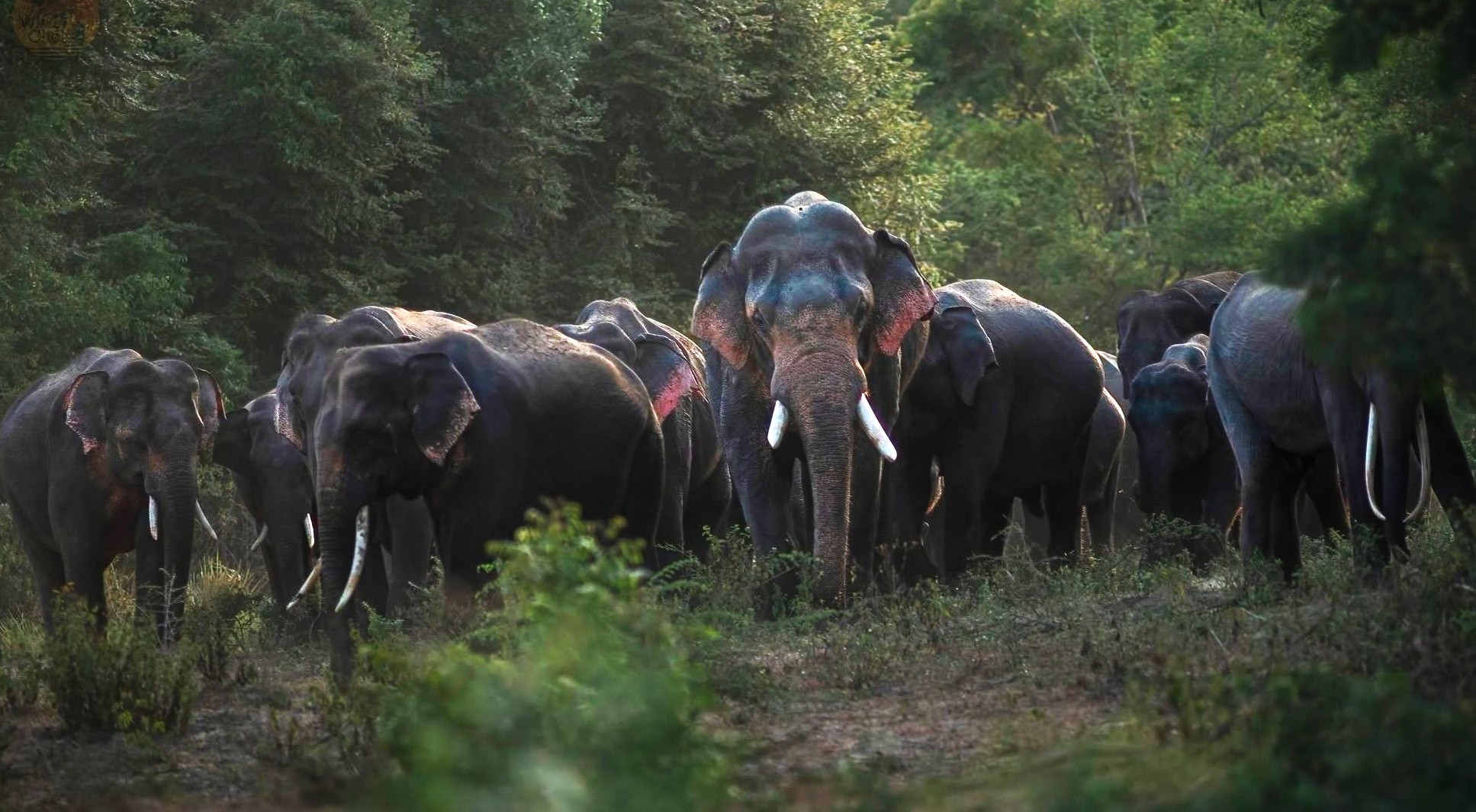
Wild Tuskers Srilanka, a group of wildlife photographers, has identified 300 tuskers in Sri Lanka over a decade and tagged 17 of them as high-risk tuskers, advocating closer monitoring and coordinated protection for them.Sri Lanka intends involving its armed forces to protect vulnerable wild tuskers following public outrage over the recent death of iconic elephant Kavantissa.Conservationists caution against assigning armed guards to individual elephants as impractical, given their extensive movement and the complexity of Sri Lanka’s human-elephant conflict.They say the armed forces could play a more effective role in tackling wildlife crime through gathering intelligence, while long-term protection requires systematic monitoring and action to reduce human-elephant conflict. COLOMBO – Following widespread public outrage over the recent death of Kavantissa, one of Sri Lanka’s most celebrated wild tuskers, the government has decided to involve the country’s armed forces to protect vulnerable elephants, including some of the island’s remaining tuskers. The initiative, a coordinated operation involving Sri Lanka’s army, navy, air force and the Department of Wildlife Conservation, will have a dedicated operations center at the military headquarters to coordinate surveillance, information-sharing and responses to threats against elephants. Code named ‘Hasthi Sena’ in Sinhala, loosely translating to ‘an elephant army’ in English, the initiative aims to prevent elephant killings and curb wildlife crimes, strengthen intelligence gathering and support joint operations in areas affected by human-elephant conflict (HEC). The task force began its operations with raids last week across several areas, arresting several individuals involved in illegal activities including setting up trap guns or wire snares and possessing explosive-laden bait. The government took this measure amid renewed concern about the vulnerability of Sri Lanka’s remaining tuskers, particularly following the shooting and subsequent death of Kavantissa last month. While conservationists have welcomed greater institutional support for wildlife protection, they caution that the initiative must translate into a sustained conservation program rather than a temporary response to public pressure and not turn into yet another well-intentioned initiative that lost momentum after public attention faded. Wild Tuskers Srilanka (WTS) used a risk-assessment formula to assign scores relating to threat factors faced by individual tuskers. Image courtesy of WTS. “We have seen many such initiatives being launched following the deaths of iconic elephants, but they have rarely been sustained,” said Hemantha Withanage, senior advisor to the Centre for Environmental Justice (CEJ), a Colombo-based environmental NGO. Following the 2025 death of another iconic tusker named Bhathiya, promises were made to expand the treatment facilities for elephants, but such promises have not materialized, noted Withanage. Guards unable to follow each tusker The idea of assigning armed personnel to protect individual tuskers has gained public support following Kavantissa’s death. However, wildlife experts have cautioned that providing continuous physical protection to free-ranging elephants is neither straightforward nor necessarily practical. African super tuskers are often found in vast protected landscapes with relatively little human habitation, whereas Sri Lanka’s elephants live largely in human-dominated areas. Armed protection of individual tuskers, as done for some of Africa’s iconic super tuskers, will not secure their future in Sri Lanka, said Manori Gunawardena, wildlife scientist at the Environmental Foundation Limited. While tuskers remain vulnerable to ivory-poaching, unlike parts of Africa where organized ivory poaching drives elephant deaths, Sri Lanka’s biggest challenge remains HEC, with elephants often killed for raiding crops, damaging property or entering settlements, Gunawardena told Mongabay. Three generations of tuskers, with Wasala leading,followed by Sesara (center), also the youngest, and Rakkitha. Image courtesy of Wasantha Kumara. According to a 1999 study, ivory poaching in Sri Lanka had become a byproduct of HEC and highlighted the rarity of tuskers, while estimating only about 7.5% of male elephants in the country had tusks. For this reason, poaching of elephants for ivory is relatively rare in Sri Lanka. “We must meet the ecological needs of the herds that produce tuskers, ensuring that male calves and juveniles survive into adulthood if we are truly committed to the future of Sri Lanka’s wild tuskers,” Gunawardena told Mongabay. “This requires sufficient and suitable habitats and socially inclusive, scientifically informed measures to reduce human–elephant conflict,” she added. Rather than attempting to place a soldier beside every identified tusker, security agencies could strengthen intelligence gathering and strictly enforce the law against those involved in wildlife crimes such as killing, firearm misuse, manufacture and distribution of explosive-laden bait (locally known as “hakka patas”) and other violations, said Withanage. Tuskers Agbo and Wasala generally roam close to Kavantissa’s home range and face grave threats. Image courtesy of WTS. During its advocacy campaigns against the use of jaw exploders, CEJ identified that only a few in any village had mastered the technique of manufacturing these harmful devices and that villagers were aware of the manufacturers’ identities. “They even know who the poachers are and this should enable the army and police to easily identify those responsible,” Withanage told Mongabay. High-risk tuskers identified Meanwhile, conservation groups have been working to identify individual tuskers considered particularly vulnerable. Wild Tuskers Srilanka (WTS) recently identified a group of high-risk tuskers and brought their conservation needs into discussions with government authorities and the armed forces. According to a WTS assessment, 17 tuskers have been identified as elephants requiring particular attention. Wild Tuskers Srilanka has identified 17 elephants requiring urgent protection, including Agbo and Wasala, together with several others including Mahanama, Bundala Kashyapa, Suranimala, Sumedha, Surya, Maha, Mahasena, Deegabhaya, Gajabahu and Wanniyan. Montage courtesy of Vinsara Senanayake. These elephants are considered at much higher risk due to their individual characteristics, prominence and biological value, with some specially recognized by their impressive tusks, said Chandika Lakshan, an active member of WTS. The WTS assessment also considers elephant behavior, habitat and geographical exposure, including the extent to which their ranges overlap with settlements and agricultural lands, and the intensity of HEC in their roaming areas, Lakshan told Mongabay. The list of 17 includes iconic tuskers such as Agbo, Wasala, Mahanama, Kashyapa, Suranimala, Sumedha, Surya, Maha, Mahasena, Deegabhaya, Gajabahu and Wanniyan. Among them, Agbo and Wasala were singled out as particularly vulnerable with risk score of 96.7% and 95% respectively. WTS representatives also handed over a report detailing this list of tuskers to the recently appointed task force consisting of the armed forces, Lakshan told Mongabay. Risk profiles of individual tuskers are created based on their movement patterns, exposure to human-elephant conflict, previous injuries or threats, physical condition and vulnerability to poaching, supported by photographic identification and repeated field observations. Image courtesy of WTS. Recognizing elephants as individuals The first challenge in evaluating risk is the systematic identification of individual tuskers, an approach comparable to the individual identification systems used for monitoring leopards, orcas and other recognizable wildlife. Elephants can be distinguished using combinations of morphological characteristics, including ear folds, nicks and tears in their ears, tusk shape and size, body markings, wounds and tail characteristics, according to Ravindralal Anthonis, a wildlife photographer who pioneered the effort to name Sri Lanka’s tuskers. At an Oct. 23 meeting chaired by Sri Lanka’s environment minister Dhammika Patabendi, it was decided to introduce a coordinated operation involving the army, navy, air force and the department of wildlife conservation to protect identified tuskers. Image courtesy of Sri Lankan Ministry of Environment. A 2014 study published examined individual identification in Asian elephants and demonstrated the usefulness of these physical characteristics in distinguishing animals. However, not all features remain constant over time. A 2011 study recorded that relatively stable characteristics such as tusk features, ear-fold and lobe shape were more reliable for photographic identification. Features that change over time could increase the likelihood of misidentification and lead to biased population estimates, the study stated. A group of researchers used systematic year-round observations of individually identified elephants to study population size, demographic characteristics and seasonal movements at Udawalawe National Park in southern Sri Lanka. The 2011 study, led by conservation Biologist Shermin de Silva, demonstrated how individual identification could help researchers monitor elephant populations over time. The researchers identified hundreds of adult elephants and used repeated observations to examine demographic patterns and seasonal immigration and emigration. “Ater identification of tuskers, our members share photos and sighting information of each known individual tuskers,” Lakshan said. This information helps to record an elephant’s distinctive features, photographs from different years, known movement ranges, sightings, injuries, veterinary interventions and changes in behavior, he added. The WTS database has identified 300 tuskers since they started collecting data a decade ago. Lakshan said that there are about 100 tuskers living in the wild and they had assessed threat levels of 55 of them based on their formula. Mahasen, another famous tusker has not been sighted for more than eight months. Image courtesy of Milinda Wattegedara. Millinda Wattegedara, co-founder of WTS, told Mongabay that any attempt at protecting tuskers should go beyond saving individual elephants, as extending protection to the 17 identified tuskers would help safeguard their habitats, benefiting other elephants and the wider wildlife sharing these landscapes. Conservation is about preserving Sri Lanka’s natural and cultural heritage and ensuring that the loss of iconic tuskers such as Kavantissa leads to meaningful, lasting conservation action, Wattegedara said. Protection beyond iconic tuskers While the focus heavily falls on tuskers, understandably given their rarity and cultural significance, conservationists caution against overlooking the wider elephant population. The urgency of addressing these threats became even clearer when the decomposing body of another young tusker was discovered just weeks after Kavantissa’s death, with one tusk missing. While this raised fears of ivory poaching, Gunawardena noted that it was more likely an opportunistic removal, noting that a poacher deliberately targeting an elephant for its ivory would unlikely leave the other tusk behind. The incident also underscores the need for a comprehensive approach to HEC, as the dead elephant was not even among the identified tuskers receiving special attention. Sri Lanka’s HEC problem cannot be resolved by protecting a handful of celebrated animals. Thousands of elephants move through landscapes shared with people, and many face threats from habitat fragmentation, roads, railways, electrocution, gunshot injuries and explosive-laden baits or jaw bombs, said Gunawardena. Communities living alongside elephants also face crop losses, property damage, injuries and deaths. Any lasting conservation program must address these realities rather than treating elephant protection as an isolated wildlife-security issue, Withanage added. Citations: Santiapillai, C., Silva, A., Karyawasam, C., Esufali, S., Jayaniththi, S., Basnayake, M., … Wijeyamohan, S. (1999). Trade in Asian elephant ivory in Sri Lanka. Oryx, 33(2), 176-180. doi:10.1046/j.1365-3008.1999.00041.x Goswami, V. R., Lauretta, M. V., Madhusudan, M. D., & Karanth, K. U. (2011). Optimizing individual identification and survey effort for photographic capture–recapture sampling of species with temporally variable morphological traits. Animal Conservation, 15(2), 174-183. doi:10.1111/j.1469-1795.2011.00501.x Silva, S. D., Ranjeewa, A. D., & Weerakoon, D. (2011). Demography of Asian elephants (Elephas Maximus) at Uda Walawe National Park, Sri Lanka based on identified individuals. Biological Conservation, 144(5), 1742-1752. doi:10.1016/j.biocon.2011.03.011 Banner Image: Sri Lanka’s 2011 national elephant census recorded 122 tuskers. This photograph shows five tuskers including Wasala (center), an aggressive pachyderm included in the list of 17 at-risk tuskers. Image courtesy of Sunanda Jayasekara. Credits Topics
As incidents spike, Sri Lanka identifies 17 tuskers considered at high risk
Full Article
Original Source
Read the full article at News →KhanList aggregates and links to publicly available news content. We do not host full articles from third-party sources. Always verify important information with original sources.