
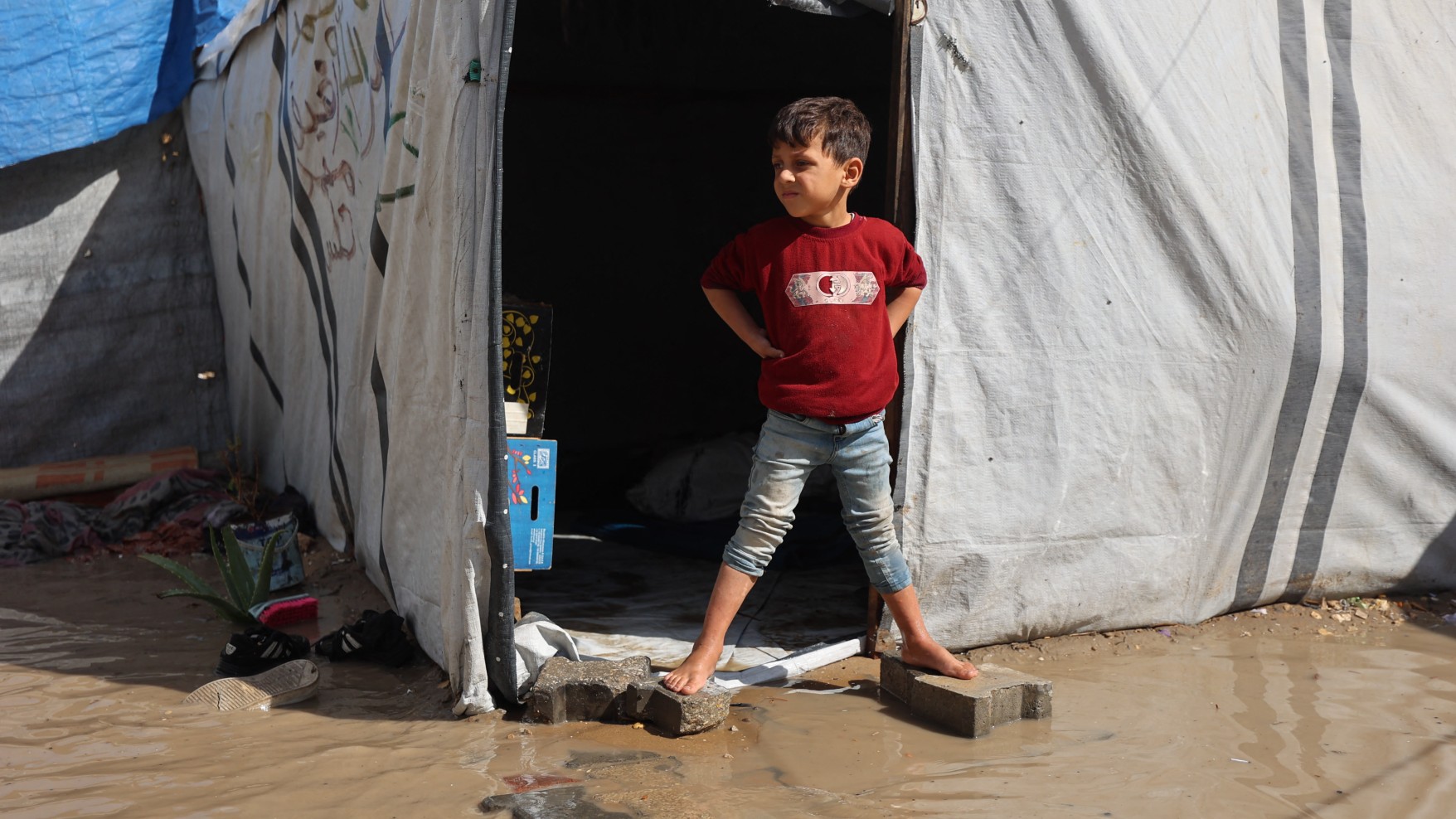
It took a mere dozen hours of the first winter storm to flood around 70,000 tents in Gaza. Even 1,000 would be worthy of major humanitarian action, but just imagine that multiplied by 70. These devastating floods were predicted and predictable. Nothing about this should surprise anyone who has paid even the scantest attention to the humanitarian situation in Gaza. Every year, Palestinians in the coastal enclave face the threat of flooding due to winter rains. Years ago, it was already challenging enough, as raw sewage flooded the streets, fuelling the spread of disease. Israel’s blockade of Gaza, in place for two decades, along with periodic military bombardments, would render these inundations particularly life-threatening. Much of the debate in years past was about the inability to pump water out, including the lack of fuel for pumps, owing to Israel’s blockade. In contrast to the situation in 2026, however, that was a minor crisis. New MEE newsletter: Jerusalem Dispatch Sign up to get the latest insights and analysis on Israel-Palestine, alongside Turkey Unpacked and other MEE newsletters Three years into the genocide, the rains are once again life-threatening, not life-giving. This is the fourth winter many have been forced to face this challenge. In Gaza, 65 percent of people - more than one million - live in tents or makeshift shelters. Amid rain and high winds, they fear for their lives. Many tents have been washed away, along with vital possessions, while those in ruined buildings face the genuine possibility that the structures will collapse. Disease and hunger, already a daily threat, will intensify across this brutalised strip of land. Manmade catastrophe This is not an accident of nature. It is a manmade catastrophe, fashioned by the Israeli leadership, with a manmade solution that is denied by the very same leadership. Israeli authorities have denied entry of vital life-saving supplies and equipment. Take tents. Prior to these floods, humanitarian agencies warned that many of the existing tents had worn out and were insufficient. According to the United Nations Office for the Coordination of Humanitarian Affairs, 121,000 tents are needed, while only 2,800 are inside Gaza. Other international actors cannot remain silent and inert, which was their standard operating procedure for years, even before the genocide Just across the border in Egypt, 150,000 tents donated for Gaza lie useless, waiting for Israel to permit them to enter. The price of tents on the market has rocketed upwards, way beyond the purchasing power of those in areas like al-Mawasi, which hosts more than 900,000 internally displaced Palestinians. Israel has only permitted limited tents to enter. What is the great security risk of a tent? Then again, this is the state that denied all food, water, medicines and fuel for protracted periods of time on two occasions, only easing this policy after considerable American pressure. Israel today occupies nearly 70 percent of the Gaza Strip, with Palestinians herded into ever-smaller, unsanitary, overcrowded hellscapes. In the past, they would have been to able to shift to safe ground. But nowhere is safe in Gaza now - and for those not following, the ceasefire announced in October 2025 is in name only. For Palestinians in Gaza, if the bombs don’t get them, the floods, famine and disease will. Taking a lead In Israel, the governing coalition led by Prime Minister Benjamin Netanyahu has resorted to its usual blame game, saying it’s all Hamas’s fault. While the rump of the Hamas authority in Gaza has serious failings, it has barely any ability in the midst of a genocide to handle these floods. Israel, however, can take action - and importantly, it has an international legal obligation, as the occupying power, to care for the people in the territory it occupies. It could allow all necessary equipment into the strip, and lift its ban, which should never have been imposed, on the UN relief agency for Palestinians and three dozen other aid agencies. Even the “Board of Peace”, the opaque concoction devised by the administration of US President Donald Trump to oversee the flow of aid into Gaza, described the Israeli response as “insufficient”. In a statement, it called on the Israeli government to “authorize and facilitate the entry of all necessary winterization and humanitarian supplies”. Gaza genocide: How Israel made horror a ritual of daily life Read More » Other international actors cannot remain silent and inert, which was their standard operating procedure for years, even before the genocide. They cannot - and must not - defer action until the arcane process of Israeli coalition-building and political chicanery glues together the next fractious Israeli government. Sanctions have been, and remain, a requirement. With most other states, in the event of mass collective punishment of hundreds of thousands of civilians, a ream of ever-tightening bans and sanctions would be issued by European states. The United Kingdom can take a lead. It recently amended its Global Human Rights and International Humanitarian Law Sanctions Regulations to allow the UK government to sanction those who block humanitarian aid. Gaza is the perfect example of a situation where these sanctions need to be invoked, as dozens of politicians argued in a letter to Foreign Secretary Ed Miliband last month. Other states must adopt similar measures immediately. Thousands of Palestinian lives are at stake in a situation that can easily be relieved. It is time to break the terrible record of consistently failing Palestinian men, women and children, which has tarnished the international record for so long. The views expressed in this article belong to the author and do not necessarily reflect the editorial policy of Middle East Eye.
As heavy rains swamp Gaza's tents, Israel must face sanctions
Full Article
Original Source
Read the full article at Middleeasteye →KhanList aggregates and links to publicly available news content. We do not host full articles from third-party sources. Always verify important information with original sources.