
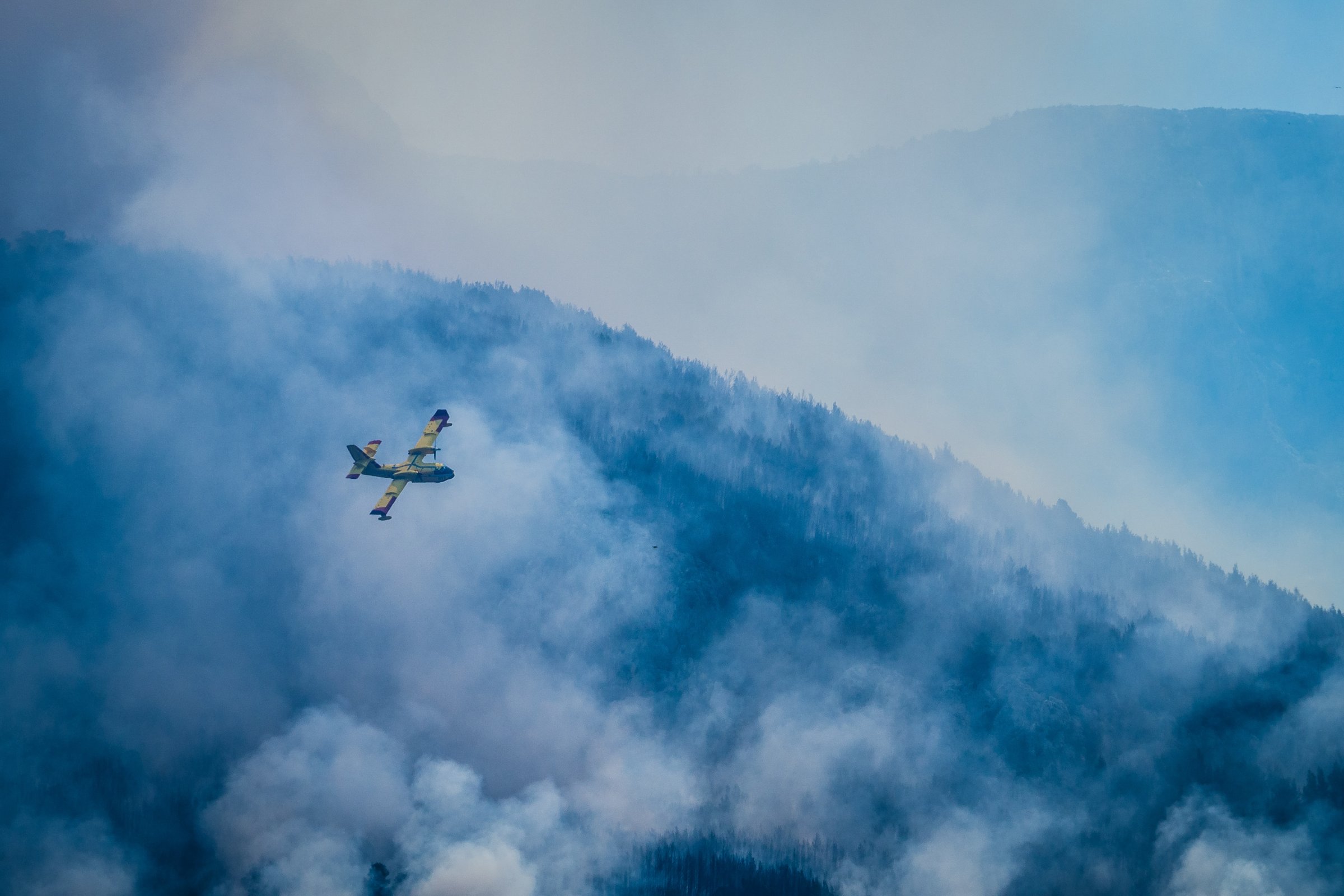
Firefighters have had enough of being called heroes by politicians. In risking their lives to save communities from the wildfires spreading across Europe, their work is obviously heroic. But the term has been cheapened by politicians trying to absolve themselves of decisions that have made their task more difficult and dangerous. “We don’t want to be called heroes; we want to be given the resources,” said Ludovic Goblet, a union representative for French firefighters. He was speaking days after new EU data showed that in the worst year on record for wildfires, the number of professional firefighters in Europe fell by 18,000. That included a reduction of over 4,000 in France. The numbers defy logic. We know that climate change is raising the risk of wildfires. Surely then the resources at the disposal of our fire services should meet the risk they are being asked to face. Instead, the cuts demonstrate how spending decisions in Europe have become detached from reality. The EU Commission rightly told member states ahead of this summer to ensure that they have “an appropriately sized and well-prepared” fire service. But the commission also enforces the EU’s strict fiscal rules, which have led to cuts in spending on public services, including fire services. Poland worst offender Poland saw the greatest reduction in firefighters last year. Along with France, it was placed under an Excessive Deficit Procedure in 2024. So, too, was Belgium; its fire service is now battling wildfires with a force reduced by 10 percent in 2024 and a further 200 firefighters in 2025. This is not only dangerous for the public and firefighters. It's also a false economy when the damage caused by wildfires this summer has already reached over €3bn. The fires have been a cruel lesson that while Europe’s spending rules might please adherents of 1980s economic theory, they are unfit for the challenges we face today. The same logic has not been applied to armaments, with huge investments being made in military hardware. Increasingly at the expense of social investment which is critical for our common security. With Russia waging war in Ukraine and ramping up provocations within the EU, the issue of ensuring security in Europe in a context of rising threats and challenges is clear.But the conception of defence is too narrow: real resilience depends on investment in a range of key services and industries. Just as wildfires have illuminated the need for resources for fire services, the Covid pandemic demonstrated the shortsightedness of cutting health services and social protection. Moreover, Trump’s war in the Middle East has again highlighted our crippling dependence on foreign fossil-fuels, while Europe's emaciated industry has reduced our ability to create domestic alternatives. Attacks on workers’ rights have driven down living standards and undermined social cohesion, creating the conditions for malign forces to undermine democracy in an era of hybrid warfare. In the face of growing and more complex threats, austerity has left Europe weaker, more divided and less prepared for the challenges we face in almost every regard. More fighter jets or drones alone will not change this. It would, therefore, be a mistake to continue with plans to siphon off cohesion funds to defence in the EU’s next long-term budget. Instead we need new spending rules which allow member states to invest in services and industries. Europe’s overstretched firefighters are doing a double service – not only are they tackling the wildfires devastating Europe this summer, they are also taking on the self-defeating cuts that will put Europe at risk for years to come.
As Europe burns, member states are actually slashing the number of fire-fighters – thanks to EU deficit rules
Full Article
Original Source
Read the full article at Euobserver →KhanList aggregates and links to publicly available news content. We do not host full articles from third-party sources. Always verify important information with original sources.