
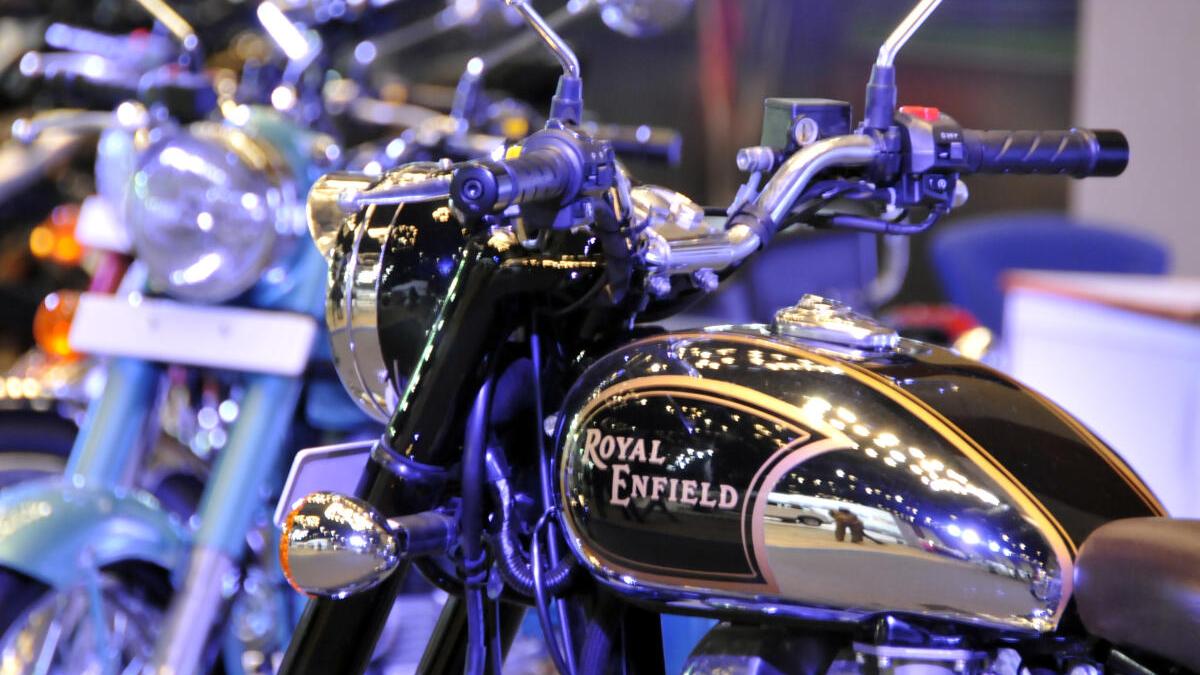
At the Paris Haute Couture Week this year, acclaimed Indian fashion designer Rahul Mishra made ancient Indian temples come alive on the runway. In his collection “Devi: The Eternal Muse” – ancient Indian temple forms came alive through raised, three-dimensional embroidery.Unlike the norm, the thread work did not just embroider the fabric surface, it created strength and scaffolding to hold up the form itself. Embroidery was not superimposed on a western garment, it became the structure, the spine. This moment captures a larger phenomenon underway in Indian design. Across fashion, products, graphics, automotive, animation and interiors, Indian designers are treating our native cultures as a source of ideas, methods and perhaps – an emerging design identity.Impact of colonialismIndia possessed this intelligence long before it became a profession. Utensils, weapons, costumes and buildings – all combined aesthetics with functionalism. Stepwells combined geometries with conservation (Gujarat, Rajasthan), Indian textiles communicated climate adaptation, community and belonging through the interplay of materials, colours and techniques (Nauvari from Maharashtra, Tsungkotepsu from Nagaland or Jamdani from Bengal) or Kathkuni architecture of the Himalayas which does not use mortar, but merges stone and wood for stability. Beauty was not an afterthought but woven with quiet pragmatism. Ornamentation was practical, carried information and shaped experiences. Aesthetics and functionality were two sides of the same coin.Colonialism disrupted this continuity of a thousand years. Indian crafts were exhibited and admired but for exotic orientalism or as objects of conquest. Modern design came to be largely seen as the “European” ideas of order, industrial production and progress.Famous designers like Eames, Arne Jacobsen, Paul Schuitema, Nanna Ditzel, Verner Panton defined design through the lens of European minimalism, creating objects and materials to be devoid of ornamentation or complex shapes. This philosophy was celebrated and exported by the famous European design schools – Bauhaus, Basel and Ulm.Functionalism, restraint, and clean lines became the visual grammar, and this formed the modern design language that independent India adopted. Cities like Chandigarh, architecture, the design of two-wheelers, home electronics, and graphics rapidly moved towards modernism, whose appearance symbolised progress and technological capability. Ornamentation, colour and asymmetry – the everyday grammar of a vibrant multicultural India would have appeared as problems that needed correction.As the gold-bullion crisis pushed India towards economic isolation in 1970s, Indian design also turned inward. With Western imports restricted, designers redirected focus towards urgent local needs: the smokeless chulha, redesigned cycle rickshaw and improved chakki. Design increasingly defined itself as a profession serving the poor and marginalised.The oldest Indian design schools, NID Ahmedabad and IDC at IIT Bombay, remained influenced by Ulm and Basel, but channelled the restrained, utilitarian approach to address function influenced by human behaviour rather than overt cultural expression.With the liberalisation of the Indian economy in 1991, design quickly assumed a new identity. A growing and aspirational middle class, rising purchasing power and exposure to global media created a new consumer segment that sought more than basic functional products.Products became expressions of aspiration, identity, and commercial success, with homes, restaurants, and shops becoming stages on which people could display their tastes and successes. Iconic cars such as Ambassadors and Premier Padminis were rapidly replaced by the Maruti 800 and the Maruti Esteem – prized possessions of the upper class that wanted to visually differentiate themselves from the symbols of the Raj. As with economics, the power of government control during the licence Raj years was making way to a free-market economy where consumer choices were abundant.In the new millennium, fashion responded first and most visibly. Designers such as Ritu Kumar, Tarun Tahiliani, Sabyasachi Mukherjee, Sanjay Garg, Rahul Mishra and Gaurav Gupta showed that Indian textiles and techniques could produce contemporary luxury without disguising their origins. Zardozi, Bandhni, brocade and handloom were no longer traditions to be preserved; they became tools for experimentation.The same confidence transformed Indian furniture. Gunjan Gupta turned familiar objects such as matkas, thalis, and stacked metal vessels into collectibles that capture the energy and contradictions of Indian life. Vikram Goyal uses brass repoussé, stone inlay and the collaborative culture of the traditional karkhana to create monumental furniture and sculptural surfaces, while Ashiesh Shah reinterprets Channapatna lacquer, cast metal and ritual forms through a contemporary lens. Sandeep Sangaru takes a more material-led approach, working with artisan communities to transform Northeast Indian bamboo and Kashmiri techniques such as pinjra kari and khatamband into restrained, modern furniture.For these designers, Indianness is not a pattern placed on a chair. It is a character: tactile, layered, ceremonial, humorous and comfortable with contradiction.Automotive design reveals a similar confidence. Royal Enfield transformed the exposed engine, upright stance and mechanical simplicity of its motorcycles into a global identity, shaped in part by industrial designer S. Sivakumar and the company’s Indian design team. At Mahindra, Ramkripa Ananthan helped define the rugged character of the Thar and XUV500, while Pratap Bose is advancing a bolder, technology-led vocabulary across its new generation of vehicles such as the EV segment flagship BE6. Tata’s revived Sierra returns to the wraparound rear glass of an Indian original, while Ather’s team, led by Bikash Jyoti Biswas, designs scooters around the needs of Indian families. Together, these designers show that globally competitive mobility need not be culturally anonymous; it can emerge from Indian roads, behaviours and aspirations.Digital products face an equally Indian challenge: they must work across languages, literacy levels and varying degrees of technological familiarity. Voice, regional scripts, assisted journeys and familiar symbols are essential because an interface designed for an English-speaking global consumer is neither neutral nor automatically inclusive. Indian typographers Satya Rajpurohit’s Indian Type Foundry created Kohinoor, an Indic type family adopted by Apple, while Girish Dalvi and his collaborators at Ek Type developed Mukta and Anek, multi-script families made available through Google Fonts. Their work proves that Indian scripts need not be forced into Latin conventions to function globally.Transformation of design educationFrom the socialist past to an entrepreneurial future, design education in India has also transformed dramatically. Five decades after the pioneering legacy of NID Ahmedabad and IDC at IIT-Bombay, the country now has over 700 schools and universities offering programmes across architecture, spatial, industrial, visual communication, textile, game, animation and automotive design, among others.While institutional philosophies differ, Indian design education has largely been anchored in problem-solving and social impact. Newer schools are expanding this lens, preparing designers for international markets and globally exposed Indian consumers who demand greater sophistication, quality, and relevance.Design graduates can now pursue multiple pathways: join corporations such as Maruti, LG, or Aditya Birla; work in specialist studios; or build independent careers as creative solopreneurs. Each pathway demands a different mindset — from agile, transdisciplinary thinking in large organisations to broad interdisciplinary capability in studios and independent practice.Design education stands at a crucial juncture with a low availability of trained teaching talent. This gap is serious, as a teaching professional in design needs both theoretical and practical experience of having delivered designs to clientele or markets.Unlike STEM verticals, design is a professional degree and needs a high level of practical exposure that is valuable in a classroom. Professors with little or no experience cannot deliver real-world input, whilst dexterous designers cannot support theoretical discourse. Both are needed, yet extremely hard to find. Design education often struggles to keep pace with changing industry expectations and consequently relies heavily on visiting professionals to bridge gaps in market awareness, contemporary thinking and practice.Good Indian design therefore balances two extremes: theory versus practice, the global minimalism trend that erases origins versus a strong visual grammar based on the cultural legacies we inherited. Indian design is not the discovery of one national style—India is far too diverse for that—but the freedom to draw from many histories, resolve contemporary problems, and decide when to speak in a universal syntax and when to be unmistakably Indian.Rahul Mishra’s embroidered architecture represents precisely this confidence. It does not reject modernity or ask heritage to remain frozen in time; it allows an old intelligence to produce newer expressions. After generations of being measured against someone else’s standards, Indian design is establishing its own—and the world is paying attention.(Professor Bhaskar Bhatt is the Head, Artificial Intelligence Transformation Office and Dean, School of Design, UPES)
As design Indianises, new careers open up
Full Article
Original Source
Read the full article at Thehindu →KhanList aggregates and links to publicly available news content. We do not host full articles from third-party sources. Always verify important information with original sources.