
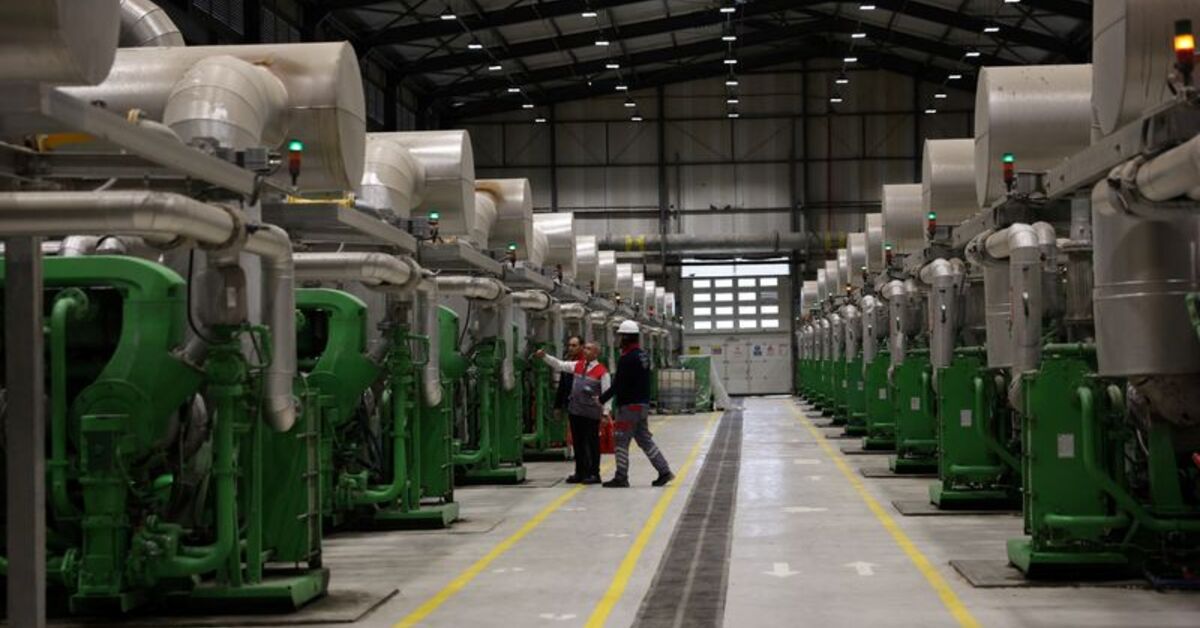
By Ali KucukgocmenSEYMEN, Turkey, Nov 7 (Reuters) - In the countryside west of Istanbul, trucks line up to empty mixed household waste from the city of 16 million people onto a vast landscape of decomposing rubbish, where landfill gas is captured to generate electricity at a nearby plant.But far above the seagulls circling the waste, satellites detect what the plant has failed to capture: methane escaping at a rate that ranks it among the world’s largest recorded landfill emitters.Turkey hosts COP31 in Antalya from November 9 to 20 and has made methane reduction a priority for the climate summit. Methane is the biggest cause of climate change after carbon dioxide (CO2) and is over 80 times more potent than CO2 in its first 20 years in the air. Sharp cuts could therefore slow warming relatively quickly.Turkey's waste sector illustrates both the potential and the difficulty of achieving rapid cuts. The country is the world's fifth-biggest emitter of methane from solid waste behind China, the United States, Russia and Brazil, according to data from non-profit emissions tracker Climate TRACE.Satellite observations analysed by researchers at the University of California, Los Angeles (UCLA) identified 70 plumes from Turkey’s 10 highest-emitting waste sites, where average detected rates ranged from 841 kg to 7.4 metric tons an hour. Three were around Istanbul, while others were near Ankara, Izmir and Antalya, where COP31 is being held.Gas capture is widespread at Turkey's larger municipal landfills, indicating that collection systems alone do not prevent large releases.'HUGE POTENTIAL'Tia Scarpelli, waste sector lead for emissions-monitoring non-profit Carbon Mapper, said cutting landfill methane requires diverting organic material before it reaches dumps, while improving rates of capture. Because Turkey’s largest detected emissions were concentrated at a few sites, addressing those landfills could deliver disproportionate gains, Scarpelli said.“There is this huge mitigation potential by just addressing the largest landfills to reduce their national emissions,” she said, suggesting better-designed collection systems and repairs to cracked covers or faulty gas wells.The UCLA analysis used public Carbon Mapper data from the Tanager-1 satellite between January 2025 and end-May 2026. It showed an average detected rate of about 7.4 tons an hour from the landfill west of Istanbul near Seymen — just below the highest-emitting landfill on a global list from 2025.“What stands out is how big its emissions are and how persistently large they are,” said Scarpelli.In response to a request for comment, Turkey's Environment Ministry said the data were not from continuous measurements and could not be used to measure annual emissions at the Seymen landfill. It said Turkey's Zero Waste Initiative, a government scheme to promote recycling, aims to reduce waste going to landfills, thereby lowering methane emissions, adding that the national "recovery rate" for waste had risen to 37.53% in 2025 from 13% in 2017. At the Seymen landfill, municipal operator ISTAC collects gas produced as buried organic material decomposes, while an energy company burns the gas to generate electricity at a plant opened in 2020.The facility produces about 22,000 megawatt-hours of electricity a month, according to a 2025 report by energy news website Enerji Gunlugu.ISTAC benefits economically from efficient methane capture to produce electricity, the Environment Ministry said. ISTAC official Aysen Erdincler disputed whether the satellite observations were representative of the landfill’s emissions, saying they typically ranged between 4 and 6 tons per hour, while a satellite reading of 12 tons per hour on one day had raised the average. ISTAC head Fatih Ugur said about 30 hectares of the landfill had been left uncovered on the day of that measurement while work was carried out on methane-collection pipes, and that low atmospheric pressure had also contributed to a higher concentration of methane.The Seymen site takes some 8,500 tons of household waste daily, from Istanbul's average total of 20,000 tons, according to ISTAC. It is unclear to researchers how much of the landfill's methane the system captures, but Erdincler said methane leaks at the site were usually around 25%. TURKEY ABSENT FROM METHANE PLEDGEMethane emissions from waste in Turkey rose nearly 25% in the decade to 2024, compared to a global rise of 6.5% over the same period, according to World Bank data based on the European Commission’s EDGAR emissions database. Turkey's waste emissions have remained around 21 million tons of CO2 equivalent annually since 2020. In 2021, the Global Methane Pledge (GMP) was launched at COP26, seeking a collective 30% cut in methane emissions from 2020 levels by 2030, with more than 30 countries later backing national targets. Turkey is not listed among the pledge’s participants.Selim Yildirim, chief climate policy researcher at Ankara-based D84, a non-profit policy and media platform, said Turkey had more developed waste disposal than poorer countries but less effective management, recycling and value recovery than much of Europe.Turkey could still join the GMP during COP31, he said, but that would not guarantee results."The issue is whether you can effectively turn it into action and implement it,” he said, adding that regulation was needed to push operators to capture and reuse methane.In Seymen, about 5 km (3 miles) from the landfill, residents have another concern — the smell. Methane itself is odourless, but the decomposing organic waste can also release pungent compounds.In summer, it enters through windows left open against the heat, said Soner Duz, a 46-year-old barber.“Around four or five in the morning, the smell suddenly comes," he said. "It wakes you up.” (Reporting by Ali Kucukgocmen, Mehmet Emin Caliskan, Tuvan Gumrukcu in Turkey, Christian Levaux in Brussels and Simon Jessop in London; Writing by Daren Butler; Editing by Aidan Lewis)
As COP31 comes to Turkey, satellites reveal a landfill methane problem
Full Article
Original Source
Read the full article at Al-monitor →KhanList aggregates and links to publicly available news content. We do not host full articles from third-party sources. Always verify important information with original sources.