
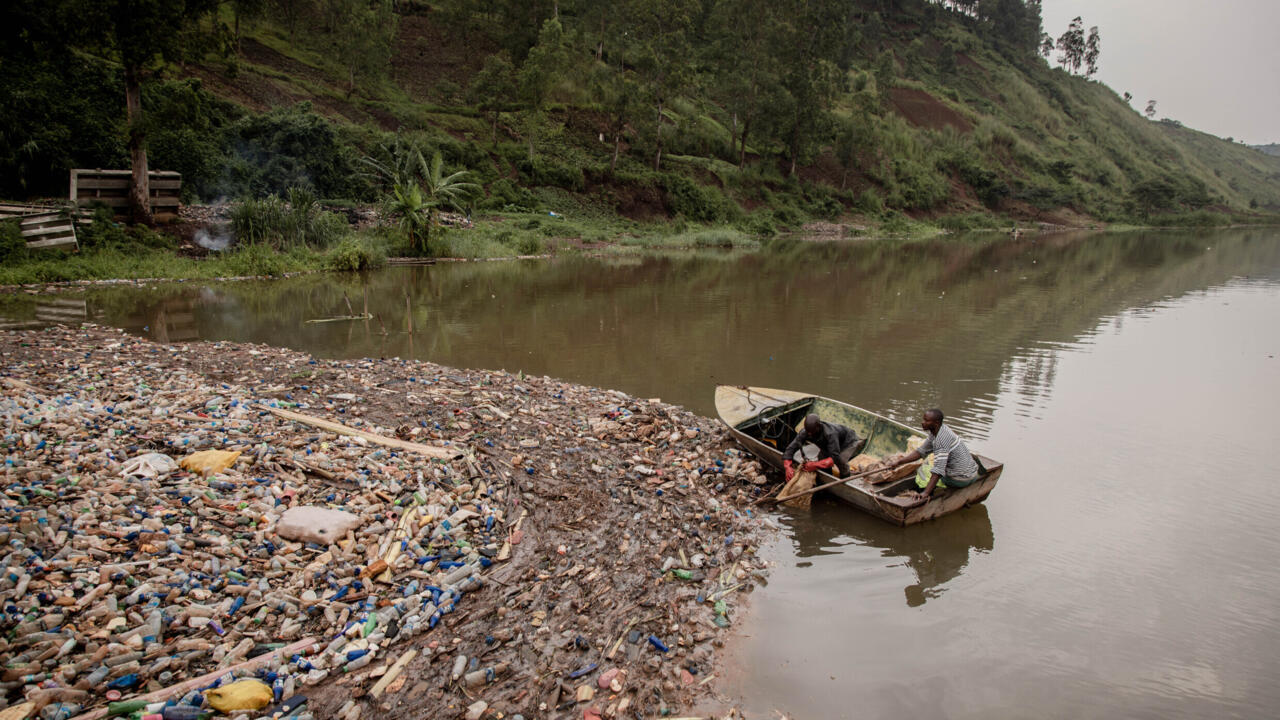
On the Congo River, plastic is becoming the catch of the day. Some fishermen around Kinshasa, capital of the Democratic Republic of Congo, can now make more money pulling plastic from the water than catching fish, as declining catches and growing waste pollution threaten an artisanal way of life. Issued on: 13/09/2026 - 19:25 4 min Reading time Fishing income has fallen to barely $20 a week for some of the families who depend on the river, while one veteran fisher told RFI he can earn about $80 a week collecting plastic and selling it to recycling companies. More than 60,000 tonnes of fish are caught each year in the Congo River, while millions of people depend on its waters for their livelihoods. Research suggests overfishing is a major factor behind declining catches in parts of the river. A 2023 study of small-scale fisheries in the Congo Basin found steep declines in the fisheries examined over the previous half-century. In one example, catches using a large-mesh gillnet fell by 84 percent between 1980 and 2019. Across the fisheries studied, 11 of the 12 most important species were being caught below their optimal size and before reaching maturity. Fisherman's boat on the Congo river, Kisangani, Democratic Republic of the Congo. (Photo by DeAgostini/Getty Images) De Agostini via Getty Images - DEA / S. VANNINI The Zambian fishing island seized by a Chinese company Plastic in the nets Around Kinshasa, fishers say they face another growing problem – plastic waste. Day is just breaking over the Congo River as Jilby Mwanufioti steers his worn wooden canoe along the banks of the sprawling capital. After 40 years of fishing, he is seeing a sharp change in what comes up in his nets. "There are only tiny fish, small fish... Before, I used to catch big fish, but fish have fled because of plastic," Mwanufioti told RFI. More and more of what he pulls from the water is plastic rather than fish. "There is more plastic than fish in the water now. There are used baby diapers, juice bottles... It's sad," he said. Less than 20 percent of Kinshasa's waste is properly treated, while much of the rest ends up in the Congo River, Vincent Kunda, director of Congolese environmental NGO Kongo River, told RFI. "There is a lot to do, but without awareness, we risk losing this entire heritage," Kunda said. A growing waste problem Small-scale fishing provides a livelihood for more than 600 families on Kimpoko, a small river island near Kinshasa. Fishers there say weekly earnings from catches have fallen to between $10 and $20, compared with around $100 a decade ago. Kinshasa, a city of more than 17 million people, generates about 12,000 tonnes of waste every day, the World Bank said in April 2026. Around 98 percent is openly dumped or burnt. Waste dumped in the city can also block storm drains and worsen flooding during heavy rainfall, Governor Daniel Bumba said. This aerial view shows floodwater at the new concession of agents of the BCDC (Central Bank of Congo) in the Mbudi district in Kinshasa on January 9, 2024 following heavy rains and the flood of the Congo River. (Photo by Arsene Mpiana / AFP) AFP - ARSENE MPIANA A Unicef assessment found that waste management had become so problematic in Kinshasa that some of its rivers "have been transformed into garbage waterways, overrun by plastic waste". DRC has banned the production, import, marketing and use of plastic packaging since 2017, although plastic bottles were not included in the ban. In January 2026, Kinshasa launched a zero plastic bottles campaign encouraging people to leave bottles at designated collection points to be collected and recycled. Investigation raises alarm over uranium in DRC cobalt shipments to China Fishing for plastic For some fishers, the plastic choking the waterways has also become a source of income. After 60 years of fishing, Charles Moluwa now collects plastic from the river and stores it at home before selling it to recycling companies. "Look at this plastic, I catch a huge amount of it. I store it all at home, up to 150 kilos," Moluwa told RFI. "I sell it to recycling companies. I earn about $80 a week." That compares with the $10-$20 a week some fishers now earn from fishing. Authorities are also trying to tackle Kinshasa's waste problem. DRC's Ministry of Planning and Coordination of Development Assistance said in May 2026 that the government had completed a feasibility study for an integrated waste-management project in the capital. The World Bank approved a $250 million Kinshasa Urban Transformation and Jobs Program in April 2026, known as Kin la Belle, aimed in part at improving solid-waste management. For fishers who have spent decades working on the Congo River, collecting plastic can now bring in much-needed income as catches decline. But the shift also points to a deeper threat – an artisanal fishing tradition that risks disappearing. This article was based on a report in French by Aurélie Bazzara
As catches dwindle, Congo River fishermen turn to plastic waste
Full Article
Original Source
Read the full article at Rfi →KhanList aggregates and links to publicly available news content. We do not host full articles from third-party sources. Always verify important information with original sources.