
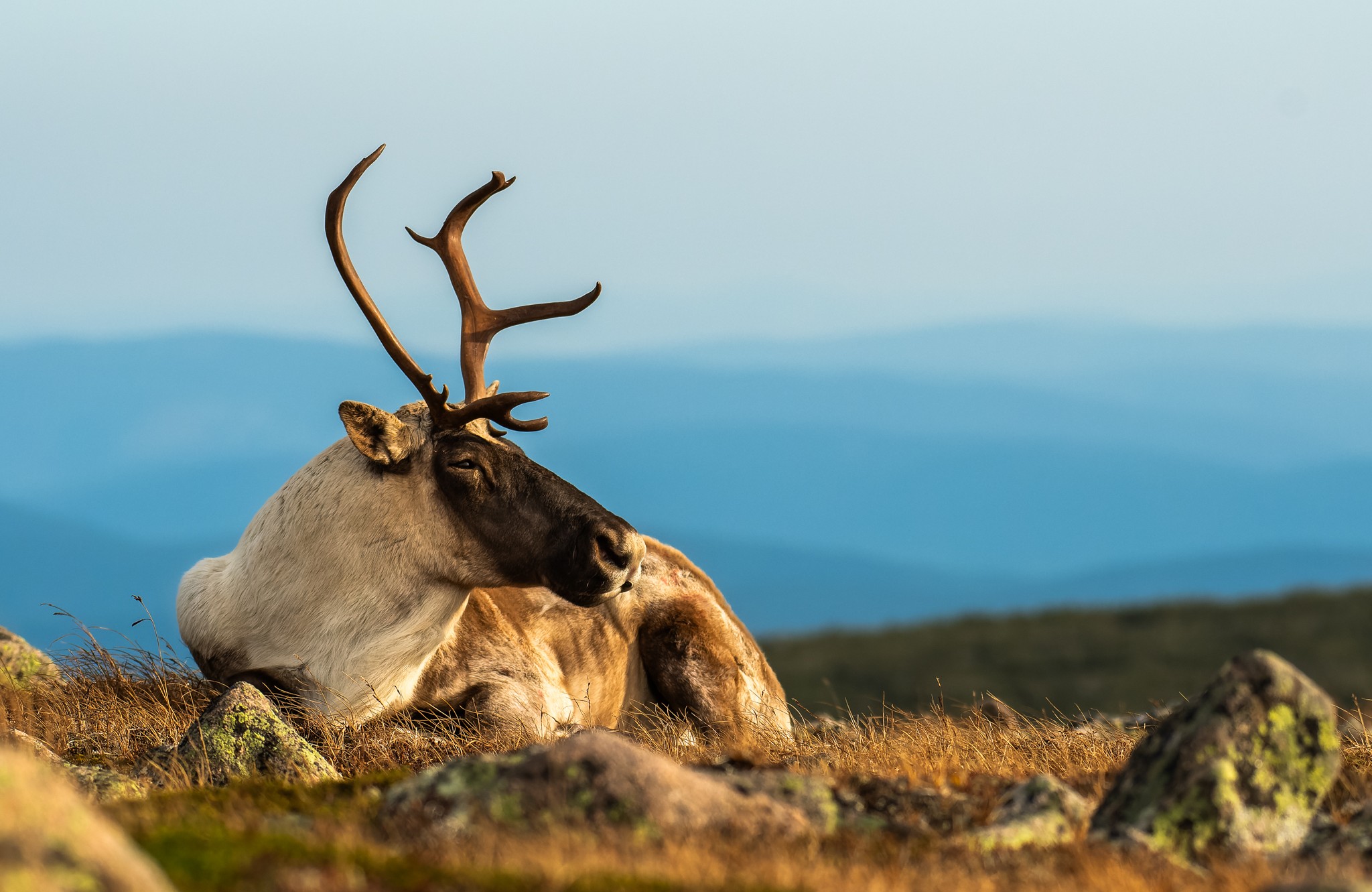
The provincial government of British Columbia, Canada, has proposed extending its decade-long wolf cull program by five more years in areas that are home to 15 declining woodland caribou herds.The province has killed 200-300 wolves each year since 2015 to help endangered caribou populations recover, spending nearly $10 million to date, but caribou numbers have increased only marginally.Scientists argue that old-growth forests cut for logging, mining and oil and gas extraction — and not wolves — is the main driver of caribou declines, making the province’s focus on wolf culls a short-sighted approach that will ultimately not save caribou and could have unintended consequences on the ecosystem.Conservationists call on the B.C. government to stop issuing new logging permits in areas where caribou live; stop building roads through forest and invest in forest restoration projects; and design long-term strategies for caribou conservation to address habitat loss. The government of the Canadian province of British Columbia is in talks to extend its decade-long wolf cull program by another five years. Since 2015, the province has killed wolves in areas with declining populations of endangered woodland caribou as part of its Caribou Recovery Program. In April 2026, provincial authorities began engaging key stakeholders about the proposed extension, including about 70 First Nations in affected areas, hundreds of landowners, environmental NGOs and others. They’re expected to make a final decision by October, according to a spokesperson from the provincial Ministry of Water, Land and Resource Stewardship and the Ministry of Forests, in an email statement to Mongabay. If the proposal passes, the government will continue shooting gray wolves (Canis lupus), the primary predators of woodland caribou (Rangifer tarandus caribou), in 15 areas with herds. Eleven of these locations will have a yearly cull; in four, the canids will be killed every two years, the spokesperson said. B.C.’s wolf cull program was instituted to reverse historic caribou declines. Provincial data today show the ungulate’s numbers are rising in areas where wolves are killed. But the proposed extension, without steps to address habitat loss, has sparked outrage and concern among conservationists and scientists. This is an “equivocal, intensely debated” issue, said wildlife biologist Paul Paquet at the Raincoast Conservation Foundation, a B.C.-based NGO. “There’s a lot of moral confusion and ethical dilemmas here on this question about protecting caribou and helping caribou by killing wolves.” Caribou need protection: Over the last three decades, the population of southern mountain caribou declined by more than half, and the provincial government declared about 10 herds to be locally extinct as of 2023. In 2003, the ungulates were classified as threatened under Canada’s Species at Risk Act (SARA).In 2014, the Committee on the Status of Endangered Wildlife in Canada (COSEWIC), an advisory body to the federal government on wildlife conservation, designated the caribou populations in south and central B.C. endangered. About 1,900 caribou remain there, according to provincial estimates. However, experts argue that wolves are a relatively minor threat compared to widespread loss of the caribou’s preferred old-growth forest habitat, which is falling to logging and mining projects and being leveled for oil and gas pipelines. Woodland caribou, also called deep-snow caribou, have special hooves that spread out like snowshoes so they can walk on snow. Their hooves also act as a shovel or a paddle while swimming. Image © Trevor Van Loon via iNaturalist (CC BY 4.0). Proposal to extend wolf cull not transparent, conservationists say In 2015, the B.C. government launched the predator management program, targeting wolves and pumas (Puma concolor) in key caribou habitat. “It was originally described as an emergency measure and a very short-term action to take as a kind of last-ditch effort to save some of these dwindling caribou herds,” said Kristen Weiss, wildlife and forests campaigner at Pacific Wild, a B.C.-based environmental nonprofit that’s followed the impact of the wolf culls since they began. But that “emergency measure” has continued for more than a decade, killing 200-300 wolves each year. To date, B.C. has killed about 2,800 wolves, spending about C$13 million ($9.4 million) in taxpayer money. It’s unclear how that has affected wolves’ overall numbers. The province estimates there are anywhere between 5,300 and 11,600 wolves and says it isn’t a species of concern. But no one knows for sure as there hasn’t been a B.C.-wide systematic survey. “It’s quite a wide range,” said Chelsea Greer, director of the wolf conservation program at the Raincoast Conservation Foundation, adding that killing hundreds of wolves in a year has consequences. “We see impacts on [wolves’] stress levels and reproduction,” she said. Wolves are intelligent animals with a highly organized social structure. “Removing breeding individuals can have huge impacts on the persistence of that pack and the longevity of that pack,” Greer said, adding that by killing adults, “you’re losing a lot of generational knowledge” among packs. The last cull program, which began in 2021, expired in March of this year. Grey wolves are one of the main predators of caribou in many parts of the ungulates’ range. Image courtesy of Denali NPS. Officials have reached out to stakeholders for input, but unlike the last extension, they haven’t made a public announcement or engaged the public in discussions. “There hasn’t been a lot of clarity around the process of how they decide they’re to extend or not,” Weiss said, adding that her organization was consulted by representatives from the caribou recovery program. “We were not given a proposal document; they just gave us a short PowerPoint presentation about their proposed extension, and then we were meant to provide feedback.” Pacific Wild opposed the extension of the cull program in the feedback it provided. Every winter, the government hires contractors to shoot entire packs of wolves from low-flying helicopters in caribou habitats, wiping out some 80-90% of these predators in an area. Many suffer a slow, painful death, according to information obtained by Pacific Wild. These killings are in addition to legalized trapping and wolf hunts in the province. But killing wolves is unpopular with people. In 2021, the government conducted a public opinion survey that found 59% of British Columbians opposed it, even as 98% said caribou recovery was important. In areas where caribou are found, 53-82% supported killing predators. A more recent survey, conducted in 2026 by Pacific Wild, found about three-quarters of the province’s people oppose any wolf killing. Mongabay asked the Ministry of Water, Land and Resource Stewardship, the department in charge of the caribou recovery program, why there’s been no public outreach about the proposed extension. A ministry spokesperson said current stakeholder consultations and “past public engagement results continue to guide B.C.’s overall recovery strategy.” Thousands of kilometers of service roads snake the province, along with blocks of clear-cut forests, all wiping off caribou habitat. Image by Ric Careless. Habitat loss, not wolves, driving caribou declines, scientists say B.C.’s mountains are home to about 4,000 woodland caribou, which constitute the southern mountain population. These herds live in old-growth forests across the deep-snow regions of southeastern B.C. and parts of the northern U.S., eating lichens that grow on centuries-old trees high up the mountains to survive the winter. But over the last century, much of these old-growth forests have been cut down, harvested for timber, or leveled to make way for mining operations and oil and gas pipelines, according to a 2020 report. Loss of critical habitat starves caribou of their winter food and leaves them vulnerable to predator attacks. “Caribou’s long-term evolutionary strategy was to segregate themselves to become more of an old-growth ungulate specialist, whereas some of the other ungulates were in younger forests,” said wildlife biologist Cole Burton, who runs the Wildlife Coexistence Lab at the University of British Columbia. “So caribou could get away from some of these concentrations of wolves.” As old-growth forests fall and younger trees replace them, white-tailed deer (Odocoileus virginianus) and moose (Alces alces) move into the landscape, Burton said, “and it’s made the conditions worse for the caribou.” Predators such as wolves, pumas, black bears (Ursus americanus) and others then follow these prey species. A recent study from Burton’s lab shows how clear-cut forests act as “ecological traps” for mountain caribou, who otherwise tend to avoid them. “We’ve found that the caribou in our study area are selecting these cut blocks probably because they’re nutritionally stressed,” Burton said — they’re hungry. “This is bringing them into areas where there’s more predation risk.” Apart from logging, slicing up the forest for roads and pipelines also impacts caribou. More than 600,000 kilometers (about 373,000 miles) of service roads — built to transport timber and mined ore and maintain pipelines — snake through the province, opening this terrain to humans and other animals. “Wolves use these linear features to travel two to three times faster,” said Jason Fisher, who runs the Applied Conservation Macroecology Lab at the University of Victoria, Canada, referring to his study that investigated moose deaths. “A faster wolf increases its encounter rate with caribou, which increases kill rates and draws caribou populations down.” Forestry roads, oil and gas pipelines and other linear infrastructure disturb caribou habitat and bring wolves and other predators closer, studies show. Image by David Adamec via Wikimedia Commons (Public domain). A 2016 study from neighboring Alberta province, where wolf culls have also been going on since 2005 to save caribou, found that wolves were up to eight times more likely to use roads or paths cleared for pipelines rather than meander through forests. By laying down roads, humans are making it easier for wolves to get around, Fisher said. “It’s been to their benefit and to the detriment of both moose and caribou.” Wildfire is also destroying habitat. Increasingly frequent, larger blazes, accelerated by climate change and drought-like conditions, burn down large swaths of old-growth forests, impacting caribou numbers. Nearly 400,000 hectares (almost 1 million acres) of B.C.’s old-growth forests were lost to wildfire between 2021 and 2025, according to a report commissioned by the nonprofit Sierra Club BC. In 2023, 457 wildfires burned 869,861 hectares (2.1 million acres) in B.C. — about twice the size of the U.S. state of Rhode Island and 53 times the average loss. So far this year, more than 1,000 wildfires have blazed through the province, gutting some 432,613 hectares (1.07 million acres). Habitat lost to logging and fires pushes caribou closer to the brink. “What human activity has done is created more access and shifted those predator-prey dynamics,” said Greer from the Raincoast Conservation Foundation. “When [caribou numbers] get to such a low point, one wolf running into one caribou can make a huge difference.” Wildfires, supercharged due to climate change, are burning hundreds of thousands of hectares of old-growth forests in B.C., and destroying caribou habitat. Image by Shawn Cahill via Wikimedia Commons (CC BY-SA 4.0). Killing wolves changes predator-prey interactions, studies show As humans continue to interfere with the landscape by altering habitats and selectively killing predators, they affect entire ecosystems in a domino effect, conservationists say. While some of those effects are known, there are others that we don’t yet know. For example, killing large numbers of wolves from a helicopter changes the canids’ behavior, according to a 2025 study by Fisher, Burton and their colleagues. “Instead of being predominantly active during the day, they switch to nighttime mode … that’s when they come out in force, because they clearly recognize that the daytime is a dangerous place for them to be,” Fisher said. The wolves then prey on small mammals active at night, such as snowshoe hares (Lepus americanus). The study also found that coyotes and lynx (Lynx canadensis), which compete with wolves, also adjusted the times when they prowl. “Before the cull, when you had wolves dominating a landscape, coyotes and lynx used patches of the landscape where wolves were not,” Fisher said. When the wolves disappeared, these other predators became more active. However, Fisher said, “We don’t know what the knock-on effects are going to be.” Coyotes can hunt and kill caribou calves. If these canids replace their larger cousins, it will mean that the wolves were killed essentially for no reason, Fisher said. “One of the things that is apparent, even if [the wolf cull] is effective, is that the positive effects are very temporary,” said Paquet from the Raincoast Conservation Foundation, adding that it won’t work over the long term — as opposed to focusing on habitat. Province says caribou numbers up; critics question results Some herds have grown since the wolf cull started, according to the B.C. government’s 2023 caribou estimates. “There are now an estimated 1,500 more caribou in treated herds than would have existed without human intervention,” the ministry’s spokesperson wrote in an email response to Mongabay. “Several herds have experienced significant population increases due to predator reduction and other recovery actions.” In addition to wolf culls, these recovery actions include capturing pregnant caribou and penning them until they birth and raise their calves to between 6 and 10 weeks old, a method called maternal penning; as well as sterilizing wolves; offering supplemental feeding to caribou in the fall; and reducing moose and white-tailed deer numbers, which attract predators, by allowing licensed hunts. A 2024 study involving provincial biologists showed these interventions increased overall caribou numbers by 52% compared to a simulated scenario without them. In some herds, the numbers have doubled since they began, according to data shared by the spokesperson. That’s not surprising, Burton from UBC said, as wolves do prey on caribou. “So, if we remove some of that source of mortality, chances are we’re helping caribou,” he said. But his 2025 study showed that results varied according to terrain. In rugged, hard-to-reach areas high in the mountains, caribou numbers increased after the wolf cull by about 41%. But downslope, where predators such as grizzly bears (Ursus arctos horribilis), wolverines (Gulo gulo) and others also prowl, there was no increase. “Other predators just compensate for the wolves, and there’s no net benefit of the wolf reduction,” Burton said. “To me, that just shows that we can’t expect the same result everywhere. It’s going to depend on the terrain, the ecosystem, the other predators in the system … [Killing wolves] is not a silver bullet, so to speak.” A woodland caribou in Jasper National Park, Alberta. Image by ThartmannWiki via Wikimedia Commons (CC BY-SA 4.0). An earlier study concluded that wolf reduction and maternal penning did not help caribou recover, and the increase in some herds depended solely on how badly their habitats were disturbed by human activities. Weiss from Pacific Wild also disputed the province’s conclusions about caribou numbers stabilizing or increasing. “We’re still seeing caribou herd declines in many of these areas where the wolf cull is occurring,” she said. Weiss noted that a deeper look into the government’s research reports and data showed a lot could be attributed to multiple factors, making it difficult to single out just how effective wolf culls actually are. Meanwhile, killing wolves is expensive: In 2026, B.C. spent C$1.5 million ($1.1 million) to cull 301 wolves, a recent investigation by news outlet The Tyee found. It cost C$74,900 ($54,400) to shoot just one wolf in the Kootenays, a rugged mountainous region home to a herd of about 200 caribou. Wolf cull strategy has no exit plan, conservationists say While the B.C. government is pushing hard to continue culling wolves, some researchers argue that this strategy ignores the root cause of caribou declines: habitat loss. Territory for caribou in B.C. and neighboring Alberta is rapidly shrinking: Seven caribou ranges lost nearly a quarter of their habitat from 2000 to 2018 according to a 2021 study, and the rate has increased since then. “We’ve seen an increase in the loss of their habitat in the last 10 years since the wolf cull, so even if some caribou herds are increasing in the short term, over a year or two, in the long term they’re not going to have the habitat to sustain their population numbers anyway,” Weiss said. Despite this, and its stated commitment to caribou conservation, the province continues to issue new logging permits within caribou habitat — one as recently as 2026, according to a report by state broadcaster CBC. “There isn’t a legal framework for some typical amount of caribou habitat protection, which is really interesting,” Weiss said. Some Indigenous communities are pushing for protection of caribou habitat. In July 2026, the Xatśūll First Nation joined the Sylix Okanagan Nation in petitioning the federal government to issue an emergency order to protect the southern mountain caribou under the Species at Risk Act. “Despite [caribou] declines, British Columbia continues to authorize forestry activities within important selcwéycen habitat, increasing disturbance in areas essential for the species’ survival and recovery,” the Xatśūll First Nation said in a press release. “In some cases, British Columbia has even authorized such forestry activity against the advice of its own caribou conservation specialists working within government.” Selcwéycen is “caribou” in Secwépemctsín, a language spoken by the Secwépemc people in the central and southern interior of B.C. Forestry roads, such as this, open up caribou habitats to people and predators. Image by Julian Axmann. Conservationists warn that without forest conservation, the province will continue killing wolves. Paquet called the approach “an infinite loop,” with habitat destruction continuing beside ongoing culling. “Culling wolves is an expensive and really temporary Band-Aid that ignores this whole idea of irreversible habitat degradation,” he said. “If you were to view it scientifically, it’s very short term, if it is successful at all.” Killing wolves also reduces motivation to focus on habitat conservation, Burton said. “We think we’re doing something for caribou… so we can kind of kick the can down the road of making those tough decisions about how we change our forestry industry.” But the government insists predator control is necessary for now. “Habitat protection, conservation, and restoration are essential for long-term recovery but do not have immediate effects,” the ministry spokesperson said in the email statement. “In the meantime, predator levels must be managed in at-risk herds so threatened caribou can recover and benefit from habitat improvements. Without this, the predator-prey imbalance would persist, and those caribou populations would likely continue to decline.” Conservation and forestry at loggerheads in B.C. Critics say the roles of the conservation and forest ministries in the province are diametrically opposed: One is charged with wildlife protection, the other with issuing logging permits and promoting forestry. “Timber and resource extraction policies in Western Canada actively clash with the caribou conservation targets,” Paquet said, adding that the government, for years, has lacked the “political will to align economic and ecological priorities in practice.” Blaming the wolves, instead of extractive industries, is a cop-out for the province, Fisher said. “Wolf culls are being used to allow further landscape change … they’re increasing the pace of development,” he said. “They are using wolf culls as a get-out-of-jail-free card, unfortunately.” The ministries’ spokesperson did not answer Mongabay’s questions about government policies on new permits that would allow logging in caribou territory — or whether the two ministries would work together to stop new logging. “Existing protections are in place for affected herds, while additional habitat conservation measures and recovery initiatives continue to be developed to support resilient ecosystems, Indigenous rights and sustainable outcomes for British Columbians,” the spokesperson said in response. Meanwhile, with fewer trees left to cut, about 20 lumber mills have closed in B.C. since 2023, and others may be in the offing. Forestry in B.C. is in turmoil as profits were declining even before U.S. President Donald Trump’s 10% tariffs, which dealt a major blow; Trump announced a new 50% tariff that began on Aug. 22 and includes wood products. As tides change in the forestry industry, some argue B.C. needs to adapt for the future. “We’re seeing a rapid decline in the forest industry, but the Ministry of Forests is still holding on to yesterday’s world and trying to do everything to keep things the way they have been,” said Julian Axmann, executive director at the NGO BC Spaces for Nature. “We need to do forestry in a way that meets the 21st century … no logging in caribou habitat and really looking at the most economically efficient logging.” A captive gray wolf in Quebec. Image by DaPuglet (Tina) via Flickr (CC BY-SA 2.0). Nonlethal alternatives exist Habitat restoration will take years, possibly a century before it really takes effect, wildlife biologist Fisher said, “and caribou don’t have a century.” “We have to stop the rampant development, clearing of new linear features and areas, and we have to restore what we’ve already disturbed. We have to start it now if we want to have an ecosystem that looks boreal in the next century,” Fisher said, urging the province to act now. Meanwhile, there are short-term fixes. Studies show that blocking roads and seismic lines and putting up flags near them drives wolves away. Another intervention is to turn the soil over where roads and pipelines exist, mound it up, plant trees, and help the forests regrow, so wolves don’t use the roads as shortcuts to get to where the caribou are. While restoration is costly, Axmann said there are ways to finance these projects: federal funding; redirecting money spent on culls to bring back lost habitat; and seeking compensation from private entities for logging and mining in old-growth forests. Carbon credits are another option, he said. “If you’re pulling out the roads and the forest is growing back, there’s a net carbon benefit from that, so maybe that could be sold as a carbon offset.” “We have nonlethal solutions,” Weiss said. “We have paths forward. We have really smart scientists who have suggested pathways towards habitat protection for caribou. We just need the political will to follow through on that.” Banner image: Woodland caribou live in the boreal rainforests across Canada and parts of the U.S., surviving on lichens growing on centuries-old trees. Image © Lory Cantin via iNaturalist (CC BY-NC 4.0). Spoorthy Raman is a staff writer at Mongabay, covering all things wild with a special focus on lesser-known wildlife, the wildlife trade, and environmental crime. Indigenous knowledge and science team up to triple a caribou herd Wolves’ continued spread in California brings joy, controversy & conflicts Old-growth forests of Pacific Northwest could be key to climate action Citations: Gharajehdaghipour, T., Tjaden-McClement, K., Muhly, T. B., Kamler, J. F., Konanz, Z., & Burton, A. C. (2026). Are forestry clearcuts ecological traps for caribou? Landscape Ecology. doi:10.1007/s10980-026-02411-1 Boucher, N. P., Anderson, M., Ladle, A., Procter, C., Marshall, S., Kuzyk, G., … Fisher, J. T. (2022). Cumulative effects of widespread landscape change alter predator-prey dynamics. Scientific Reports, 12(1), 11692. doi:10.1038/s41598-022-15001-3 Dickie, M., Serrouya, R., McNay, R. S., & Boutin, S. (2016). Faster and farther: wolf movement on linear features and implications for hunting behaviour. Journal of Applied Ecology, 54(1), 253-263. doi:10.1111/1365-2664.12732 Daniels, L. D., Dickson-Hoyle, S., Baron, J. N., Copes-Gerbitz, K., Flannigan, M. D., Castellanos-Acuna, D., … Gray, R. W. (2024). The 2023 wildfires in British Columbia, Canada: Impacts, drivers, and transformations to coexist with wildfire. Canadian Journal of Forest Research, 55, 1-18. doi:10.1139/cjfr-2024-0092 Frey, S., Tejero, D., Baillie‐David, K., Burton, A. C., & Fisher, J. T. (2022). Predator control alters wolf interactions with prey and competitor species over the diel cycle. Oikos, 2022(8). doi:10.1111/oik.08821 Lamb, C. T., Williams, S., Boutin, S., Bridger, M., Cichowski, D., Cornhill, K., … Serrouya, R. (2024). Effectiveness of population‐based recovery actions for threatened southern mountain caribou. Ecological Applications, 34(4), e2965. doi:10.1002/eap.2965 Gharajehdaghipour, T., Auger‐Méthé, M., & Burton, A. C. (2025). Neonate mortality in mountain caribou: Patterns of predation during onset of a wolf reduction program. The Journal of Wildlife Management, 90(2). doi:10.1002/jwmg.70143 Harding, L. E., Bourbonnais, M., Cook, A. T., Spribille, T., Wagner, V., & Darimont, C. (2020). No statistical support for wolf control and maternal penning as conservation measures for endangered mountain caribou. Biodiversity and Conservation, 29(9-10), 3051-3060. doi:10.1007/s10531-020-02008-3 Nagy‐Reis, M., Dickie, M., Calvert, A. M., Hebblewhite, M., Hervieux, D., Seip, D. R., … Serrouya, R. (2021). Habitat loss accelerates for the endangered woodland caribou in western Canada. Conservation Science and Practice, 3(7). doi:10.1111/csp2.437 Dickie, M., Sherman, G. G., Sutherland, G. D., McNay, R. S., & Cody, M. (2022). Evaluating the impact of caribou habitat restoration on predator and prey movement. Conservation Biology, 37(2), e14004. doi:10.1111/cobi.14004 FEEDBACK: Use this form to send a message to the author of this post. If you want to post a public comment, you can do that at the bottom of the page. Credits Topics
As British Columbia mulls continued wolf-killing to save caribou, critics say habitat loss is the real threat
Full Article
Original Source
Read the full article at News →KhanList aggregates and links to publicly available news content. We do not host full articles from third-party sources. Always verify important information with original sources.