
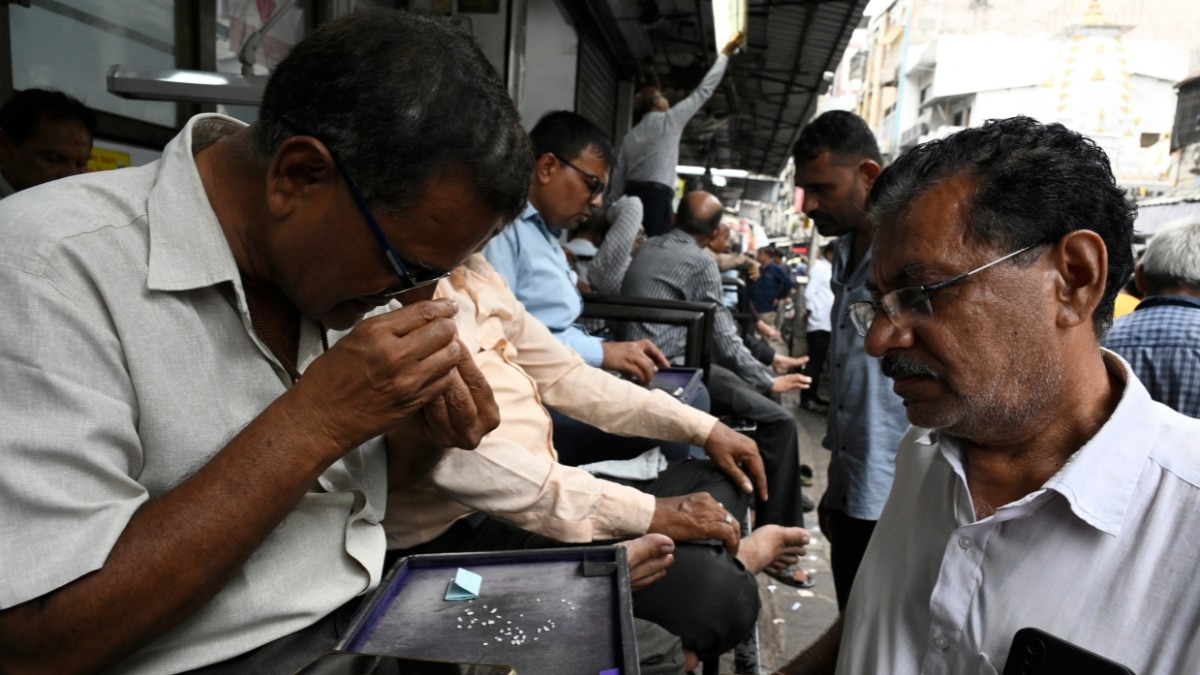
The move is expected to support Surat and Mumbai's growth as globally recognised rough diamond trading centres and push up exports, investments and jobs in the sectorA new tax law cleared by Parliament could eventually give Antwerp and Dubai a ‘diamond identity’ crisis. The world's diamond business runs on a strange split. India cuts and polishes about nine of every 10 diamonds sold globally—most of it in Surat. But the buying and selling of the raw stones, before any artisan touches them, happens in faraway Antwerp and Dubai. Parliament has just taken a serious swing at that. Under the Taxation and Other Laws (Amendment) Bill, 2026, from October 1 this year until March 2041, foreign companies selling rough diamonds in India in special customs areas at Mumbai and Surat will pay no income tax on those sales. Currently, a rough diamond leaves a mine in Botswana or Angola as a dull grey pebble. Somebody must sort it, price it and match it to a buyer. Antwerp has done this for 400 years and has the banks, brokers and trust to go with it. A sale there is taxed at 0.187 per cent. Dubai charges nothing, lets foreign firms own their businesses outright and take their money home freely. India was the world’s largest rough diamond importing market in 2025, importing 106.09 million carats worth $11.07 billion.Surat sits at the end of that chain. Its polishers buy stones that have already passed through someone else's hands, at someone else's margin, on someone else's timetable. And the drift has been one way. Dubai's share of India's rough imports climbed from 36 per cent in 2019-20 to over 60 per cent by 2023-24 while Belgium's roughly halved. So why couldn't India trade the stones itself? Government tax. India built special notified zones—secure customs enclaves where foreign miners could show stones to Indian buyers. But the moment a sale happened, taxes took a third of the profit. So, miners showed goods in India, flew them back to Dubai to sell them, then shipped them back.By the industry's own reckoning, about 60 per cent of stones made this pointless round trip. A 2024 fix let foreign miners simply declare a flat 4 per cent profit on such sales and pay tax on that, instead of opening their books. But there was still a tax to pay, and the offer was open only to mining companies, not to brokers and auction houses through whom most roughs actually change hands. The ‘fix’ was a non-starter. Now, the new law fixes both problems. Zero tax beats Belgium's 0.187 per cent. And it now covers brokers, aggregators and auction houses—the middlemen who really run the rough market and who were left out the last time. Industry leaders believe the move will help reduce procurement timelines, improve access to rough diamond supply, increase trading activity and further strengthen India's role across the diamond value chain.A week after the legislation was passed, reflecting its immediate impact, a senior government delegation from Namibia visited Mumbai to explore direct rough diamond trade with India. Kimberley Process, an intergovernmental forum to exclude conflict diamonds from legitimate trade, has data that reports that Namibia produced 2.09 million carats valued at $721.4 million in 2025, with an average value of $343.88 per carat—the highest of any producing country in the world. It is the fifth-largest diamond producer by value and accounts for approximately 8 per cent of the global rough diamond production.The policy is also expected to support the growth of Surat and Mumbai as globally recognised rough diamond trading centres and contribute to higher exports, investments and employment opportunities for the sector.Yet a tax law is not a trading floor. Gems and Jewellery Export Promotion Council (GJEPC) chairman Kirit Bhansali says what held India back “was not capability or capacity; it was certainty”, and that a 15-year statutory exemption (till 2041) settles the matter.GJEPC has asked the government to update trade and customs rules so that middlemen are actually allowed inside the zones. The tax department has yet to issue the paperwork rules. The zones are also still built on the assumption that the buyer is Indian, which makes India a cheaper shop, not yet a marketplace where foreigners trade with each other. Antwerp and Dubai are not packing up. What Surat's polishers will get, for now, is stones closer to home, less shipping, and a shot at buying direct instead of through a middleman. While Mumbai already sits on the international map as an urban metropolis with international connectivity at scale, Surat does not have a direct flight to Mumbai, never mind to, say, Tel Aviv or Brussels.Although the Surat Diamond Bourse’s 4,200 offices are struggling to attract traders and polishers, this incentive could act as a much-needed boost for the ecosystem of bankers, brokers, certifiers and allied operators to set shop here. Subscribe to India Today Magazine- EndsPublished By: Yashwardhan SinghPublished On: Aug 19, 2026 17:05 IST
As bill removes tax on rough diamond trade, how Surat-Mumbai could gain
Full Article
Original Source
Read the full article at Indiatoday →KhanList aggregates and links to publicly available news content. We do not host full articles from third-party sources. Always verify important information with original sources.