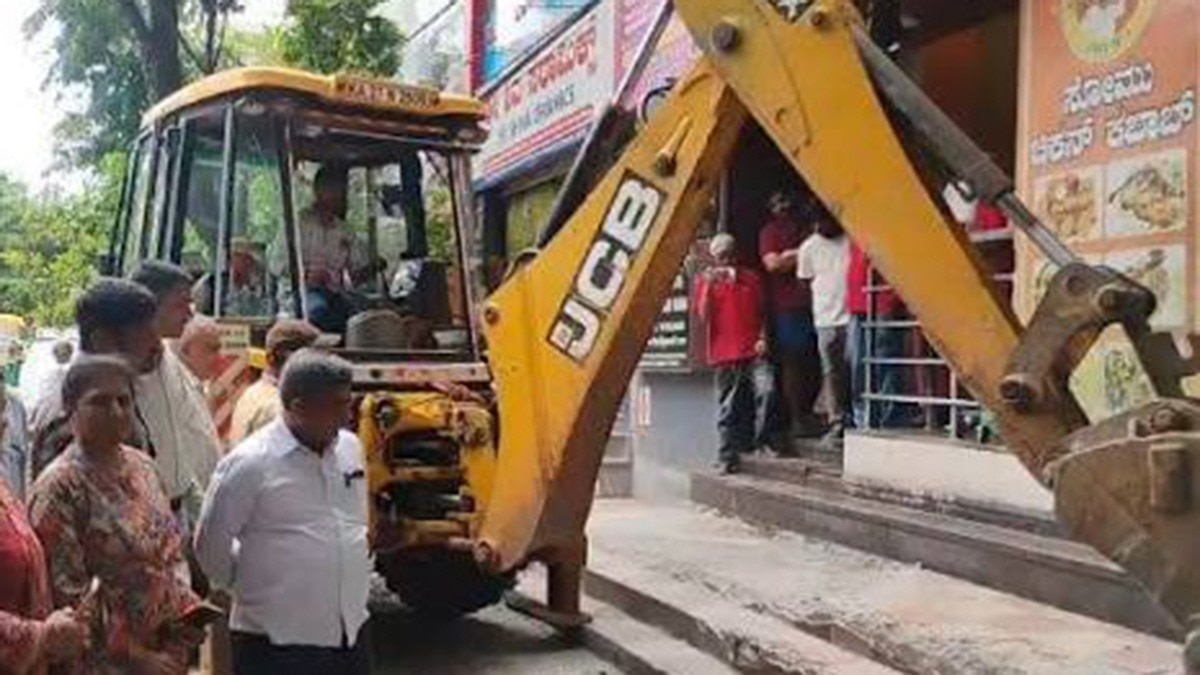
Since July 1, obstructions from 673 km of footpaths have been cleared. Impetus for the walkability campaign came from a Supreme Court ruling on the right to walkIn March, as the Indian Premier League cricket season kicked off, tour guide Arun Pai, who calls himself Bengaluru’s ‘Footpath Mayor’, began an ‘IPL’ of his own. The acronym stood for ‘Indian Pedestrian League’, and each time Karnataka home team Royal Challengers Bengaluru played a match, Pai’s group of civic authorities and citizen volunteers padded up to rid a tough patch of street footpath of garbage and debris.By the time the IPL cricket final was played two months later and Royal Challengers Bengaluru were crowned champions, Pai’s IPL had transformed 24 chronic black spots in the city into walkable terrain again.“Bengaluru has some of the best footpaths in India—in pockets,” says Pai, who walks extensively across the city.Bengaluru’s first serious bid to approach road design holistically materialised between 2014 and 2017 with an initial 10 km of roads in the city centre getting designated footpaths, cycle tracks, public plazas, and vending and vehicle parking zones. This was done as per specifications for urban roads pioneered by the city-based non-profit Janaagraha. The tech city has 175 km of such roads today. In 2025, for the first time, Bengaluru’s civic authority also announced in its budget a ‘pedestrian-first’ policy. But, like in other Indian cities, walking on footpaths meant picking your way through a maze of obstructions.Earlier this year, Lucknow-based start-up Neural City put out a ‘State of the Indian Streets 2026’ survey that ranked cities on various parameters, including walkability. It relied on AI-based analysis of video evidence of streets, collected by staff and outsourced contributors such as gig workers and students. In 10 out of the 12 cities surveyed, more than half of the assessed footpaths had obstructions. Even in Bengaluru, which emerged as the best performer, 45.4 per cent of assessed footpaths were found obstructed.However, over the past month, there’s been a sustained drive to reclaim Bengaluru’s footpaths. On July 1, the Greater Bengaluru Authority commenced a ‘Safe Footpath Campaign’ by clearing encroachments from footpaths in all five city corporations under its ambit.By July 27, the authority had cleared 673.71 km of footpath from obstructions that included name boards, kiosks, chairs and tables, and removed vendors and shop fronts that had spilled onto walkways. In the process, about 2,982 tonnes of debris; 5,107 advertisement pillars and boards; 3,165 steps and ramps; and 2,332 shops and petty shops were cleared.Bengaluru’s impetus to act came from a recent Supreme Court order that declared the right to walk on a demarcated footpath as a fundamental right and held urban development authorities, municipal corporations, municipalities and even panchayats duty-bound to provide and maintain footpaths.“It is not at all difficult to imagine how a wide, well-demarcated and uninterrupted footpath can change the beauty of and [ensure] equitable access to our cities and towns—this could truly be transformative of our urban and rural living,” said the Supreme Court on June 19 while delivering its judgment on a motor vehicle accident claim pertaining to the death of a five-year-old child in 2014 in Rayadurga in Anantapur district of Andhra Pradesh.“In reality, how much does it take to create a well-demarcated footpath wherever a road exists? All that the fundamental right to walk demands is comfortable space for an easy and carefree walk. Should this not be the minimum of the minimum duty that a municipal authority owes to citizens?” the court remarked.Pedestrian safety is the primary goal of the Bengaluru drive given that the city has seen 931 road accident deaths since 2023, says Krishna Byre Gowda, the minister for Bengaluru Development. He is spearheading the initiative.Improving walkability can have other benefits too, Byre Gowda points out. “To decongest cities, one of the low hanging fruits is to make people walk short distances. If they can walk a km, then they will resolve to walk rather than take a car or two-wheeler. So, you can reduce urban congestion,” he said on social media on July 9.While there has been opposition from the evicted street vendors, Byre Gowda explained that the drive is only restricted to 20 per cent of the roads in Bengaluru. “We need to protect their livelihoods. I’m leaving 80 per cent of the roads in Bengaluru open to street vending. I’m only requesting them to shift from the arterial roads to the interior roads where pedestrian footfall is less,” said the minister.Alongside the footpath drive, civic authorities on July 18 began removing abandoned vehicles from roads. And on August 1, they are set to a launch a ‘Freedom From Waste’ campaign to clear garbage and construction debris. An estimated 22,732 tonnes of debris have been identified at 1,616 locations.As part of the campaign, Byre Gowda has directed the Bengaluru Electricity Supply Company to prepare a comprehensive inventory of power supply-related infrastructure, such as transformers or disused poles obstructing footpaths.Political will has been the key ingredient in Bengaluru’s footpath drive, points out Pai. According to him, a good way to maintain a walkable city is by getting users to rate footpaths. “We don’t have user ratings for walkability. But we need to,” he says.Whenever Pai is out on a group walk, he takes along a perambulator. The thumb rule he goes by: if you can push a pram comfortably on a footpath, it’s as good as it can get.Subscribe to India Today Magazine- EndsPublished By: Shyam BalasubramanianPublished On: Jul 29, 2026 20:11 IST
As Bengaluru reclaims footpaths, next up: 22,700 tonnes of piled-up debris
Full Article
Original Source
Read the full article at Indiatoday →KhanList aggregates and links to publicly available news content. We do not host full articles from third-party sources. Always verify important information with original sources.