
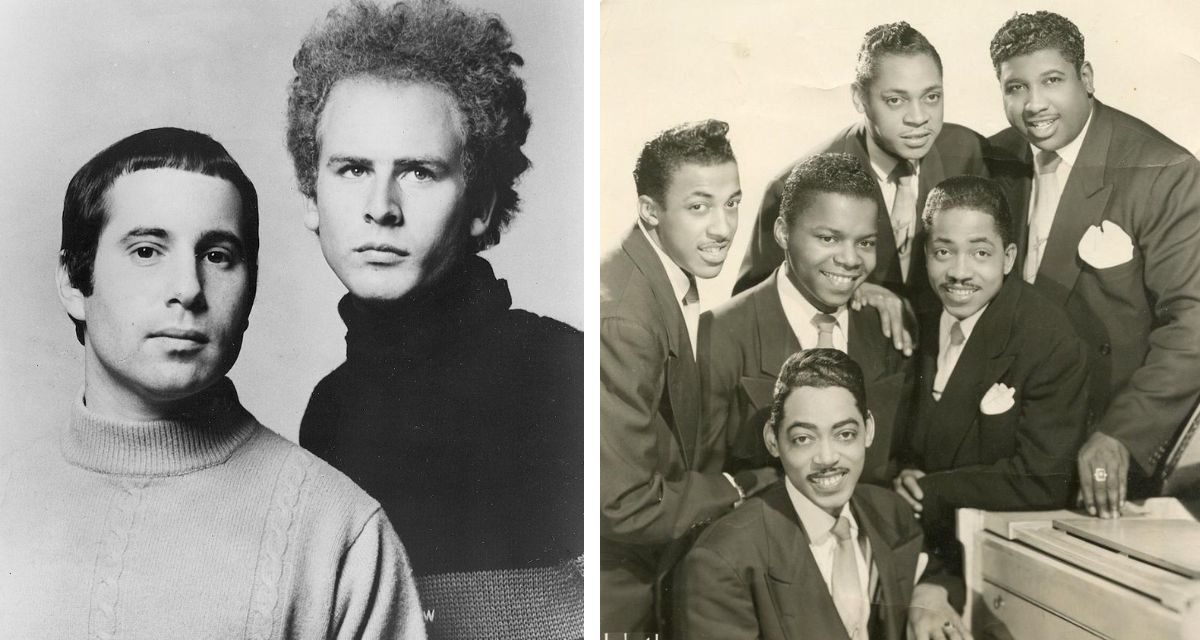
In early 1969, after the mega success of two albums that topped the Billboard 200 for four months, Paul Simon began writing “Bridge Over Troubled Water.” The gospel-inspired tune drew from two major influences. One was Sonny Til and the Orioles’ recording of “Crying in the Chapel,” which Simon had heard as a teenager. The other was a more recent album by The Swan Silvertones. Captivated by the emotional power and otherworldly quality of gospel music, Simon set out to bring that same feeling into his newest work. A song divinely inspired In one particular Swan Silvertones’ track, “Oh Mary Don’t You Weep,” Simon was struck by the lyrics, “I’ll be a bridge over deep water, if you trust in my name.” Within two hours, he had a fifteen-note melody and two verses based on these lyrics. He knew, without a doubt, that something special was being born. “I thought, ‘This is better than I usually write.’ It just seemed to flow through me. In a way, you don’t feel you can really even call it your own, but then again, it’s nobody else’s. I didn’t know where it came from, but I knew it was exceptional. It’s as if there’s this chemical feeling, the creating of something that is so exceptional it’s addictive. It’s one of the things that keeps you writing your whole life — you’re trying to get to that place again,” Simon shared with Robert Hilburn, chief pop music critic for the Los Angeles Times, for the book Paul Simon:The Life. The real reason Garfunkel rejected ‘Bridge Over Troubled Water’ Simon knew this “humble little gospel song” would be perfect for his partner Art Garfunkel’s pure, angelic tenor voice. But to Simon’s surprise, Garfunkel said no. The pair had already dealt with ongoing disagreements, both creatively and personally. So, one might assume that Garfunkel’s reticence stemmed from not liking the song. But as Garfunkel remembered it, that was not the case. He was merely looking out for his friend. “When Paul showed me ‘Bridge Over Troubled Water,’ he did say it was for me. And I loved the song immediately. My way of saying thank you was: ‘Are you sure? Because you sound lovely singing it, and it’s almost like you could do it…’ “Now, the famous story is that he took offence and that became a thorn between us, as if I was rejecting the song. That’s nonsense. I don’t remember him having a hard time with my grace. He said: ‘No, I wrote it for you.’ I said: ‘Thank you, man,’ and got into singing it.” The hit song that spelled the end By 1970, “Bridge Over Troubled Water” was released, launching what would become the peak of Simon & Garfunkel’s musical career together. However, it would also mark the beginning of the end for their duo. For starters, tensions rose when Garfunkel took on a film role in Catch-22. This delayed studio sessions and forced Paul Simon to wait in New York while Garfunkel was away filming. Worse still, Garfunkel had expected Simon to write the remainder of the album while he was away. That way, it would be ready to record once he returned. That left Simon feeling stuck with all the “heavy lifting.” Simon’s resentment grew as Garfunkel’s vocal performance of the song became an iconic, career-defining moment. It was a moment Simon couldn’t help but envy. As Simon recalled: “Many times on stage, when I’d be sitting off to the side… and Artie would be singing it, people would stomp and cheer when it was over, and I would think: ‘That’s my song, man. Thank you very much. I wrote that.’ In the earlier days, when things were smoother, I never would have thought that, but towards the end, when things were strained, I did.” By 1971, the legendary folk-rock pair, who had begun performing together as sixth-graders, had officially parted ways. But “Bridge over Troubled Water” remains a beloved classic, covered by everyone from Aretha Franklin to Harry Styles. Simon has even performed it solo. The song may have helped bring the end of Simon and Garfunkel, but its story proves that even relationships that don’t last can create something lasting.
Art Garfunkel initially refused to sing Paul Simon’s ‘humble gospel song.’ It became their biggest hit.
Full Article
Original Source
Read the full article at Upworthy →KhanList aggregates and links to publicly available news content. We do not host full articles from third-party sources. Always verify important information with original sources.