
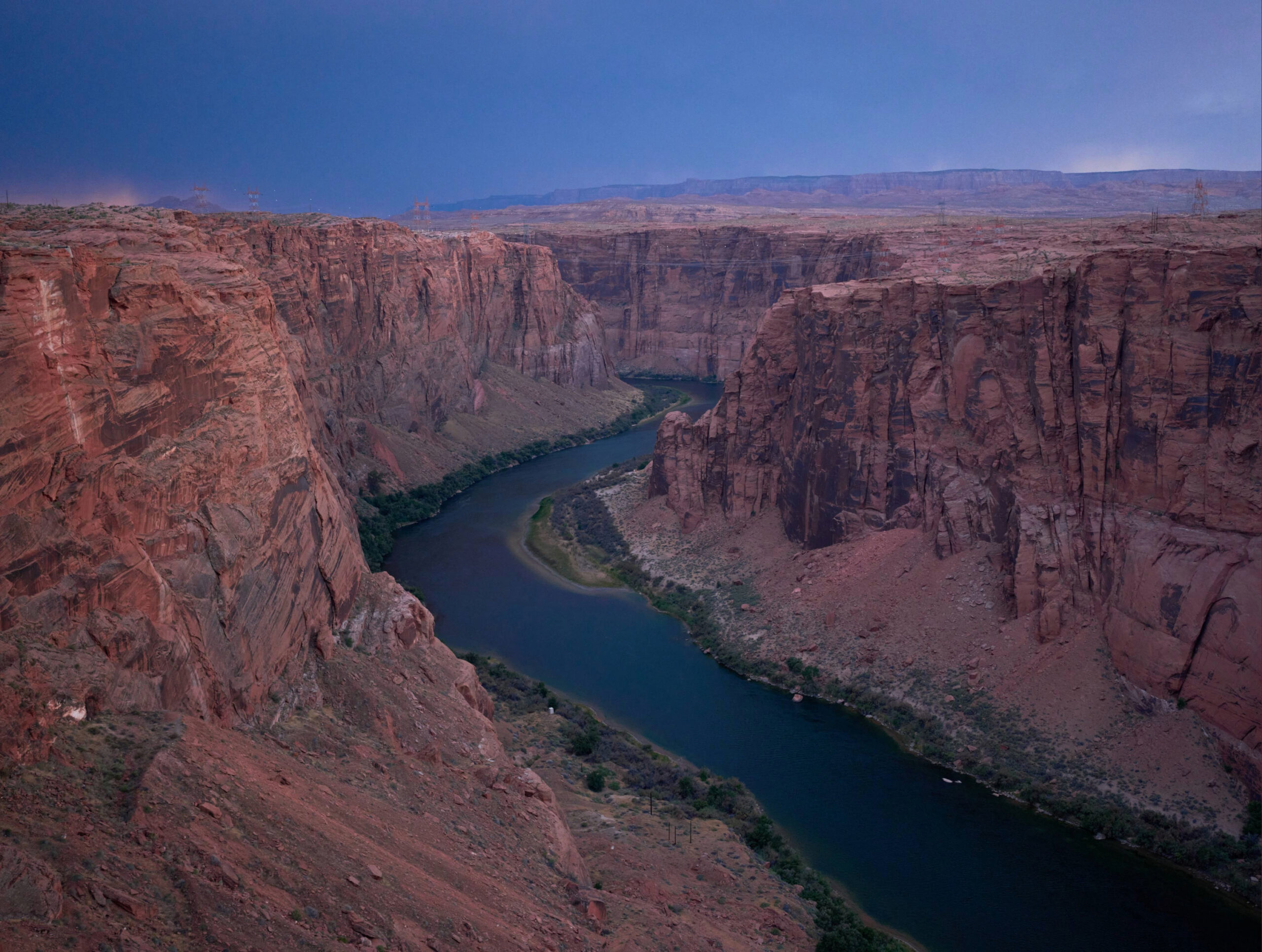
Arizona and Nevada say the federal government failed to hold upper basin states accountable for delivering water legally owed to those on the lower basin.(CN) — Nearly eight weeks after the federal government slashed Arizona’s share of Colorado River water by nearly a third, the state’s Department of Water Resources joined a Nevada lawsuit challenging the Bureau of Reclamation decision.The state department and Arizona Governor Katie Hobbs say the bureau failed to hold the four upper basin states accountable for water delivery obligations to the three lower basin states, which absorbed all federal reductions imposed in August.“Arizona has always been willing to do our part to protect the Colorado River, but we will not accept a forced federal plan that solves this crisis on the backs of our families, farmers, and businesses," Hobbs said in a Friday afternoon press release. “We are drawing a line in the sand.”The bureau’s plan follows years of negotiations over post-2026 operating guidelines that missed several deadlines and ultimately deadlocked. The upper basin states, Colorado, Utah, Wyoming and New Mexico, refused mandatory cuts, citing senior priority under the Law of the River.Under the plan, the lower basin states, Arizona, Nevada and California, will collectively cut 3.5 million acre-feet over the next two years. Arizona will give up the most, 760,000 acre-feet annually for two years. With another 300,000 acre-feet in voluntary conservation, the state will lose more than 1.8 million acre-feet by the end of water year 2028.An acre-foot is about 326,000 gallons, enough to cover one acre with a foot of water and typically supply three average households for a year.The plan includes no mandatory cuts for the upper basin.“I am taking this legal action alongside Nevada because the federal government refuses to hold the upper basin accountable for the water deliveries they owe Arizona, and is threatening to force draconian cuts that go well beyond the Lower Basin Agreement,” Hobbs said in the press release. “While we ensure our voice is heard in court, we’ll continue working alongside Nevada and California to implement the Lower Basin Agreement and prevent a devastating cut to Arizona’s Colorado River water.”The Lower Basin Agreement is a deal between Arizona, California and Nevada to protect the river and avoid future federal cuts that could slash more than 77% of the Central Arizona Project’s allocation. The canal supplies more than 30% of Arizona’s water. Under the agreement, the lower basin states commit to conserving more than 3.2 million acre-feet in 2027 and 2028.Nevada sued Aug. 24, three days after the Bureau of Reclamation announced a plan to cut the state’s allocation by 210,000 acre-feet annually, about 71% of its 300,000 acre-foot entitlement.Nevada’s share is just 3.3% of water allocated to the lower basin states and Mexico, but supplies 90% of water used in the Las Vegas Valley.Without it, the already dry state could shrivel.Nevada says the federal plan violates the Administrative Procedure Act, National Environmental Policy Act and Law of the River. It wants a judge to halt implementation and vacate the operating plan and environmental impact statement authorizing it.Arizona officials say they were similarly shortchanged.“Intervention in the Nevada lawsuit is necessary at this time for Arizona to protect its legal rights to Colorado River water while preserving a path forward to achieving a collaborative outcome with California and Nevada to protect the Colorado River system,” said Tom Buschatzke, director of the Arizona Department of Water Resources.Hobbs said joining the lawsuit will allow Arizona to protect its interests and challenge parts of the final environmental impact statement and record of decision that she says unlawfully fail to require upper basin reservoirs to deliver water to Lake Mead, created by the Hoover Dam at the Grand Canyon’s west end.Lake Mead and Lake Powell, created by the Glen Canyon Dam at the canyon’s east end, are at 27% and 22% capacity, respectively, while upper basin reservoirs remain above 60%. Both lakes are nearing “deadpool,” the level at which water can no longer flow through their hydropower-generating dams.The federal plan sets cuts for the next two years, but future, potentially steeper lower basin cuts will depend partly on Lake Powell’s elevation. The bureau will conduct 24-month studies to determine the highest release possible while keeping the lake at 3,510 feet, just 140 feet above deadpool.If that release is at or below 6 million acre-feet, it will trigger reconsultations to further reduce lower basin use by as early as June 2027. A 7 million acre-foot release would avoid further consultations.Subscribe to our free newslettersOur weekly newsletter Closing Arguments offers the latest about ongoing trials, major litigation and rulings in courthouses around the U.S. and the world, while the monthly Under the Lights dishes the legal dirt from Hollywood, sports, Big Tech and the arts.Additional Reads
Arizona joins lawsuit challenging Colorado River cuts
Full Article
Original Source
Read the full article at Courthousenews →KhanList aggregates and links to publicly available news content. We do not host full articles from third-party sources. Always verify important information with original sources.