
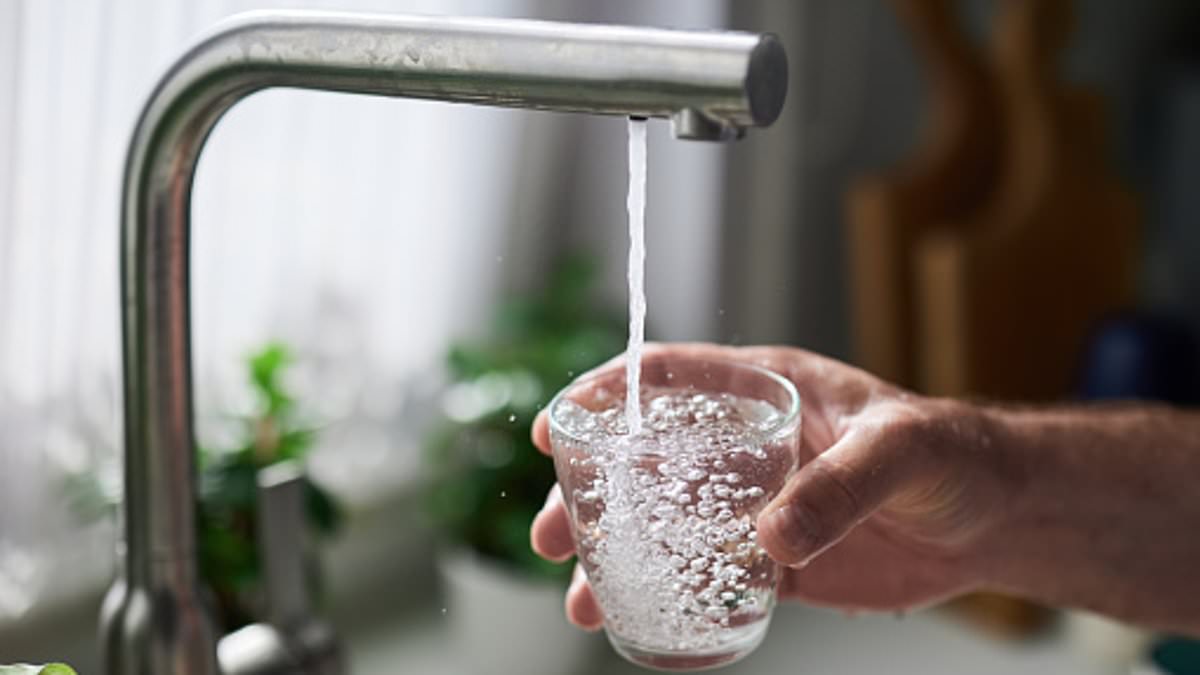
Millions of Britons across the UK could be needlessly squandering hard-earned cash on expensive water filters due to common misconceptions about what actually flows from their taps.Despite the country boasting some of the strictest drinking water standards in the world, experts warn that confused homeowners are mistaking harmless regional mineral quirks, such as chalky limescale in hard water areas or harmless air bubbles, for contamination. Before splashing out on pricey filtration systems, Brits are being urged to check their local water supply characteristics, as many standard pitchers do little to solve the issues people actually complain about.Julie Dolman leads the technical department at Doulton Water Filters, and she says that many issues people see as red flags in their water supply are actually harmless.She says, ‘Water can vary from one part of the country to another. UK drinking water has to meet strict standards, but that doesn’t mean every household receives water with exactly the same characteristics.’Five red flags to look out for when drinking tap water:1. A persistent change in taste, smell, or appearance A change in your water doesn’t automatically mean there is a safety issue, but Dolman says she wouldn’t ignore a persistent or noticeable change, particularly if it’s something you haven’t experienced before. Dolman says a change in taste, smell or appearance doesn't necessarily mean there's a safety issue.‘Tap water can taste or smell different for perfectly normal reasons,’ she says. ‘Chlorine is commonly used as part of the treatment process, naturally occurring minerals can affect flavour, and water that has been sitting in household pipework overnight can taste different when first poured.‘However, if you notice an ongoing or significant change in colour, taste, or odour, I’d contact your local water supplier rather than simply assuming it’s something a filter will solve. They’ll be able to advise whether there is an issue with the supply or something specific to your home.’2. A noticeable change after moving house If you’ve recently moved house and your water suddenly tastes different or your kettle starts developing limescale much faster, it doesn’t necessarily mean there is a problem with the water, but it should be monitored.‘Water can vary considerably from one area to another depending on its source and local geology, which can affect things like mineral content, hardness, and taste.‘It’s worth finding out what’s typical for the area you’ve moved to – you can usually access your mains supplier’s water reports on their website. A difference in taste or limescale doesn’t necessarily mean the water is unsafe. It may simply be different from what you were used to before.’3. Cloudiness that doesn’t clear ‘If your water occasionally looks cloudy or milky, I wouldn’t automatically assume it means contamination. Cloudiness is often caused by tiny air bubbles becoming trapped in the water, particularly following changes in water pressure or maintenance work. In many cases, the bubbles will disappear if you leave the water to stand for a few minutes.Join the discussionAre water filters a must in today's world?What's your view? Cloudiness is caused by tiny air bubbles trapped in the water.‘What I wouldn’t ignore is cloudiness that persists, particularly if it’s accompanied by a noticeable change in colour, taste, or smell. In that situation, I’d contact the water supplier for advice.’Dolman says it is also worth remembering that not every change in how your water looks is something that a filter needs to address. ‘Find out what’s causing the change first, rather than automatically assuming filtration is the answer.’4. Assuming a filter will fix every change in your water ‘If I noticed something has changed about my drinking water, I wouldn’t automatically assume that a filter was the answer. Different filtration technologies are designed to target specific things, so it’s important to understand what’s actually causing the change first. A filter won't necessarily solve every issue with your drinking water.‘I’d also want to know whether I was dealing with something related to taste or odour, hard water, or a specific contaminant before deciding whether filtration was appropriate. I’d then look at the manufacturer’s supporting performance test data and recognised certifications, such as NSF or WRAS, to check what they cover.‘For me, the important thing is understanding the issue first rather than simply assuming that putting a filter on the tap will solve it.’ 5. Not knowing what’s in your local water ‘I’d always take a few minutes to understand more about the water coming from my tap. UK drinking water is highly regulated and has to meet strict standards, but understanding the characteristics of your local supply – from hardness and naturally occurring minerals to the treatment process used – can help explain things you notice at home.‘It can also give you a better starting point if you’re considering filtration. Rather than assuming you need a filter because you want ‘cleaner’ water, I’d first look at what you’re actually trying to achieve and what’s relevant to your local water.’
Are YOU wasting money on expensive water filters? Expert reveals what's harmless, and what's a 'red flag' when it comes to your tap water
Full Article
Original Source
Read the full article at Dailymail →KhanList aggregates and links to publicly available news content. We do not host full articles from third-party sources. Always verify important information with original sources.