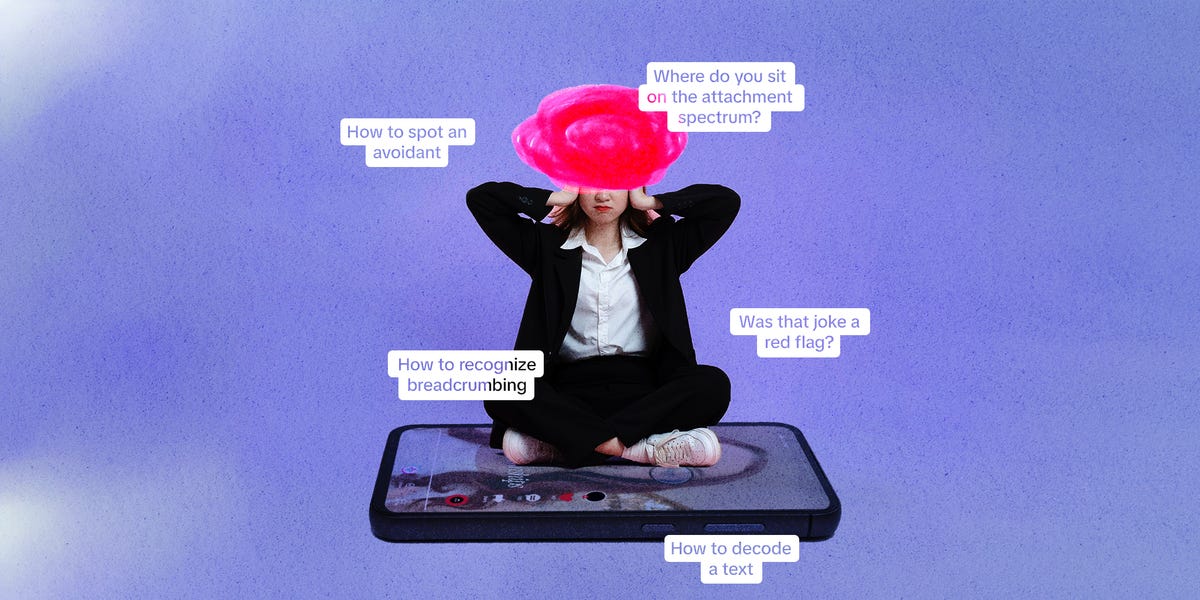
There was a time when dating advice mostly came from your mom, your best friend, or the one person in the group chat who had been in a stable relationship for longer than six months. These days, though, it often comes from a stranger speaking directly into a camera with a ring light, a podcast mic, and absolute certainty, and that shift in teacher does have an impact on the dating landscape.TikTok relationship experts have become part therapist, part detective, and part emotional translator to millions of viewers they don’t actually know. They show us how to spot an avoidant, identify a red (or yellow) flag, decode a text, recognize breadcrumbing, and generally work out whether someone is truly interested. Some of their content is genuinely useful and even necessary: It gives people language for experiences they may have struggled to articulate otherwise, and that can be incredibly validating.As a sexologist with an online presence, I am well aware of the irony of critiquing relationship advice on social media while also creating it myself. I make videos about sex, dating, communication, and relationships, and I believe strong digital fluency can really help people. I would never dismiss the advice I’ve shared or the valuable work being done by many thoughtful experts online, because the truth is my concern is not that relationship advice exists on TikTok, but what happens to us all collectively when the most complex ideas about intimacy are clipped and stripped of context, qualifications, and nuance, then handed to a large dating cohort as tools?Learning about attachment styles, boundaries, emotional availability, and healthy communication can help people make sense of old patterns. It can also make dating feel less lonely. (There is something powerful about hearing someone explain a dynamic you’ve lived through yourself and realizing, ‘Oh, that is what was happening.’) Even so, issues arise when complicated human behavior is reduced to 30-second videos.In sexology and relationship therapy, context matters. People almost never fit into neat categories: Yes, someone could pull away because they are avoidant, but they could also pull away because they are overwhelmed, grieving, unsure, depressed, distracted, or simply not that interested in you. All these possibilities can look frustratingly similar from the outside, which can make one-size-fits-all viral advice a poor substitute for an honest read from a trusted friend.But algorithms frequently reward certainty, not nuance. A confident statement like “if he wanted to, he would” is easier to absorb than a more honest answer: sometimes people want to and still struggle. (But make no mistake: That does not mean we should excuse poor behavior. Someone’s presumed attachment style is not a free pass to ignore you, disappear for three days, or leave you in a constant state of anxiety, just like understanding why someone behaves a certain way does not mean you have to stay and experience it.)Add Cosmopolitan as a preferred source in your Google search results.Use your Google account to add this to your settings.The real risk comes when the therapeutic language social media platforms adore turns you into a doctor of your own love life, handing out prescriptions. Suddenly, every ex is a narcissist. Every delayed reply is emotional unavailability, and every uncomfortable conversation is gaslighting. We can become so focused on diagnosing the other person that we stop asking a more important question: How do I actually feel in this connection?Dating content can make people feel like they have to be hyper-vigilant. Instead of getting to know someone, you start assessing them. Was that joke a red flag? Was their hesitation avoidant behavior? Did they future-fake by suggesting a second date? When dating starts to feel like a psychological crime scene, it becomes difficult to relax long enough to experience attraction, curiosity, or even joy.This is particularly relevant when it comes to intimacy, because desire rarely sprouts under surveillance. If you are constantly monitoring whether you are being chosen, rejected, manipulated, or triggered, your nervous system may stay in protection mode. And the hard truth is that emotional connection usually requires some tolerance for uncertainty.The best online advice should give you more agency, not more anxiety. It should help you notice patterns without convincing you that every person can and should be decoded before dessert. It should make you more curious about yourself, not just more suspicious of everyone else. What is your communication style? Where do you sit on the attachment spectrum? And what are you doing to personally bring fun to the table?Before accepting a piece of relationship advice blindly online, ask yourself whether it helps you understand your needs, communicate more clearly, or make a healthier decision. And ask whether it leaves room for complexity, too. TikTok relationship experts are not inherently helping or harming us, and the same creator’s two cents can change someone’s life for better and someone else’s for worse. The truly useful ones give us language, perspective, and permission to expect better while the less useful turn dating into a series of tests no real human could pass.Use the language; keep the boundaries; learn the patterns. Just do not forget that relationships are lived between people, not content categories or your FYP.
Are TikTok Relationship Experts Helping Us… or Making Dating Even More Confusing?
Full Article
Original Source
Read the full article at Cosmopolitan →KhanList aggregates and links to publicly available news content. We do not host full articles from third-party sources. Always verify important information with original sources.