
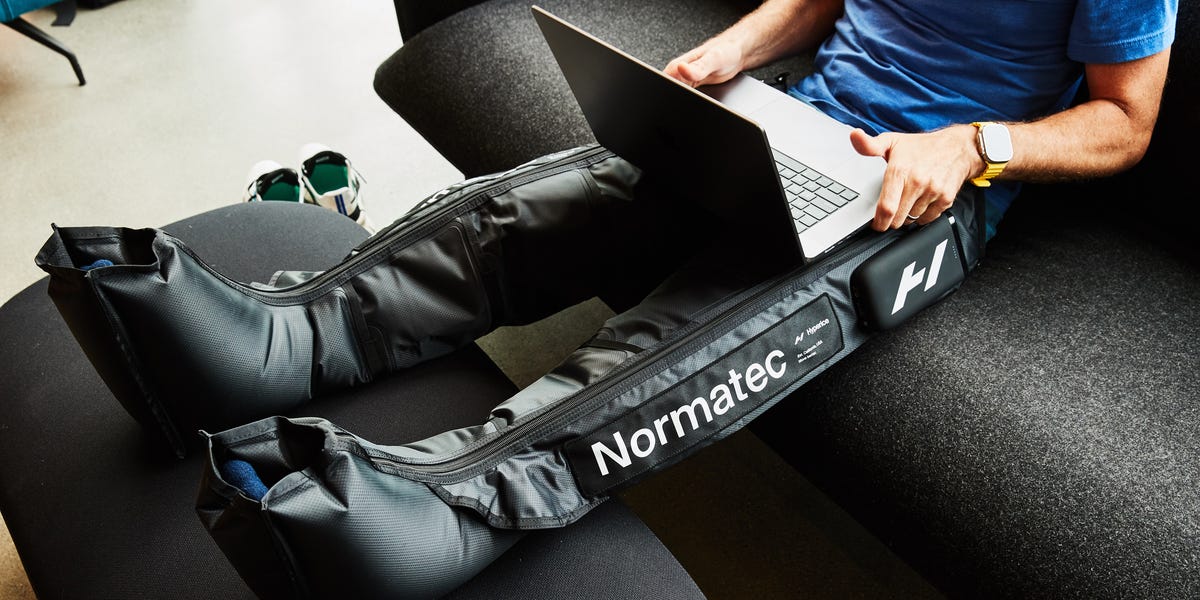
Jump to:What is recovery, exactly?Why is recovery important for runners?Which recovery tools are actually worth it? Experts weigh inThe bottom lineRecovery is not the most exciting part of a runner’s training program—after all, it’s literally just the rest you take in between workouts—but ensuring high-quality recovery is essential if you want to maximize the gains of exercise and generally feel better after a butt-kicking run.When good recovery is your goal, you’ll find no shortage of tools and strategies that promise to deliver exactly that—from cold plunges and saunas to foam rolling, compression gear, and more.But as with many things in the wellness world, not everything that’s trendy is actually beneficial. So which recovery tactics are truly legit—and which ones are overhyped? We investigated five popular running recovery strategies to learn what’s worth your while… and what you could likely skip.What is recovery, exactly? Recovery is when you give your body a break so that it can absorb the training you’re doing, Grace Horan, an exercise physiologist at the Hospital for Special Surgery (HSS), tells Runner’s World. There are four foundational elements to recovery, according to Horan: sleep, hydration, nutrition, and maintaining an appropriate training load (basically, keeping your easy runs easy and avoiding large spikes in training volume or intensity).Other recovery tools can be used on top of that foundation—and we’ll dissect five of them in this article—but it’s important to first make sure that your foundation is solid, Horan says. In particular, sleep and nutrition are the most important, Horan says. If you aren’t locked in with those two, “all of the other recovery methods almost can go out the window,” Horan says.Why is recovery important for runners?Recovery is part of what Horan calls the “adaptation equation”: stress plus recovery equals adaptation.Stress is all your training runs and workouts. Recovery includes the four foundational elements, along with any other recovery tools used on top of that. And adaptations are physiological changes that occur in response to training, such as improved endurance, increased aerobic capacity, and more strength and power in your muscles, Susan Kwiecen, PhD, principal scientist with the Gatorade Sports Science Institute and author of numerous publications on exercise recovery, tells Runner’s World.Stress + Recovery = AdaptationBasically, you’re not getting stronger and more fit from training alone, but instead when you combine training with quality recovery.These adaptations, says Kwiecen, are “ultimately what allow runners to become fitter and perform better over time.” And recovery—when done right—can enhance these adaptations by helping them happen better and faster. Recovery can also help you maintain performance by reducing soreness and managing fatigue, which allows you to run again as quickly as possible.Keep in mind: “there’s no single best strategy for recovery,” Kwiecen says. “It depends really on the runner’s goals.”1. Cold PlungesAh, the cold plunge. Most runners have a love-hate—or a straight-up hate-hate—relationship with this recovery tool. That’s because hanging out in frigid water is not very enjoyable in the moment. But is the discomfort worth it if your goal is recovery?Possibly… with an asterisk. “The literature shows that cold plunges, ice baths, and cryotherapy in general can reduce soreness and help improve perceived recovery,” says Kwiecen. And if you feel less sore thanks to cold plunging, you may be able to perform better either that day or the next day. For that reason, cold plunges can be useful when your priority is rebounding between races or hard training sessions, Kwiecen says.But here’s the catch: Regularly jumping in a cold plunge post training could reduce some of your fitness adaptations. Research shows this concern is most pronounced after resistance training, Kwiecen says. The cold temps can reduce blood flow to your muscles, which can decrease the opportunity for protein synthesis, ultimately blunting hypertrophy (muscle growth) and strength gains, Horan explains. Cold plunging may diminish endurance adaptations, too, Kwiecen adds.So if you’re in a phase of training where your goal is to get stronger, “using cold plunges might not be the best idea,” Kwiecen says. Instead, they’d be better shelved for the end of a training block, when you’re no longer interested in gaining strength but simply want to feel as recovered as possible for your race.Horan’s take: Cold plunges are not a recovery strategy that people should go out of their way to do, especially because the experience of cold plunging is “not super pleasant.” She personally doesn’t partake in cold plunging because “there are other recovery methods that are a little bit more gentle and a little less jarring that will have a very similar effect on perceived soreness and perceived recovery,” she explains.That said, if you’re already an ice bath enthusiast, continuing the habit wouldn’t make or break your recovery or your training adaptations, Horan says.If you do choose to cold plunge, pay attention to how your body reacts. Shivering, in particular, is a sign to end your session stat. “As soon as you start to shiver, you’re reversing all of the possible [recovery] benefits of cryotherapy,” Kwiecen explains.2. Foam RollingFoam rolling can elicit a mixed bag of emotions from runners. Some athletes swear by their roller for reducing soreness and boosting mobility—and others try it and don’t feel any different, so they stop using it, Horan says.Whatever camp you fall into, here’s the truth: “Rolling is definitely a low-risk option that can make runners feel looser and more prepared to train,” Kwiecen says. “It probably won’t ease muscle damage, but it can definitely help improve a runner’s mobility or comfort—both of which make it easier to complete planned training in the future.”Horan personally loves foam rolling and does it after every run: “It’s low risk. It’s inexpensive. It does a few things reasonably well,” she says. That includes increasing range of motion and reducing feelings of soreness and general tightness after a run.These benefits can be especially helpful for runners who are in an intense training block—for example, people nearing the end of marathon training. For some people, heavy training can really increase tightness in the fascia and muscles, Horan explains, in which case foam rolling can be an easy antidote.Also cool: A foam rolling session doesn’t need to be long to be effective. “It’s something that you can get done in five minutes or less,” Horan says. She recommends runners focus their foam rolling on the quads, glutes, calves, and hamstrings (though she adds that stretching the hamstrings is potentially more effective than foam rolling them). Spend about 30 seconds to 1 minute per side of each muscle group, she advises.For each muscle group, roll up and down the big muscle belly (rather than near the tendons) and pause when you find a spot that feels super tight, Horan says. From there, contract the muscle you’re foam rolling, which helps the foam rolling penetrate deeper into the myofascia, she explains. For example, kick your heel to your butt multiple times to contract the quad, or point and flex your foot to contract your calves.Many runners foam roll after their workouts. But it can also be a helpful tool in your warmups to help you feel loose and move efficiently during a long run or race, Kwiecen says.3. Popping NSAIDsNon-steroidal anti-inflammatory drugs (NSAIDs)—which you can find over-the-counter as Advil, Motrin, Aleve, or Aspirin—are a type of medication that some runners take to ward off post-exercise discomfort.The purpose of these drugs is to reduce pain and inflammation, Kwiecen says. And that can be helpful… when there is a valid medical reason, Horan says. But Kwiecen and Horan agree NSAIDs shouldn’t be a routine recovery strategy from running—a stance supported by other experts and research.Part of that is because the stress of training triggers an inflammatory response in most people, Horan says. That might sound bad, but it’s actually a good thing: This specific type of inflammation is a normal, natural reaction to exercise that “needs to take place for us to adapt optimally to the stress that we’re giving our body,” Horan explains. Taking NSAIDs suppresses that inflammatory response, which can ultimately minimize our gains from training, she explains.Plus, taking NSAIDs to mitigate pain you’re feeling from running can cause you to continue training through an issue that would be better solved with rest, training modification, and potentially getting evaluated by a medical provider, Kwiecen points out. “Reducing pain and improving recovery are not the same thing,” she says.Bottom line: Runners shouldn’t rely on NSAIDs as a recovery strategy. If you’re an athlete who thinks you need this medication for another reason, Horan recommends consulting with your doctor on the pros and cons.4. Compression GearCompression garments—in the form of socks, pants, and pneumatic compression boots—are a popular choice for runners looking to accelerate their recovery after long or hard runs. But do they work?This is another recovery strategy that does have legit benefits… but also comes with an asterisk. Horan generally likes compression garments, saying they can help boost a runner’s comfort, perceived recovery, and blood flow post exercise. Research also shows that using compression gear can help you feel less sore, Kwiecen adds. But here’s a caveat: You need a certain level of compression in order to achieve that reduction in soreness—and it can be difficult to get that from commercially available products, Kwiecen says. As she puts it: “Compression garments are tricky.”That said, they’re a pretty low-risk strategy, meaning they likely won’t harm your recovery in any way, Horan says. “There are people that will wear their pneumatic compression boots after every single run, and if they love it, then I think that’s great,” she says. At the same time, some compression garments—particularly the pneumatic boots—can be pricey, and by no means are they essential to a quality recovery. As Horan puts it: “I don’t think people need to go out and buy $500 boots if it’s not something that they already love.”5. SaunaUnlike cold plunges or tight compression gear, saunas are one of those recovery strategies that feel good in the moment (and often afterward, too). “People love a sauna—myself included,” says Horan. They can help usher in a sense of relaxation and may also reduce feelings of soreness, Horan says.Beyond those recovery benefits, saunas could also help stimulate adaptations that benefit endurance performance, Kwiecen adds. More specifically, sauna sessions count as heat exposure, which spurs the production of heat shock proteins, Kwiecen explains. “These proteins protect and repair cells when they’re under stress,” she says. This means sauna sessions can help the body adapt to heat, “which can be beneficial when preparing for races in warm conditions,” Kwiecen says. Horan agrees that sauna sessions can help runners acclimate to heat if used regularly.That said, saunas do have their limitations: They aren’t going to erase muscle damage or speed up recovery, Kwiecen says. Even so, Horan sees them as a “great” option for runners who enjoy them and have the time for them in their schedule.Just be careful about jumping into a sauna immediately following a long run, especially if you’re already dehydrated, Horan says. That’s because you’ll likely sweat in the sauna, which will cause you to become even more dehydrated. And proper hydration, like we mentioned, is an essential component to good recovery.Also, for general safety, don’t spend a ton of concentrated time in the sauna. Unlike the cold plunge, there’s no reverse shivering response for the sauna, Kwiecen says. As a general rule of thumb, though, cap your sessions at 10 to 12 minutes (or get out sooner if you start feeling unwell). As long as you follow these general guidelines, “if you’re well-hydrated and you really like to be in a sauna, I say go for it,” Horan says.The bottom lineRunners should steer clear of using NSAIDs as a routine recovery tool, in part, because they can blunt fitness adaptations and cause runners to train through pain, which can increase injury risk. As for the other four strategies mentioned here—cold plunges, saunas, foam rolling, and compression gear—Kwiecen’s stance is that “if it makes you feel better, go for it.” That’s because when you feel better, chances are you’ll perform better the next time you go out for a run. “It’s all super subjective,” Kwiecen says, adding that not many recovery modalities have strong science-backed benefits beyond the feeling of less soreness.Also keep in mind: The “right” recovery strategy may change throughout your training cycle and overall running journey. “Matching the recovery strategy to the runner’s goal is important,” Kwiecen says. For example, because cold plunging can blunt strength gains, it may not be the best choice when your goal is to get stronger—but perhaps it does have a time and place right before a big race, when your main priority is minimizing soreness.Whichever recovery strategies you choose to use, remember to first prioritize the fundamentals. “Nothing,” says Horan, “will ever, ever, ever beat sleeping enough, eating enough, drinking enough water, and avoiding really sharp spikes in intensity or volume load.”Jenny is a Boulder, Colorado-based health and fitness journalist. She’s been freelancing for Runner’s World since 2015 and especially loves to write human interest profiles, in-depth service pieces and stories that explore the intersection of exercise and mental health. Her work has also been published by SELF, Men’s Journal, and Condé Nast Traveler, among other outlets. When she’s not running or writing, Jenny enjoys coaching youth swimming, rereading Harry Potter, and buying too many houseplants.
Are These 5 Popular Running Recovery Strategies Hype or Legit?
Full Article
Original Source
Read the full article at Runnersworld →KhanList aggregates and links to publicly available news content. We do not host full articles from third-party sources. Always verify important information with original sources.