
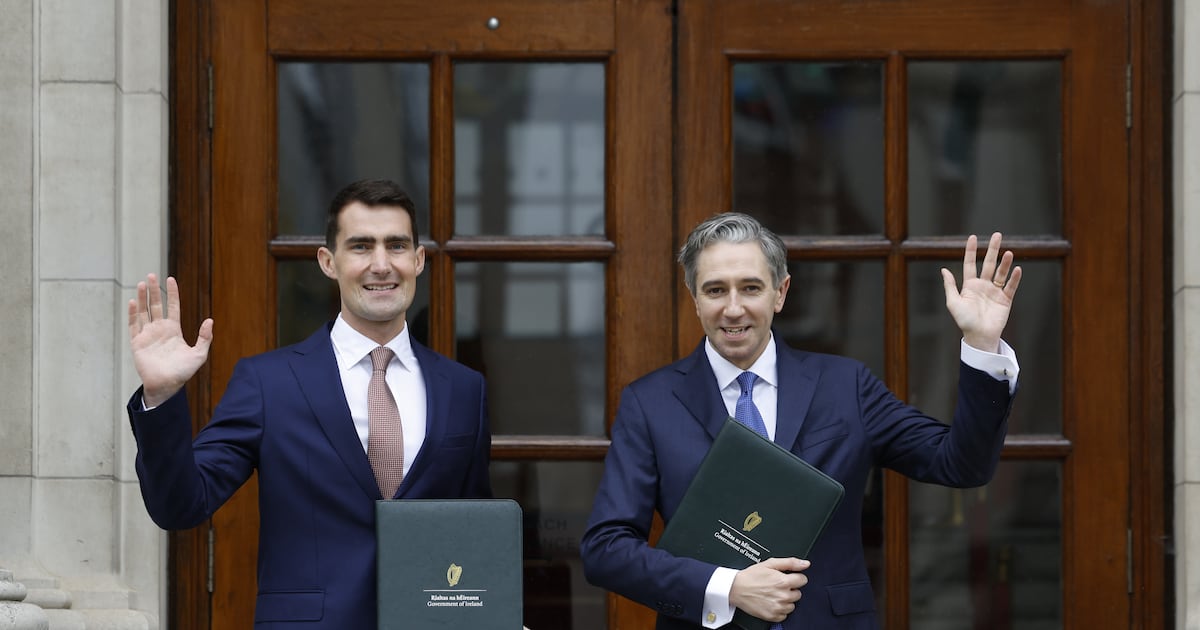
Since details of what was billed as a “workers’ budget” were confirmed last Tuesday, the various Ministers sent out to meet the press have been at pains to point to all the money the Government is putting back in taxpayers’ pockets. But although an income tax package of €1.3 billion might sound impressive and a €10-per-week hike in pensions and social welfare payments is more than might have been expected (though lower than Fianna Fáil’s pre-election promise of €12), the day-to-day numbers affecting people’s lives don’t lie.Virtually all the numbers suggest almost everyone will still be poorer next year than in 2026, emboldening public sector workers as they head into two 24-hour strikes on Wednesday and October 21st in an attempt to extract from the Government a new pay deal that would assist with these cost-of-living increases.Central Statistics Office figures published on Thursday highlight the difficulties many are facing, with prices climbing by 4.1 per cent over the last 12 months, the fastest rate in nearly three years. READ MORE“The fact that all spending categories have now recorded annual price increases for three consecutive months highlights the breadth of the cost pressures facing Irish households and businesses,” says Dermot Daly of consultants EY.He added, however, that the budget “should provide welcome support for households and businesses and help offset some of the cost pressures many continue to face”. But just how much will it help with those cost pressures?“This budget was about helping workers stand still,” says Daragh Cassidy of price comparison and switching website bonkers.ie. “But I don’t view it as some sort of big tax giveaway or boon for workers.” The big problem, he argues, “is that households are being faced with numerous new cost pressures that will erode most, if not all, of the gains from the budget. “While workers might be slightly better off next year if they can get a 4 or 5 per cent pay hike, the tax changes alone are unlikely to leave people much better off.”The cost pressures are easy to identify.All the domestic electricity and gas providers have imposed hikes in recent weeks, with most households set to be worse off by about €300 over the next 12 months as a result. The cost of a litre of motor fuel has been on an upward trajectory for weeks and is about 40 cent more than it was in February, even with temporary cuts in excise duty factored in. A typical Irish motorist uses about 1,100 litres of fuel annually the price spike means it will cost €450 more to keep their car moving in 2027 than in 2025. And, as industry sources have been repeatedly pointing out in recent weeks, the situation might get even worse in the run-up to Christmas. In January, 500 litres of home-heating oil cost just under €500. Today it’s closer to €800. Most of the 700,000 homes that rely on it will use about 1,500 litres between now and next May and many will probably pay close to €1,000 more for it than they did last winter. The most recent figures from retail analysts Worldpanel put grocery inflation at 4.3 per cent and if that level is maintained – although it is likely to get worse – a household that spends €200 a week on groceries will be €450 poorer in 2027. The cost of health insurance has also climbed, with hundreds of thousands of households getting renewal letters in the months ahead likely to pay at least €300 more for the same level of cover. [ ‘Tipping point’: Why are people giving up their health insurance?Opens in new window ]People with tracker mortgages are also facing higher repayments as a result of two interest rate hikes from the European Central Bank since June. A person with €150,000 remaining on their mortgage over 10 years will be paying just over €30 extra a month or about €350 annually in 2027 – or even more if rates climb again in December. A quick tot-up makes it clear that most – if not all – households will be worse off by more than €2,000 next year, a sum that more than cancels out all the tax cuts for even the biggest winners in the budget The marquee move by Minister for Finance Simon Harris was the raising of the entry point for the higher rate of income tax from €44,000 to €46,500, which will see the annual tax bill of the “winners” on the top rate falling by €500 a year.Also, increases of €125 in both the personal and PAYE tax credits will be worth another €250 to an individual.A couple in a double income house where both are earning in excess of €50,000 will probably pay about €1,300 less in tax in 2027 than in 2026.It sounds impressive but, as Cassidy notes, the increase in the rate at which people start paying the top rate of tax was only 5.7 per cent and there was no increase last year. “Over the past two years inflation has gone up by around 6 or 7 per cent. So the entry point hasn’t increased in ‘real’ or inflation-adjusted terms,” he says. “And back in 2010, the cut-off rate was €36,400. Had the rate simply increased in line with inflation and wage growth over the past 15 years or so, it would be over €50,000 today. And of course there was no USC [universal social charge] back then either.”If those who have fared well out of the budget are still worse off, those who missed out are likely to feel the financial sting even more. For those on the margins – the half a million people that earn between €32,000 and €44,000 who won’t benefit from the key tax breaks in Tuesday’s budget – the pain will be worse still.Labour leader Ivana Bacik described the budget as “pathetic” and “underwhelming” and said the money the Government stressed “will go back into people’s pockets could barely buy a chocolate bar a week”. It was a “sort of KitKat budget from a TikTok Tánaiste”, she said in the Dáil.“In seeking to please everybody, you’ve ended up pleasing nobody,” she said.[ There’s a good chance Ireland will come to regret this boomtime period as a missed opportunityOpens in new window ]Although the Government parties will no doubt bristle at such a suggestion, it has certainly been hard to find anyone outside those circles who was happier after the budget speech than they were before it. The discontent is only likely to grow as the dark winter evenings set in and the cost-of-living crisis drags on.
Are the unions right? Did the Government’s budget abandon workers? If they lost, who won?
Full Article
Original Source
Read the full article at Irishtimes →KhanList aggregates and links to publicly available news content. We do not host full articles from third-party sources. Always verify important information with original sources.