
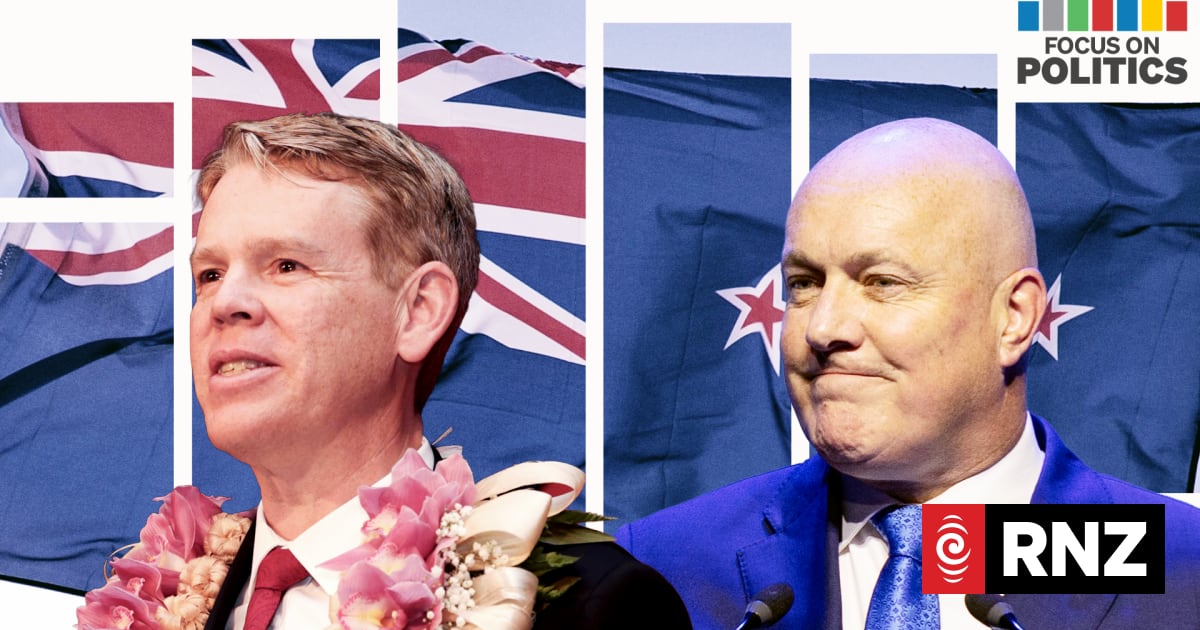
With voter turnout this election on track to be its second lowest in history, and plenty of criticism of negative campaigns, are New Zealanders tuning out of the democratic electoral process?RNZ's coverage during the election campaign considered the rise in threats towards MPs, the way negative campaigning has surged since 2020 and the scale of sexist and racist abuse in politics.Now, following an election where National and Labour combined are at historic lows on preliminary results, political reporter Lillian Hanly speaks to experts about some of the cynicism around politics, and whether the 'attention economy' is making it worse.During the election campaign, many voters told RNZ they were uncertain about who to vote for - an uncertainty they hadn't felt in the past - or whether to vote at all.One West Aucklander was so uninspired that he said choosing between the parties was like "picking which shit food to eat".His final choice? Not to vote for anyone.Another Aucklander told RNZ during the campaign he wasn't "a big fan" of any of them."All of these empty promises, all the time, saying things are going to happen and then they just don't happen."A key feature of this election was the declining support for both major parties, while minor parties saw a lift.National and Labour, under Christopher Luxon and Chris Hipkins, consistently polled in the low thirties and even twenties throughout the year.Preliminary results have them both at 29 percent.Former chief science advisor Sir Peter Gluckman described the trend as the "hollowing out" of the political middle, something traditional liberal democracies were increasingly grappling with, along with a range of other issues.Former chief science advisor Sir Peter Gluckman.Supplied / University of AucklandA global crisis of confidenceEarly this year, international relations expert Reuben Steff - now an associate professor at Mendel University, Czech Republic - described New Zealand as being on a path of systemic decline in relation to its living standards, brain drain and economy.He later told RNZ New Zealand was following the trend of a global crisis of confidence in democracy with increasing dissatisfaction with how it functioned.He pointed to growing distrust internationally in political institutions, populist sentiment, media distrust, disinformation and declining civic skills.He described social media algorithms as amplifying outrage, hostility and political division, while shorter attention spans and declining literacy and numeracy were potentially undermining people's capacity to engage with complex issues and informed debate.He warned of the erosion of the classical liberal centre, rooted in open debate, intellectual humility and the recognition of political adversaries as legitimate opponentsHe also warned political opponents were increasingly viewed not simply as being wrong, but as immoral or unwilling to debate in good faith.Steff said New Zealand was following the same trajectory."Citizens are feeling increasingly isolated and alienated. It is not an exaggeration to say that the political system now arguably faces a legitimacy crisis," he told RNZ.International relations expert Reuben Steff.suppliedThe hollowing out of the middleGluckman warned the incoming prime minister in 2023 that New Zealand was not immune to the pressures facing liberal democracies internationally, desribing them as "cracking".In New Zealand, he said "our institutions are less trusted, policy debates have often been reduced to personal attacks and citizens feel relatively powerless".Speaking to RNZ ahead of the election, he said politicians were increasingly claiming to have simple answers to complex problems that had accumulated over decades."Citizens are becoming more and more cynical about that," he said.He also pointed to social media driving demands for short-termism, the lingering effects of the Covid-19 pandemic, economic anxiety and the cost-of-living crisis - which was not unique to New Zealand.Gluckman pointed to the "hollowing out" of the political middle, saying the MMP system was not designed for the social media age."Extreme parties grab more of the attention economy," which worked on single statements which were not nuanced."In the end, policy is a complex project over time and with multiple dimensions", which also required agreement and continuity across political parties.He raised concerns too about the focus shifting towards leaders' personalities, television performances and presentation rather than their policies, and that political debate was increasingly characterised by people defining themselves against opposing parties rather than through their own policy positions."There is a tribalism that emerges, there's no doubt about that, and unfortunately, since Twitter appeared with an anonymity and ad hominem attacks becoming easier, we've seen that reflected in political discourse as well."The attention economyUniversity of Auckland professor of media and screen studies Neal Curtis described the attention economy as the situation in which information was constantly increasing, so people's capacity to pay attention to it was "ever diminishing."Curtis said the reason it was an attention economy was because corporations depend on getting customer attention to sell their product.The rise of the internet and social media had intensified the problem, with social media companies using algorithms designed to maximise engagement and keep people returning to their platforms he said.Curtis said research had found that scandal and outrage generated particularly high levels of engagement, creating an information environment increasingly dominated by conflict, antagonism and clickbait.He argued the need for commercial - and publicly funded - media to attract audiences and demonstrate engagement to advertisers and funders created pressure to produce clickbait.Curtis said (speaking prior to the news of RNZ's deficit blowout) that RNZ wasn't immune from the pressure because it must demonstrate audience engagement to justify its funding."Radio New Zealand will damage itself by trying to chase after that kind of [attention], to try and make itself heard in that type of information environment, rather than creating a completely different information environment."He's concerned about a move away from long-form, deliberate and reflective journalism.Negative campaigning and political promisesThe Listener's political columnist Danyl McLauchlan argued the major parties were losing public confidence because they had become too negative, disconnected from voters and focused on short-term political wins rather than good government.During the election, he said both major parties had run predominantly negative campaigns."They understand New Zealand politics primarily in terms of opposing each other. They define themselves in these negative terms."Somewhere along the way they've forgotten to find a way to tell something positive about themselves."He said voters recognised the disconnect and were moving towards smaller parties."The public senses that inauthenticity and that disconnection, and when they see other viable options, they just defect for them."He also pointed to an "unusual" aspect of this campaign where the major parties didn't have charismatic leaders, while the minor parties did."Normally charismatic leadership plays a huge role in politics, and that's not just being mediagenic or who you want to have a beer with."It's being able to tell that convincing story about what your party is and what it stands for and what it wants to do."McLauchlan also warned that political communications had become increasingly focused on announcements rather than delivering results, which was "enormously destructive" to the integrity of the policy process.Earlier this year, McLauchlan described in the Listener "grid-based politics", in which politicians prioritise announcements - or "announceables" - to dominate media coverage and secure short-term political gains.He argued the focus on short-term political wins had accumulated over decades, contributing to a dysfunctional political system and economy.The Listener's political columnist Danyl McLauchlan.Supplied / Te Herenga Waka University PressThe need for long-term thinkingSpeaking to RNZ again after the election, Gluckman said the results reinforced his earlier thinking and concerns."Quite clearly, the country can't decide on its future direction."He said the "muddled situation" made it very difficult for the country to make some hard decisions about the long-term direction: on the political economy, on the position of Māori, health, education, and so on.Those "hard questions" shouldn't be caught in the "pendulum of three-year cycles", he said."We do need some long-term thinking desperately in New Zealand."Associate professor at Massey University Veronica Tawhai, an advocate for constitutional transformation, was particularly concerned about the lack of vision from major parties on issues affecting Māori.She's also concerned at the way Māori increasingly seemed to be considered as any other group in New Zealand, rather than holding a unique position.According to Tawhai, the major failing from the big parties was a lack of vision and an "extreme lack of policy proposals" that would help Māori achieve equality as citizens, despite experiencing some of the effects of housing and healthcare crises disproportionately.She said Māori had traditionally been highly politically engaged, but research showed attack-style politics could cause young Māori to switch off.The concern was that this could move beyond disillusionment and discourage them from participating in politics altogether."When elections are based on your antagonism or perceived objections to the other side, you're not projecting a message of where you would want to go, and I think New Zealanders do want have a sense that the country can move forward," said Gluckman.He said the centrist parties would need to "have a real deep think about how they behave and what they think attracts voters".
Are New Zealanders sick of politics - or sick of politicians?
Full Article
Original Source
Read the full article at Rnz →KhanList aggregates and links to publicly available news content. We do not host full articles from third-party sources. Always verify important information with original sources.