
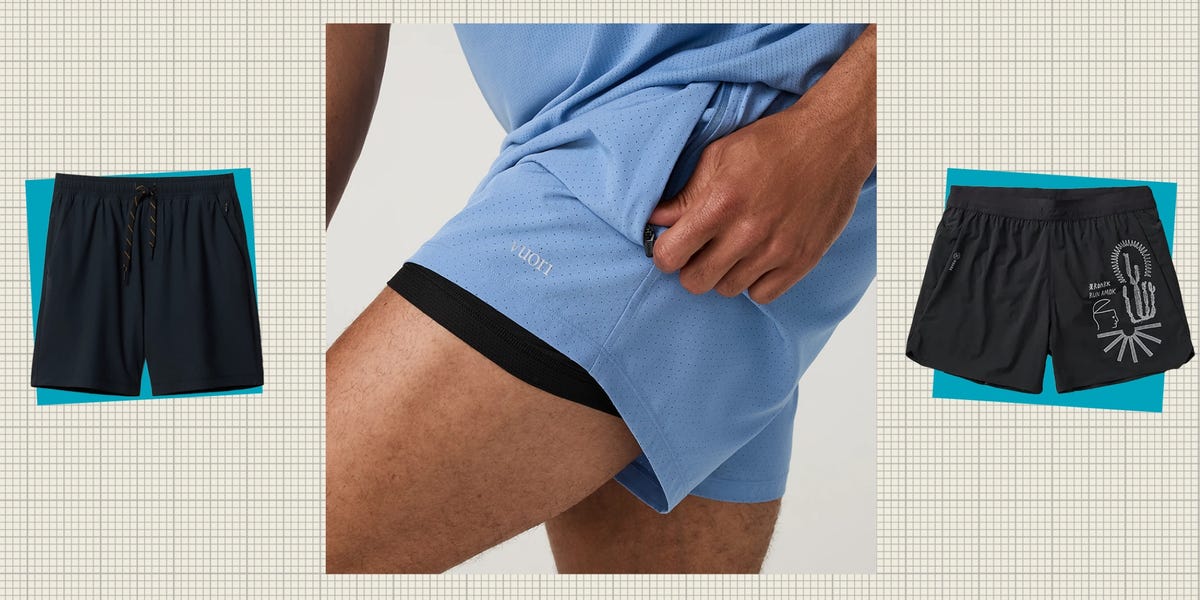
7 min readGYM SHORTS ARE a training essential, not just because they keep you decent, but because a good pair can help you stay dry and supported without restricting your mobility during runs or big lifts. If you’re not convinced you need them, try working out in blue jeans for a week. Or just trust us when we tell you that your workouts—and your legs—will be better off, and less chafed, if you invest in solid shorts.The need for workout shorts isn’t up for debate at Men’s Health HQ, but a lot of our editors and writers do have opinions on lined versus unlined shorts. Big Fitness, of course, has complicated (or optimized, depending on where you stand) the training short by making some with built-in compression underwear. The sell is that they’re more supportive and eliminate the need for a separate pair of underwear, but not everyone likes the feel—or the lack of underwear autonomy.Our team has worn and tested all kinds of shorts over the years, and we can help you avoid shelling out $60-plus on a pair you end up not loving. So we’ve put together a guide to lined versus unlined shorts, including why the differences matter, what to consider before picking a pair, and some of our favorite options in each camp.The Difference Between Lined Vs. Unlined The main difference is that one style of shorts features a built-in liner and the other doesn’t.Most lined shorts come with a pair of built-in, breathable compression shorts (sometimes mesh, and sometimes briefs). They promise more support and breathability down below, and typically extend to the mid-thigh to help prevent chafing. That extra support can make lined shorts a better option during activities with a lot of movement and friction, like running, dynamic lifting, or intense sessions on an air bike. Liners vary, too. While many are fitted like compression shorts, some brands use looser mesh or brief-style liners, so the feel and amount of support can differ considerably from pair to pair.Unlined shorts are exactly that: just the shorts themselves, leaving it up to the wearer to choose the level of support they want from their underwear. Not everyone, myself included, likes the feel of compression shorts. And if you dabble in different activities that require different levels of support—say, golf, running, and powerlifting—you can save the compression for when you actually need it.“I wear both, but I think when it comes to unlined, I like that I can hit a quick workout but also do some errands after without feeling like I'm wearing ‘gym shorts’ at the grocery store,” says Fitness and Reviews Editor Charles Thorp, NASM. “I also have a batch of compression shorts from Lululemon and Ten Thousand that I’ll use as base layers on occasion if I want to use those shorts for a workout.”Which Should You Choose?It seems silly to mull over the shorts you’re purchasing to work out in, but it’s really not. Quality gym shorts ain’t cheap; we’re talking $50, $60, sometimes even $80 for a single pair. And obviously, you’re not going to know what works best for you without actually training in them. That said, there are a few simple considerations that’ll help you inch closer to your ideal workout shorts.To make it easy: Anyone engaging in a high-friction activity with a lot of bouncing may benefit more from lined shorts. (Though that’s not to say you can’t do those activities without a liner.) Running and box jumps cause a lot of movement, and a tight liner can help keep everything in place. And if you’re a heavy sweater, you may be more prone to chafing, which a compression liner can help prevent. If you already train in compression shorts anyway, a lined pair can also eliminate the need for that separate layer.To some, compression shorts are a necessity for certain activities, not a want. I’m not running nine miles through my local trail system without them. However, for more static training, like lifting weights or walking, I’ll just wear a pair of unlined shorts with my go-to underwear. Some people also like compression shorts but want more control over the feel and fit of their undergarments. If that’s you, you’re probably better off investing in a solid pair of compression shorts and wearing them under unlined shorts.Our Favorite Lined ShortsProsUltra soft, lightweight, and breathableBuilt-in boxer-brief liner offers plenty of supportWorks in a casual environmentConsPricey for gym shortsLiner may feel restrictive if you prefer looser underwearMaterialShell: 48% recycled polyester, 42% polyester, 10% elastane; Liner: 94% polyester, 6% elastaneInseam Length5, 7, 9 in.Pockets3Colors5Founded in 2015, Vuori has quickly become one of the leaders in athleisure for its line of breathable, lightweight performance gear. The Kore shorts are a staff favorite, earning the “best looking” superlative in our best gym shorts guide.The Kore Breathe is available in multiple inseam lengths, so there’s an option for just about everyone, and the recycled fabric doesn’t compromise on fit or feel. You get two standard front pockets plus one in the back for extra storage, and our editors think the clean aesthetic works just as well outside the gym. If you want one-lined short that can handle a workout and still look normal grabbing lunch afterward, this is an easy pick.Read More: A Review Of Vuori’s Sunday CollectionProsSupportive compression-style linerPlenty of built-in storageLightweight, stretchy shellLonger inseam provides more coverageConsA two-layer construction may feel warm for some runnersMore technical-looking than versatile gym shortsMaterial86% recycled polyester, 14 % elastane; Liner: 79% recycled nylon, 21% elastaneInseam Length5, 7 in.PocketsMesh storage system; discreet zip pocket; liner storage pocketColors5Hoka’s running-forward Glide 2-in-1 shorts deliver the storage and support runners tend to want without looking quite as race-day specific as some running shorts. The simple aesthetic and 7-inch inseam give them the look of a more traditional training short, so they make sense for running but also higher-friction workouts like conditioning sessions, plyometrics, or general gym work.The longer compression-style liner gives you more thigh coverage to help reduce chafing, while the outer shell stays loose and stretchy enough that it shouldn’t get in the way of your stride or squat. Hoka also packs in more storage than you’d expect: There’s room for a phone, keys, gels, and other small essentials without relying on a pair of loose hand pockets. If the Alta feels a little too short, loud, or trail-specific for you, the Glide offers a more conventional alternative while still giving you the support and utility of a dedicated running short.Read More: Hoka Dropped the New Clifton 11 Running ShoeProsLightweight, stretchy constructionBrief liner feels less restrictive than compression shortsPlenty of storage for running essentialsBuilt with trail running in mindConsOnly available in a shorter 5-inch cutHeavy on graphic designs which might not be for everyoneMaterial85% recycled polyamide, 15% elastaneInseam Length3.5, 5 in.Pockets1 water-resistant zip phone pocket; 2 gel stash pocketsColors5Roark crafted the Alta for trail runners, with a slightly looser brief liner, a water-resistant zippered pocket large enough for your phone, two stash pockets for gels, and either a 5- or 3.5-inch inseam with a generous side slit for more mobility during long runs. The four-way-stretch fabric moves easily, while the antimicrobial brief helps ward off stink when you’re several sweaty miles deep.The colors skew earthy, and each pair is liberally covered in a unique graphic. Between the designs and short inseams, some guys may not feel comfortable sporting these far beyond the trail—though, no judgment if you do. From the reflective logos to the stash pockets and abbreviated cut, the Alta feels purpose-built for runners who want a true performance short rather than a do-everything gym short.ProsDesigned for both running and swimmingLightweight, breathable linerQuick-drying shellMultiple storage optionsConsExpensiveOnly available in a 5-inch inseamMaterial100% polyester shell; 86% polyester, 14% spandex linerInseam Length5 in.Pockets2 drop-in hand pockets; 1 liner pocket; internal key loopColors2Marketed toward runners, Tracksmith’s Cannonball shorts pull double-duty as training shorts and swim trunks. The liner is supportive and breathable but lighter than others on this list. Available in a patterned red (red clay sun print) and vibrant green (rolling hills), and sporting sleek curved hems, the Cannonballs are as much a fashion piece as they are a gym short—with the price tag to match.What stands out—and is very on-brand for Tracksmith—are the smaller details. A pocket in the liner stores your credit card, while a bungee cord in the front pocket gives you an anchor point for your keys. The fabric is also hell light and breathable, making these a strong option for longer runs or shorter sprint sessions. And seeing as you can get a lot of mileage out of them—literally—as training shorts, swim trunks, and general casual wear, the steep price becomes a little easier to stomach.Our Favorite Unlined ShortsProsLightweight performance fabric Available in three inseam lengths Simple, versatile constructionEasy to pair with your preferred base layerConsSide pockets aren’t zipperedMore expensive than other optionsMaterial71% polyamide, 29% elastaneInseam Length5, 7, or 9 in.PocketsSide pockets; stealth zipper pocketColors9 for unlined, 5 for linedRhone’s Pursuit is a straightforward training short with a lightweight shell, plenty of stretch, and both lined and unlined options. It also comes in three inseam lengths and a wide range of colors, which makes it easy to dial in the fit and look you want if you’re building out a small rotation of gym shorts.All of that makes the Pursuit, according to our editors, a great everyday pick, so keep that in mind before you let yourself go into sticker shock. You can wear them to the gym, out for a grocery run, or just around the house—they’re that comfortable—and that versatility is why we’ve dubbed them the “most versatile” on our list of the best gym shorts.ProsLightweight and stretchyAvailable in multiple inseam lengthsProVersatile enough for lifting, conditioning, and casual wearLots of colors to choose fromConsPremium priceNo built-in supportMaterialLightweight stretch performance fabricInseam Length5, 7, or 9 in.PocketsSide pockets; zippered secure pocketColors17 standard, 5 trendingThe MH team has dubbed these the “unicorn” of gym shorts for the Pace Breaker’s combination of aesthetic appeal, legroom, and lightness. There’s a mesh panel in the back to keep air moving through the shorts, two front pockets plus a zippered pocket for storage, and, if you like them enough to buy multiple pairs, a huge range of colors to choose from.Our team has lifted and run in these shorts, with one editor logging dozens of miles in them. The waistband is secure without feeling overly snug, and the zippered pocket can hold your keys, wallet, or chapstick without letting everything bounce around too much. Overall, Lululemon is known for quality performance gear, and the Pace Breaker lives up to that reputation as a reliable do-it-all short.ProsStretchy, quick-drying fabricSecure phone storageAvailable in two inseam lengthsWorks for running, hiking, and general trainingConsMore expensive than other options on the lsitTechnical fabric may feel less casual than some alternativesMaterial71% nylon, 29% spandexInseam Length5, 7, 10 in.Pockets2 deep front pockets; 1 sweat-proof zippered phone pocketColors4 core colors, 2 limited editionThe Warren gives you zippered pockets large enough to store a phone, is made from water-resistant material, and comes in two inseam lengths. You can only buy these without a liner, so if you’re running, you’ll likely want to pair them with compression shorts or supportive underwear.One detail we particularly appreciate is that the drawcord that cinches the waistband is anchored to the shorts, so it won’t pull through or disappear into the waistband in the wash. They’re pricey, but between the secure storage, durable fabric, and versatility, the Warren feels like a solid investment for runners who also want shorts they can wear for lifting, hiking, or general training.Andrew Gutman, NASM-CPT is a journalist with a decade of experience covering fitness and nutrition. His work has been published in Men's Health, Men's Journal, Muscle & Fitness, and Gear Patrol. Outside of writing, Andrew trains in Brazilian Jiu-Jitsu, helps coach his gym's kickboxing team, and enjoys reading and cooking. Charles Thorp is the Fitness and Reviews Editor at Men’s Health, where he shares the best product recommendations in gym equipment, recovery tools, supplements, and more. Following an early life in athletics, Charles became a NASM-certified trainer and began writing programs alongside the most respected coaches in the world. Since entering the world of fitness content, Charles has had the opportunity to learn from and train alongside high performance individuals from the NFL, UFC, NBA, Formula 1, CrossFit, US Olympics, and Navy SEALs. When he’s not writing about training programs or gear, he can be seen at the gym or in the wild, putting them to the test.
Are Lined or Unlined Gym Shorts Better for Working Out? Fitness Editors Weigh in.
Full Article
Original Source
Read the full article at Menshealth →KhanList aggregates and links to publicly available news content. We do not host full articles from third-party sources. Always verify important information with original sources.