
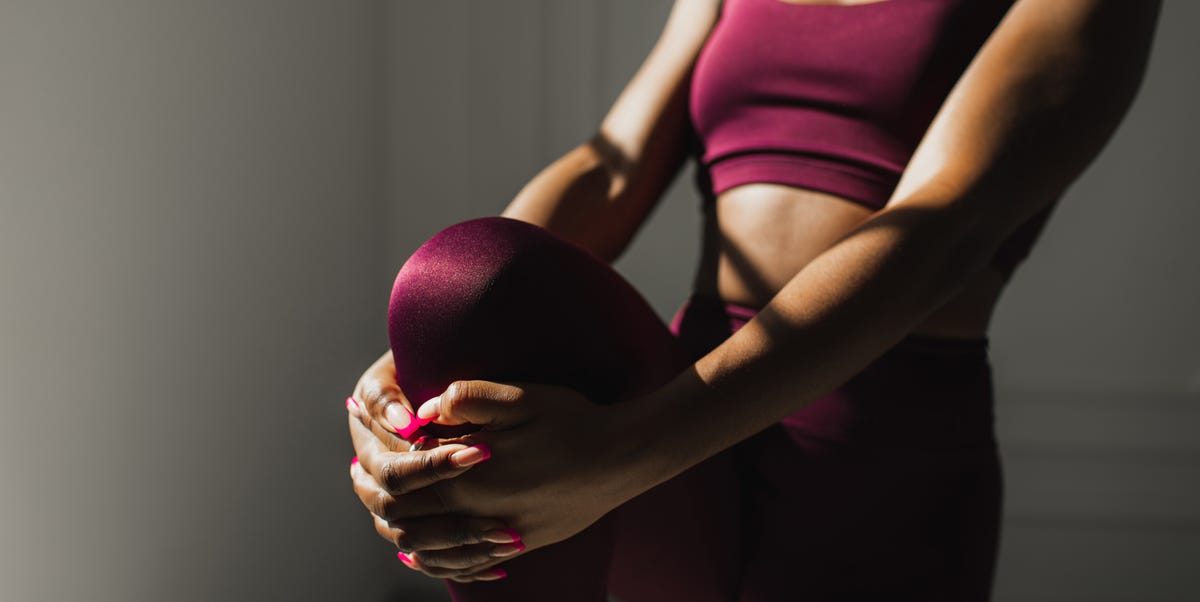
Anastasiia Krivenok//Getty Images11 min readYou’ve probably been sold a story about aging that goes something like this: You can’t run for miles anymore, HIIT classes with jumping become risky, or sprinting around the tennis court at 63 like you did at 25 isn’t worth it. And by your 50s or 60s, knee pain isn’t just common—it’s inevitable. But that narrative is inaccurate.There’s a far-reaching misconception many people have that as they age, their knees are doomed. They believe they can’t run or do any other type of high-impact exercise without developing knee pain or arthritis, says Abigail Campbell, MD, sports orthopedic surgeon and the co-director of the Women's Sports Medicine Center at NYU Langone. And there’s a reason for that thinking.Yes, women may lose bone density based on hormonal fluctuations and cartilage tends to thin as you age, says Dr. Campbell. But that doesn’t mean you’re bound to experience knee pain—there are ways to work against the aging process to decrease the possibility of feeling that pain. In fact, the latest research points to something far more surprising: Knee pain isn’t driven by age nearly as much as we’ve been led to believe—it’s driven by how (and how much) you move.A 2025 study in Frontiers in Public Health looked at the association between sedentary behavior, physical activity, and osteoarthritis (especially in the knee). It evaluated data from the National Health and Nutrition Examination Survey in a population of more than 24,000 people over 13 years. It found that those diagnosed with osteoarthritis had higher levels of sedentary behavior and lower levels of physical activity.Additionally, a 2023 Arthritis & Rheumatology study evaluated the relationship between strength training, knee pain, and knee osteoarthritis in over 2,600 participants by administering a questionnaire about their strength training history and following up eight years later. Those with a history of strength training reported less frequent knee pain, concluding that it's beneficial for future knee health.In other words, the real risk to your knees isn’t getting older; it’s doing less. Ahead, find out exactly what the science says to do instead—so you can keep your knees strong, resilient, and pain-free for decades to come.The knee is one of the hardest-working joints in the body, making it a little bit drama-prone.That’s also why so many people mistake normal, fixable knee pain for inevitable “wear and tear” from aging. In reality, the knee is just a highly sensitive joint doing a very demanding job—and it tends to speak up quickly when something is even slightly off.The knee is naturally less protected than other joints. The hip, for instance, is a ball and socket, but the knee is just a hinge, making it a bit more fragile, says Dr. Campbell. Plus, part of the knee’s job is to take on the force of your body weight while you move. In fact, the kneecap takes on up to 0.5 to nearly 10 times (!) your body weight just during normal daily activities, she adds.All of that load means that small changes that occur elsewhere in your body—like weakness, stiffness, or altered movement patterns—can show up in the knee fast. But instead of recognizing those as fixable issues, many people assume it’s simply age catching up with them.As a result, the knee is “very moody,” Dr. Campbell describes, and even a minor thing can cause pain. For instance, if you sprained your ankle and didn’t use that leg as much for a month, you could lose quad strength, which might cause the kneecap to start gliding up, causing friction and pain.Knee pain isn’t random—here’s what’s really behind it as you age.Arthritis is the most common source of knee pain for older adults, specifically those 50 and older, and the knee is one of the more common places to get it, says Dr. Campbell. Plus, research shows that “women have 1.5 to two times higher prevalence of knee arthritis than men, and we don't totally know why that is,” Dr. Campell says. “There [are] some studies in [women] 50 and up that show almost half will have some arthritis on their x-ray.”Additionally, if you do high-impact exercise often, like running, without strength training, you may wear down your body and experience knee pain. “Your body absorbs so much shock [while] running,” particularly your knees, says Patricia Greaves, CPT, a personal trainer based in Long Island, New York, and a member of the WH Strength in Diversity initiative.However, “there's no data to support that running will give you arthritis or make your arthritis worse,” Dr. Campbell says. It just wakes it up, in a sense. “You could go out and run a marathon tomorrow and your arthritis won't be any worse the next day, but your knees are probably going to get mad at you,” she adds. It’s not necessarily knee damage, it’s just that your knees didn’t necessarily like the activity.Plus, “once menopause hits, a lot of secret things that were going on silently in your body start to talk,” Dr. Campbell says. For instance, if you have some wear and tear on your knees, like a meniscus tear from when you were 28 that’s been dormant for decades, it might become symptomatic during menopause.It’s unclear exactly what it is about menopause that can cause joint pain, says Dr. Campbell. However, it may have to do with hormone shifts during menopause, particularly with estrogen decreasing. Those shifts can heighten your risk of having lower bone mineral density, she says. With the bones naturally thinning out, there may be a higher chance of osteoporosis, osteopenia, and fractures that can lead to knee pain. However, more research needs to be done to know for sure, she adds.Older adults who have had past injuries, like an ACL or meniscus tear, may also experience pain if they don’t regularly do strengthening or rehabilitation exercises, says Winnie Yu, DPT, CSCS, a sports and orthopedic physical therapist at Bespoke Physical Therapy in New York City. Tearing the meniscus (the cushion between the femur and the tibia)—or the pain becoming symptomatic from a past injury—is also more common as we age, even starting in your 30s. That’s because the tissue ”becomes softer and more easily tearable,” says Dr. Campbell. “It just takes one wrong twist to make that tear symptomatic or to worsen it.”Lastly, no matter whether you’re athletic or sedentary, you can still have muscle imbalances that lead to knee pain, says Yu. Particularly if you’re sedentary, you can experience ankle or hip stiffness, which may change your gait patterns and cause you to walk with more pressure on one side of the body. Mobility, soft tissue, or muscular restrictions along the hips, knees, and ankles can “lead to muscular imbalances or poor biomechanics” of movement like walking, running, and other forms of exercise over time, causing knee pain, she adds.So, age alone doesn't doom the knees. But here’s what *can* predispose them to discomfort down the road.The whole idea that you’re destined for knee problems once you hit a certain age is “a total myth,” says Dr. Campbell. It doesn’t depend on the chronological age of the knee joint, or your literal age, but the biological age, which is influenced by prior injuries and genetics.Say you’re 32 (your chronological age) but you’ve dealt with a ton of injuries and have had knee surgeries and cartilage removed; you might need to be more careful and change your workouts to lower-intensity activities because your knee is biologically older and more at-risk for developing arthritis, she explains. Your workouts will be different from a 72-year-old with perfect knee cartilage and no meniscus tear.Biological age is also determined by genetics. Some people “do everything right, stay active, and they [still] get arthritis in their 40s because both parents did,” Dr. Campbell says. But that’s not always the case.And when you see a 70-plus-year-old running a marathon, they likely (hopefully) “have a good base of higher-impact training,” Yu says. They were also probably generally injury-free throughout the decades before and have a great cross-training routine, and may also have good genetics. “I've even had patients with arthritis on x-rays who run marathons” and it really doesn’t hurt them, Dr. Campbell adds.Most Knee Pain Isn’t Permanent—Here’s WhyWhether you can reverse knee pain typically depends on whether the pain is due to a structural or dynamic problem, Dr. Campbell says.Structural issues deal with the actual structure of your knee. It’s like when there’s some wear and tear, like missing cartilage or arthritis, says Dr. Campbell. Some structural issues are fixable, like a meniscus tear. “It can be either smoothed out or repaired depending on the tear pattern,” she adds. Arthritis is not fixable—but there are ways to minimize your pain. (More on that later!)Dynamic issues, on the other hand, have to do with the functionality of your knee. For example, the patella femoral kneecap joint may cause pain if “it's not gliding perfectly smoothly” back and forth in its soapdish-shaped groove as you walk, Dr. Campbell says. That can cause friction, pain, and inflammation in the knee—but it’s reversible through physical therapy.Similarly, if you have knee pain because of poor biomechanics, mobility, or strength, there are ways to strengthen and develop your muscles to eliminate that pain, Yu says.What to Do for Stronger, Healthier Knees—Starting Right NowStrength training is the antidote for all types of knee pain, says Dr. Campbell. And it’s never too late (or early!) to get started. But how you strength train matters—small mistakes in your routine can actually contribute to knee pain, which is why a few key tweaks can make all the difference. The goal is “strengthening the muscles around the knee to take the load off the knee, especially the patella, which tends to be the first joint affected in women,” she adds.Train your lower body holistically instead of isolating the knees. Make sure your lower-body strength sessions include moves that work all of your leg muscles. Yu sees a lot of clients who think they’re doing everything “right” for their knee health, but they’re only doing isolated knee movements (like knee extension and donkey kicks). So, you’ll also want to add compound moves like squats (including staggered-stance squats) and lunges, as well as step-ups, bridges, sit-to-stands, and heel raises.A 2024 study in Physiotherapy Practice and Research put 75 patients ages 40 to 65 with knee osteoarthritis in three groups that either did isoinertial exercises with a flywheel device to apply resistance as well as a squat-based home exercise program (including moves like squats, heel raises, and split squats), the home exercise program and electrotherapy (which can help with pain), or just home exercise three times a week for eight weeks. The study found that the home exercise program and electrotherapy, when combined with the isoinertial exercises, led to an increase in strength and a reduction in pain.Additionally, a 2023 study in Physical Therapy in Scholarly Projects had an 82-year-old woman with knee pain complete physical therapy two days per week for six visits total, having her do exercises like bridges, step-ups, lateral walking, squats, and triple flexion (bending the hip, knee, and ankle at the same time). Throughout treatment, her pain significantly decreased and she experienced better range of motion and strength in the affected leg—but this research was just a case study on one woman’s routine, so more research is needed.Make sure you’re using heavy enough weights. Sometimes, knee pain can also come from using too light of a load in strength workouts. “In general, you want to make sure the muscles around the knee joint and the knee joint itself are being adequately challenged,” Yu says. She recommends picking a weight that leaves you with two reps in reserve (RIR), meaning, you could only perform two more reps with good form before hitting failure. But of course, some people may need to lift lighter loads, like older adults or anyone with cardiovascular or pulmonary impairments.Don’t dismiss the importance of mobility drills. Say you’re already strength training regularly but consistently feel symptoms of stiffness or tightness around the legs or knees, or your range of motion in a specific movement is restricted. While you should get these symptoms evaluated by a medical professional first, adding mobility exercises into your routine on the regular can also help.“Mobility drills allow you to work on your range of motion and control within the range that is available to the hip and knee joint,” Yu says. You can throw multiple sets of a seated dynamic figure-four stretch, a seated dynamic hamstring stretch, sit-to-stands, bodyweight squats, and marches into your routine every day.Incorporate Pilates once or twice a week. Dr. Campbell is also a fan of Pilates because it isolates and strengthens the core and other leg muscles like the glutes and hamstrings with slow, controlled motions. A 2025 review in the International Journal of Rheumatic Diseases looked at the effects of Pilates in those with knee osteoarthritis compared to no exercise or conventional lifting, pushing, and static exercises. It found that Pilates can be helpful for pain reduction in addition to conventional exercises.Another 2025 review of studies on the efficacy and safety of Pilates in those with knee osteoarthritis in Annals of Medicine found that it can relieve pain and improve physical function. If you strength train a few times a week or you’re a runner, do Pilates one or two times per week to “hit the deep core and small pelvic and glute muscles that typical lifting and machines don’t,” she adds.YouTube can also be a great source, says Dr. Campbell. She regularly recommends looking up videos for knee-strengthening exercises for people with arthritis.If you have a preexisting knee issue, check in with a physician or sports medicine doctor before adjusting your routine. Then, you may decide to work with a physical therapist or personal trainer for a customized workout plan to “optimize the longevity of the knees,” Dr. Campbell says.Don’t sleep on higher-impact cardio (really!). Exercise that gets your heart rate up will “support the knee's ability to tolerate load and impact,” Yu says. “The more that your body can move in a safe manner, the better that it's going to tackle natural aging processes.” A 2025 review of studies on the safety of exercise modalities on those with knee osteoarthritis in BMJ found that aerobic exercise (walking, cycling, or swimming) was the most beneficial for improving pain, function, and quality of life.High-intensity aerobic exercise can help too: A 2025 Frontiers in Physiology review looked at the effect of high-intensity training on improving knee flexion (the motion of kicking your foot backwards into your glutes) strength and quality of life in those with knee osteoarthritis. It found that high-intensity exercise (like HIIT) significantly improves knee flexion strength, leg press strength, pain and other symptoms, and quality of life.Aim to get at least 150 minutes of moderate-intensity activity (walking, cycling, rowing, or swimming) or 75 minutes of vigorous-intensity exercise (running) per week, which is the American Heart Association (AHA)'s recommendation.Regular exercise will also help with weight management. It’s also important in the context of knee pain, as knee arthritis has been linked with obesity, since it forces your knees to carry more of a load, Dr. Campbell says.Implement strategic rest days. And of course, you have to make time to rest, especially when you’re older. At 58, Greaves takes two days of rest in between leg days, and when she strength trains, she’s not going all out. “I'm not trying to break a record,” she says. “If I feel I've reached my limit in terms of lifting, I'm not going to push it.” She lifts enough to stay strong without overdoing it. If you feel sore after a lower-body workout, “wait until the soreness dissipates,” she adds. And if a move is causing you more pain or symptoms, stop and don’t push through it.Ultimately, the best thing you can do for your knees is keep moving, Greaves says. Ease into movement and try out some exercises that feel good for your body. It’s never too late to get started with your fitness journey, and your knees (and whole body!) will thank you for it. Take it from Greaves: “I don't believe in chasing youth, but I do believe that as you age, you should feel your best.”Find the Perfect Women’s Health Training Program for You Addison Aloian is the associate health & fitness editor at Women’s Health, where she writes and edits across the health, weight loss, and fitness verticals. She’s also a certified personal trainer through the National Academy of Sports Medicine (NASM). In her free time, you can find her lifting weights at the gym, running on the West Side Highway in New York City—she recently completed her first marathon, the 2025 New York City Marathon—and watching (and critiquing!) the latest movies that have garnered Oscars buzz. In addition to Women's Health, she’s made an appearance on the Oprah Podcast and her work has also appeared in Allure, StyleCaster, L'Officiel USA, V Magazine, VMAN, and more.
Are Bad Knees an Inevitable Part of Aging? The Latest Science Says No—Here's the Truth
Full Article
Original Source
Read the full article at Womenshealthmag →KhanList aggregates and links to publicly available news content. We do not host full articles from third-party sources. Always verify important information with original sources.