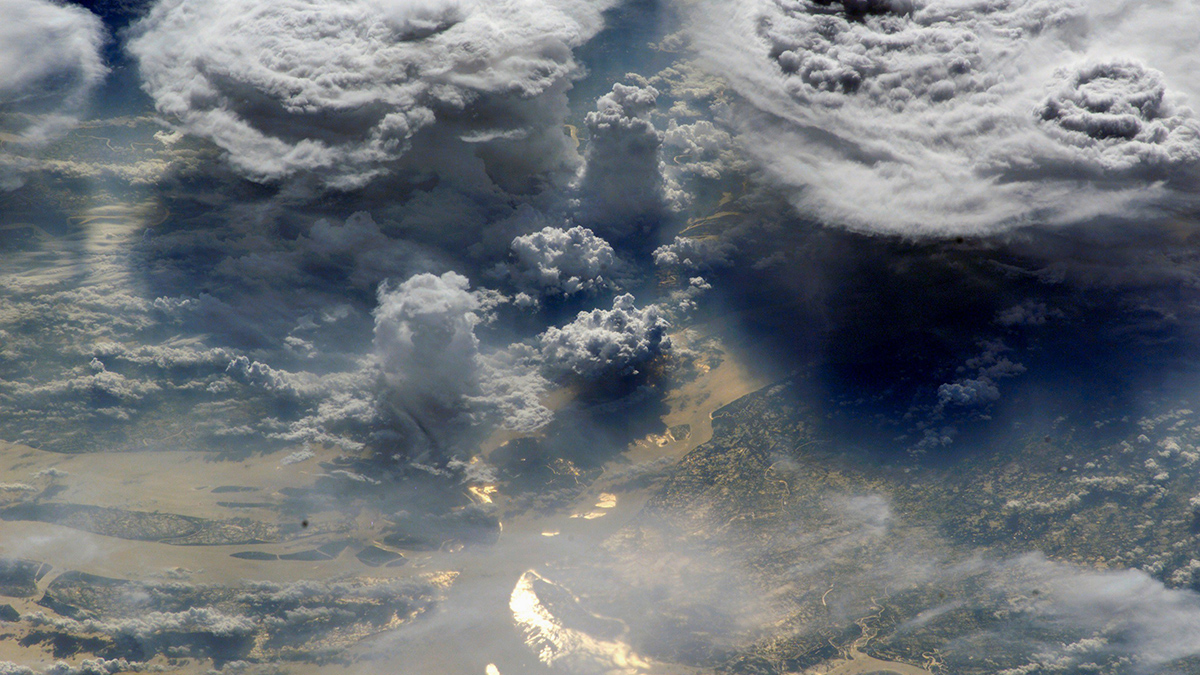
The annual Asian monsoon is one of the most consequential components of the global climate system, pivotally affecting water availability, agriculture, and livelihoods for billions of people across much of East, South, and Southeast Asia. Even modest shifts in the timing or intensity of monsoon rainfall in a given location can lead to flooding, drought, and cascading socioeconomic impacts. In 2024, for example, exceptionally heavy rains inundated large areas of eastern Bangladesh, affecting millions of people, damaging crops, and disrupting transportation and essential services. In contrast, delayed or below-average monsoon rainfall in parts of India has repeatedly reduced crop yields and strained water supplies, illustrating how both excess and deficient rainfall can have far-reaching consequences for food security and regional economies. Despite decades of research, predicting the Asian monsoon’s variability from place to place and year to year remains difficult. Despite decades of research into the complex interplays of tropical ocean conditions, land-atmosphere feedbacks, and large-scale circulation that drive the monsoon, predicting its variability from place to place and year to year remains difficult. Traditionally, scientists have focused on studying tropical drivers such as the El Niño–Southern Oscillation (ENSO) and Indian Ocean variability. Increasingly, however, attention is turning toward processes far outside the tropics. Rapid environmental change in the Arctic, particularly the decline of sea ice, is emerging as a potential contributor to atmospheric variability that may extend into monsoon regions. The Arctic is warming nearly 4 times faster than the global average, a phenomenon known as “Arctic amplification.” And since satellite observations of Arctic sea ice began in 1979, summer (minimum) sea ice extent has declined sharply—by about 12% per decade—exposing larger expanses of ocean surface, which absorbs more solar radiation than ice does, and accelerating regional warming [Screen and Simmonds, 2010; Serreze and Barry, 2011]. Arctic sea ice extents and concentrations have declined substantially in recent decades. The minimum ice extent in 2024, shown here, covered far less area compared with the 1981–2010 median. Credit: NOAA Climate.gov image, based on data from the National Snow and Ice Data Center These changes are often framed as primarily polar concerns, but a growing body of research suggests they may also influence atmospheric circulation patterns affecting distant regions, including the Asian monsoon. Arctic Amplification and the Jet Stream Arctic amplification, driven largely by sea ice loss and albedo feedbacks [Screen and Simmonds, 2010; Serreze and Barry, 2011], reduces the equator-to-pole temperature gradient, a key driver of midlatitude atmospheric circulation. This effect has motivated one of the most widely discussed hypotheses about modern climate dynamics: that Arctic warming alters the behavior of the jet stream in ways that affect weather and climate at lower latitudes [Francis and Vavrus, 2012, 2015]. The hypothesis proposes that a weaker meridional (north–south) temperature gradient leads to reduced zonal (west–east) wind speeds and increased meridional meandering of the flow of the jet stream. In this framework, a “wavier” jet stream favors more persistent ridges and troughs, potentially allowing high-latitude weather anomalies to propagate into Eurasia and influence subtropical systems. Though influential, this idea is far from settled. Subsequent studies have both supported and challenged different aspects of the hypothesis. Some observational analyses, for example, have suggested that episodic increases in the jet stream’s wave amplitude and the frequency of blocking events (stationary high-pressure systems that block other weather systems from moving through an area) are consistent with a weakened jet [Francis and Vavrus, 2015; Coumou et al., 2018]. Others, however, have found that internal atmospheric variability or forcing by tropical conditions alone can explain much of the jet stream’s observed behavior without requiring a prominent Arctic contribution [Barnes and Screen, 2015; Blackport and Screen, 2020]. Unraveling the nuanced cause-and-effect relationships between the Arctic and the jet stream is essential for interpreting potential downstream effects on the Asian monsoon. Climate model experiments have further complicated the picture. Whereas some simulations reproduce jet stream responses consistent with the Francis-Vavrus mechanism, others show weak, negligible, or even opposite responses. These discrepancies arise in part because modeled atmospheric responses to Arctic forcing are sensitive to background conditions, including sea surface temperatures, stratospheric variability, and how transient eddies in the atmosphere are represented. Meanwhile, synthesis studies have emphasized that Arctic amplification does not seem to produce a robust, uniform response in the jet stream. Instead, its influence appears to depend on season, region, and interaction with other climate drivers. In this view, Arctic change may alter the likelihood of certain circulation regimes, such as blocking patterns, occurring at given times and places, rather than causing lasting, systematic shifts. Unraveling the nuanced cause-and-effect relationships between the Arctic and the jet stream, as a large body of recent research has aimed to do, is essential for interpreting potential downstream effects on the Asian monsoon. Emerging Evidence of a Complex Connection Recent studies have begun to investigate Arctic-monsoon linkages explicitly, though their results also reveal a complex picture. Duo and Zhang [2025] used a combination of observational datasets and climate model simulations from the Coupled Model Intercomparison Project Phase 6 (CMIP6) to examine late-season (autumn) monsoon dynamics over Southeast Asia. Their analysis showed that reduced Arctic sea ice is associated with delayed monsoon retreat and increased rainfall during the postmonsoon transition, which the researchers attributed to Arctic-induced circulation changes weakening zonal winds and enhancing moisture convergence over Southeast Asia. Their results highlight that Arctic forcing may influence not only seasonal precipitation averages but also monsoon timing. Zhang et al. [2024] used reanalysis data alongside coupled climate model experiments from the Polar Amplification Model Intercomparison Project (part of CMIP6) to explore interdecadal variability in the East Asian summer monsoon. They found that Arctic sea ice loss can generate stationary wave responses across Eurasia that alter circulation in the upper troposphere and modulate monsoon strength and rainfall distribution. Their simulations also suggested that Arctic forcing contributes to longer-term variability in monsoon circulation and rainfall that is superimposed on anthropogenic warming trends. Recent studies indicate that declining Arctic sea ice does not trigger a uniform monsoon response. In other work, Sardana and Agarwal [2025] examined the influences of spring sea ice variability in the Barents and Kara Seas on the Indian summer monsoon using 6 decades of observational data. They reported that reduced sea ice in the Barents-Kara region is associated with suppressed rainfall over northern India, proposing that the shortage of sea ice alters large-scale atmospheric circulation patterns and weakens moisture transport into the subcontinent. The studies above indicate that declining Arctic sea ice does not trigger a uniform monsoon response. Whereas Duo and Zhang [2025] identified enhanced late-season rainfall as a result of sea ice loss, Sardana and Agarwal [2025] found that it suppressed monsoon rainfall. Zhang et al. [2024], meanwhile, showed that Arctic sea ice loss modulates long-term variability in the East Asian summer monsoon rather than producing a consistent increase or decrease in monsoon rainfall. These differences likely arise because of the different regions, seasonal timings, and teleconnection pathways considered in each study. Rather than contradicting one another, however, the studies collectively suggest that Arctic influences on the Asian monsoon are spatially and temporally heterogeneous. How Arctic Signals Travel South In addition to outlining monsoon effects associated with Arctic sea ice loss, recent research has proposed several mechanisms to explain physically how ice loss may influence storm systems thousands of kilometers away (Figure 1). Fig. 1. Arctic sea ice loss may be linked to Asian monsoon variability in a variety of ways, including those illustrated here. Declining sea ice enhances Arctic amplification and weakens the equator-to-pole temperature gradient, altering the jet stream’s structure, the propagation of Rossby waves, and land temperatures across Eurasia. These atmospheric adjustments may then influence the timing, intensity, and spatial distribution of Asian monsoon rainfall, including delaying monsoon retreat. Credit: Neha Kushwaha Jet stream modulation is one possible mechanism. As noted earlier, Arctic amplification can alter atmospheric temperature gradients and the strength and structure of the polar jet stream. A wavier jet may favor persistent ridges and troughs over Eurasia that can promote the divergence of winds in upper atmospheric layers, as well as vertical motion and moisture transport relevant for monsoon dynamics [Serreze and Barry, 2011]. The propagation of Rossby waves, large-scale atmospheric waves driven by Earth’s rotation, is another potential mechanism. Changes in heat fluxes and pressure-temperature conditions (i.e., geopotential heights) over the Arctic surface may excite stationary Rossby wave trains that propagate into Eurasia. These wave trains can reorganize subtropical high-pressure systems and monsoon troughs, thereby affecting atmospheric convection and rainfall distribution [Zhang et al., 2024; Duo and Zhang, 2025]. Land-atmosphere feedbacks, including Arctic-induced circulation changes, can enhance warming over Eurasia, particularly during spring. This warming may modify land-sea thermal contrasts, a key driver of monsoon circulation. Changes in snow cover and soil moisture can amplify or dampen these contrasts, introducing additional regional variability [Serreze and Barry, 2011; Zhang et al., 2024]. An emerging line of research suggests that Arctic variability may also influence monsoons indirectly via the stratosphere. Sea ice loss can modify the flux of Rossby waves entering the stratosphere, potentially weakening the polar vortex. The resulting atmospheric circulation anomalies can propagate downward from the stratosphere into the troposphere and affect midlatitude circulation patterns that govern monsoon systems [Barnes and Screen, 2015]. The effects of transient eddies in the atmosphere add additional complexity. Changing Arctic temperature gradients can modify eddy formation, influencing how energy is transferred and, in turn, affecting both large-scale wave patterns and the growth and decay of synoptic weather systems that contribute to monsoon variability. Limitations on Current Understanding The Arctic-monsoon connection does not occur via a single linear pathway but through a network of interacting atmospheric processes operating across scales. The variety of mechanisms above demonstrates that the Arctic-monsoon connection does not occur via a single linear pathway but through a network of interacting atmospheric processes operating across scales. Despite growing interest in this connection, substantial uncertainties remain regarding the relative importance and robustness of different mechanisms and their specific effects on the Asian monsoon. Resolving these uncertainties is not an easy problem to parse. Tropical drivers such as ENSO continue to dominate interannual monsoon variability, often overshadowing the effects of high-latitude influences [Turner and Annamalai, 2012]. Furthermore, observational records of Arctic sea ice and its relationship with Asian monsoon variability are relatively short compared to the timescale of Arctic change, limiting our ability to detect robust, long-term relationships [Barnes and Screen, 2015]. Studies using climate models show considerable spread in monsoon responses to Arctic forcing. Differences in model resolution and representations of sea ice and atmospheric dynamics lead to varying outcomes, including in the magnitude and even direction of monsoon responses. Another key uncertainty lies in the timescales of responses. Although some studies identify interannual links between Arctic variability and monsoon behavior, others emphasize decadal or longer-term modulation [Zhang et al., 2024; Sardana and Agarwal, 2025]. This distinction raises an important question: Are observed relationships indicative of a persistent physical connection, or do they emerge intermittently under favorable background conditions? Addressing this question will require the availability of longer observational records and conducting targeted model experiments designed to isolate the effects of Arctic forcing. Furthermore, interactions between Arctic and tropical drivers remain poorly constrained. For example, Arctic-induced atmospheric circulation anomalies may reinforce or counteract ENSO-related patterns. This nonlinearity complicates attribution and suggests that Arctic influences are best understood within a multidriver framework, rather than in isolation. Why This Matters in a Warming World Understanding Arctic-monsoon teleconnections is not merely an academic exercise; rather, it carries significant implications. The monsoon underpins food security, water resources, and economic stability across much of Asia. If changing Arctic conditions influence background atmospheric states, they may undermine these crucial needs by affecting the likelihood and timing of rainfall and drought, including extreme events. Ice loss may act as a risk amplifier, subtly reshaping the conditions under which monsoons evolve. Although current evidence does not support a simple causal chain between Arctic sea ice decline and effects on the Asian monsoon, ice loss may act as a risk amplifier, subtly reshaping the conditions under which monsoons evolve. As Arctic warming continues and the region undergoes further rapid transformation, whether and how these teleconnections could strengthen and interact with other climate drivers in complex ways remain open questions. Recognizing these connections challenges the traditional view of monsoons as purely tropical systems and highlights the need for a hemispheric perspective in climate research and prediction. Improving seasonal forecasting, refining climate projections, and anticipating extreme events will increasingly require accounting for cross-latitude interactions. The Arctic-monsoon connection ultimately illustrates a broad principle: Climate change is not simply a collection of independent regional trends, but a global network of linked processes. Understanding these links is essential for managing risk in a world where distant changes can have local consequences. References Barnes, E. A., and J. A. Screen (2015), The impact of Arctic warming on the midlatitude jet-stream: Can it? Has it? Will it?, Wiley Interdiscip. Rev. Clim. Change, 6(3), 277–286, https://doi.org/10.1002/wcc.337. Blackport, R., and J. A. Screen (2020), Insignificant effect of Arctic amplification on the amplitude of midlatitude atmospheric waves, Sci. Adv., 6(8), eaay2880, https://doi.org/10.1126/sciadv.aay2880. Coumou, D., et al. (2018), The influence of Arctic amplification on mid-latitude summer circulation, Nat. Commun., 9(1), 2959, https://doi.org/10.1038/s41467-018-05256-8. Duo, Y., and J. Zhang (2025), Arctic ice loss is delaying monsoon retreat over the Indochina Peninsula, npj Clim. Atmos. Sci., 8, 364, https://doi.org/10.1038/s41612-025-01241-3. Francis, J. A., and S. J. Vavrus (2012), Evidence linking Arctic amplification to extreme weather in mid-latitudes, Geophys. Res. Lett., 39(6), L06801, https://doi.org/10.1029/2012GL051000. Francis, J. A., and S. J. Vavrus (2015), Evidence for a wavier jet stream in response to rapid Arctic warming, Environ. Res. Lett., 10(1), 014005, https://doi.org/10.1088/1748-9326/10/1/014005. Sardana, D., and A. Agarwal (2025), Impact of spring sea ice variability in the Barents-Kara region on the Indian summer monsoon rainfall, Sci. Rep., 15, 37790, https://doi.org/10.1038/s41598-025-21544-y. Screen, J. A., and I. Simmonds (2010), The central role of diminishing sea ice in recent Arctic temperature amplification, Nature, 464, 1,334–1,337, https://doi.org/10.1038/nature09051. Serreze, M. C., and R. G. Barry (2011), Processes and impacts of Arctic amplification, Global Planet. Change, 77, 85–96, https://doi.org/10.1016/j.gloplacha.2011.03.004. Turner, A. G., and H. Annamalai (2012), Climate change and the South Asian summer monsoon, Nat. Clim. Change, 2(8), 587–595, https://doi.org/10.1038/nclimate1495. Zhang, X., et al. (2024). The role of Arctic sea ice loss in the interdecadal trends of the East Asian summer monsoon in a warming climate, npj Clim. Atmos. Sci., 7, 174, https://doi.org/10.1038/s41612-024-00717-y. Author Information Neha Kushwaha ([email protected]), Indian Institute of Science Education and Research Bhopal, India Citation: Kushwaha, N. (2026), Arctic sea ice loss may be reshaping the Asian monsoon, Eos, 107, https://doi.org/10.1029/2026EO260249. Published on 29 July 2026. Text © 2026. The authors. CC BY-NC-ND 3.0Except where otherwise noted, images are subject to copyright. Any reuse without express permission from the copyright owner is prohibited.
Arctic Sea Ice Loss May Be Reshaping the Asian Monsoon
Full Article
Original Source
Read the full article at Eos →KhanList aggregates and links to publicly available news content. We do not host full articles from third-party sources. Always verify important information with original sources.