
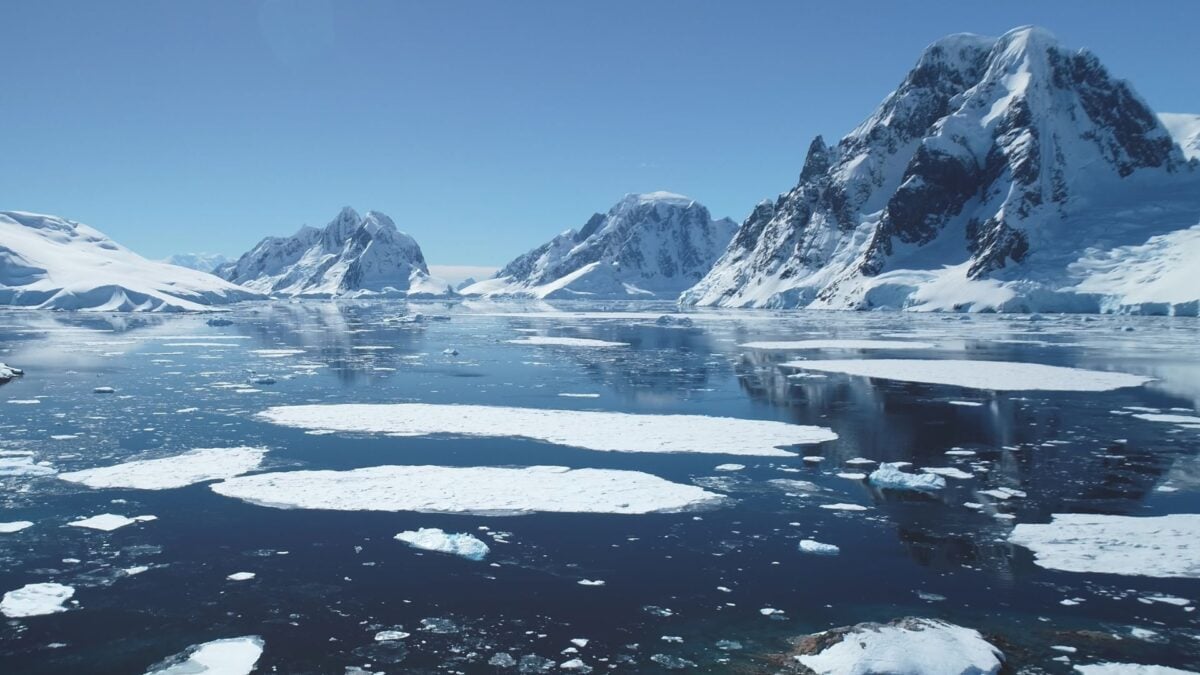
The Arctic’s future is already looking bleak, with rising temperatures driving a steady decline in sea ice. But the picture could be even worse than scientists thought. A new study suggests that Arctic winter sea ice could shrink by around 621,000 square miles (1 million square kilometers) more than previously projected after researchers used evidence from a warm period 6,000 years ago to improve the accuracy of climate models. The findings, published in Nature Geoscience, could have wider consequences that extend well beyond the polar region. Clues from the past Arctic sea ice melts through spring and summer, typically reaching its annual minimum in September. The decline is especially visible because large areas of open ocean emerge where ice once covered the surface. As temperatures fall, sea ice grows back and reaches its annual maximum, usually in March. But the return of a broad ice cover does not mean the Arctic has recovered. Ice can become thinner, younger, and less extensive than it once was. Winter ice also controls how much heat escapes from the ocean into the atmosphere, making its changes important for the Arctic climate system. While the dramatic retreat of Arctic sea ice in summer has become one of the most visible signs of climate change, changes in winter ice have proved harder for climate models to capture reliably. To address that problem, researchers turned to clues preserved in Arctic sediments from thousands of years ago. The team behind the new study compiled measurements of chemical biomarkers produced by algae living in sea ice. The samples were taken from ocean sediment cores that date back to the mid-Holocene period (roughly 6,000 years ago), when slow changes in Earth’s orbit altered the distribution of sunlight and reduced sea ice cover in the Arctic. By examining chemical traces preserved in marine sediments, the researchers could reconstruct past sea ice conditions. They then compared those reconstructions with simulations from 27 climate models of the same period to test how well the models capture changes in sea ice. Better projections for the future The researchers found that the climate models estimated more winter sea ice than the evidence suggests was actually present. The findings raise questions about how accurately climate models capture the Arctic’s future. Winter sea ice is already one of the areas where models show their greatest biases and uncertainties. By testing simulations against evidence preserved in Arctic sediments from thousands of years ago, the researchers were able to substantially reduce those uncertainties. If a model struggles to reproduce evidence of sea ice conditions during that past warm period, it may not be accurately capturing the processes that govern Arctic ice. The researchers used these comparisons to adjust the relative influence of different models in their future projections. “By using evidence from the past, we can now produce more reliable maps of where Arctic winter sea ice is likely to disappear,” Marco Aquino-López, a researcher at the Centro de Investigación en Matematicas in Mexico and co-author of the study, said in a Cambridge University statement. “These give us a much clearer picture of what the Arctic might look like in the coming decades, and how much uncertainty remains.”
Arctic Sea Ice Loss Could Be Far Worse Than Models Predict
Full Article
Original Source
Read the full article at Gizmodo →KhanList aggregates and links to publicly available news content. We do not host full articles from third-party sources. Always verify important information with original sources.