
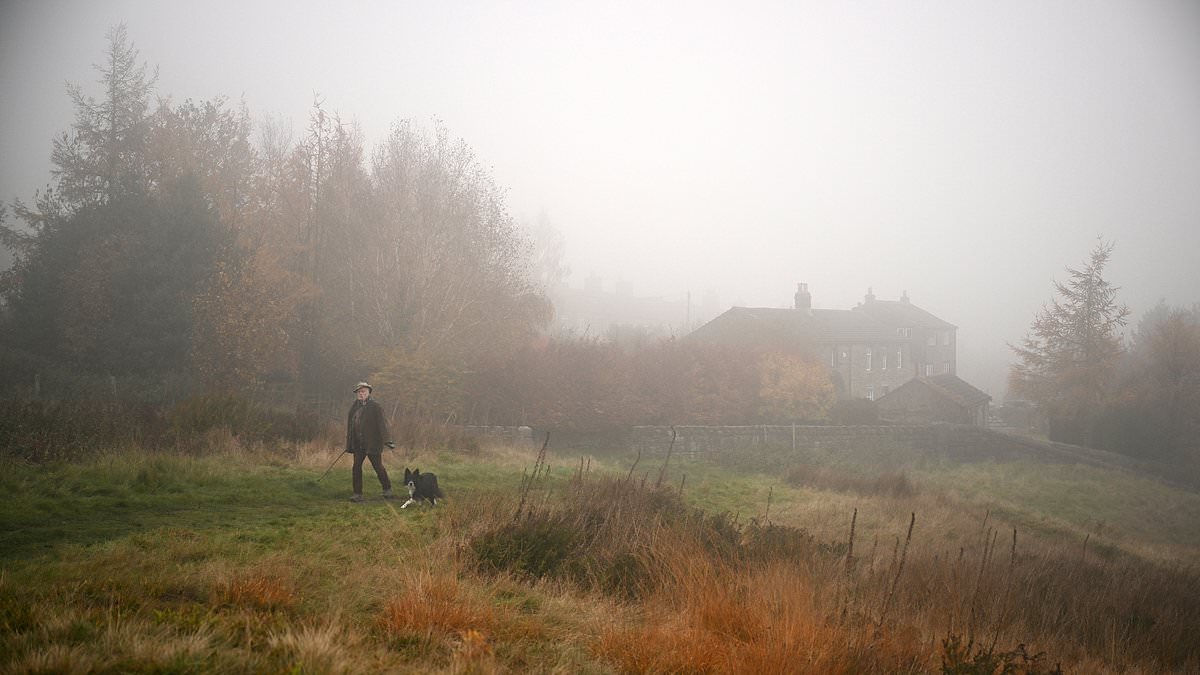
An incoming Arctic blast has prompted health officials to issue Britain's first cold alerts of the season as temperatures plunge after the coldest night of autumn so far. The Met Office said the mercury fell to -6.2C at Tyndrum in the Stirling area of Scotland overnight, and could drop further to -8C tonight and the next two nights.The UK Health Security Agency (UKHSA) issued a yellow cold health alert for the North West and West Midlands from 9am tomorrow until noon on Saturday.Overnight temperatures in many towns and cities will fall below freezing, with frost and 50mph wind gusts expected - and sleet and snow showers possible in Scotland.The Government agency said low temperatures can result in a spike in use of health and care services as officials urged people to check on loved ones and neighbours.Colder weather can also lead to increased risk for over-65s and people with certain health issues including heart and lung problems, the health leaders added.Temperatures are expected to plummet in rural areas tonight to -8C in Scotland, -6C in northern England, 0C in the South, -3C in Wales and -5C in Northern Ireland.Tomorrow night will be colder in places, with -8C again in Scotland but -7C in the North of England, -3C in southern areas, -5C in Wales and -3C in Northern Ireland. A dog walker in the early morning mist and fog in Marsden, West Yorkshire, yesterday Early morning mist and fog covers the Cheshire countryside near Knutsford yesterdayOn Friday night, it will be even chillier in the South of England with -8C. Northern England and Wales will both fall to -5C, Northern Ireland to -6C and Scotland to -2C.UKHSA public health consultant Dr Anya Gopfert said: 'This is the first cold health alert of the winter, but we can expect more as we move further into the season.'Cold weather can have a serious impact on the health of some people, including those aged 65 and over and those with pre-existing health conditions, so it is vital to check in on friends, family and neighbours who are most vulnerable.'We're also reminding people to take simple steps to stay warm and look after their health as temperatures begin to fall. Keeping homes heated where possible and dressing warmly can help people stay safe and well during colder weather.'Temperatures are expected to fall after much of the UK faced foggy conditions in the first part of the week, which led to a 'high' air pollution alert being issued in London.The Met Office said colder conditions will begin to move into the North today, with snow showers expected in northern Scotland overnight tonight into tomorrow.Arctic air will begin to move southwards across the UK from late today, with the colder air spreading through tomorrow and Friday.Forecasters said temperatures are expected to fall below average widely by tomorrow and particularly Friday.They said the far North-East will also feel particularly cold in stronger winds.Met Office chief meteorologist Jason Kelly, said: 'Snow showers could briefly fall on lower ground in northern Scotland and the Northern Isles, mainly Shetland, overnight on Wednesday and into Thursday. The UK Health Security Agency (UKHSA) has issued yellow cold health alerts from tomorrow Temperatures fell to -6.2C at Tyndrum in the Stirling area of Scotland overnight'However, snow may only settle on higher ground and this is relatively normal for the time of year.'It is predicted that over the weekend cold conditions are likely to become less widespread, with temperatures recovering closer to average.Nazir Hussain, clinical lead at the charity Asthma and Lung UK, said: 'The freezing conditions forecast for the next few days could be particularly dangerous for the 12 million people in the UK living with a lung condition, with thousands rushed to hospital with respiratory illness every winter.'Cold air can cause the airways to narrow, making breathing more difficult. It can also irritate the lungs and worsen symptoms of lung conditions like asthma and chronic obstructive pulmonary disease (COPD). Respiratory infections are also more common during winter and can trigger flare-ups of lung conditions.'If you have a lung condition take preventative steps to manage your health during the cold weather. Be sure to get your flu vaccination, one of the best ways to protect yourself. Take your medication and use your preventer inhaler, as prescribed and seek medical advice promptly if your symptoms worsen.'It comes after the Met Office warned Britons could be hit by colder temperatures later this month as a weakening polar vortex threatens to bring Arctic air.The polar vortex is a ring of powerful winds that helps keep freezing air near the North Pole.If it weakens, it could allow colder Arctic air to sweep south towards Britain, increasing the risk of wintry weather. Fog covers Durham Cathedral yesterday as much of the country is shrouded in mist Mist surrounds covers the Penshaw Monument memorial near Sunderland yesterday Trees show off their autumnal hues at the Lovell Quinta Arboretum in Cheshire yesterday A jogger passes a wall covered in leaves showing their autumn colors in London yesterday The Dream Sculpture is surrounded by trees in autumn colours near St Helens in MerseysideBut Met Office forecaster Honor Criswick said: 'We can't link what's happening to the polar vortex now to what is currently happening in the weather.'Because the polar vortex takes place so high up in the stratosphere, it would take a few weeks for any of those impacts to then possibly be seen in the UK, because it's not guaranteed.'She added: 'In time we could have a look and see if what's happening now with the polar vortex and in a few weeks see what happens to see if that has an impact on our UK weather.'However, it does look like it's a slight blip before things generally turn to more average for this point of the year - so a chance it could have an impact on UK weather, but very much not guaranteed.'Forecasters at Imperial College London advised Lord Sadiq Khan to trigger the high pollution alert 'after dense fog and very light winds allowed pollution to build up over the weekend, and linger into Monday morning', according to the Mayor's office.It said that smoke from Bonfire Night and Diwali fireworks 'is likely to have contributed'. Londoners were advised to walk, cycle and use public transport more frequently, drive less and avoid unnecessary burning at home.The pollution alert was the fourth issued in the capital this year, with the last one made in June during a heatwave.Also today, pet owners were encouraged to prepare now for the incoming colder conditions.Dr Samantha Butler-Davies, veterinary director at Vets for Pets, said: 'As temperatures begin to drop, now is a good time for owners to think about how colder weather might affect their pet.'Every pet is different, and factors such as their breed, age and lifestyle can influence how well they cope with the cold. A few simple changes can make a big difference to keeping them comfortable, healthy and safe.'Cold health alerts are usually issued by the UKHSA between November and March each year. The last cold health alert ended on February 20 this year.
Arctic blast set to sweep across UK with temperatures in parts of England plummeting to -8C overnight as health officials issue first cold alert of season
Full Article
Original Source
Read the full article at Dailymail →KhanList aggregates and links to publicly available news content. We do not host full articles from third-party sources. Always verify important information with original sources.