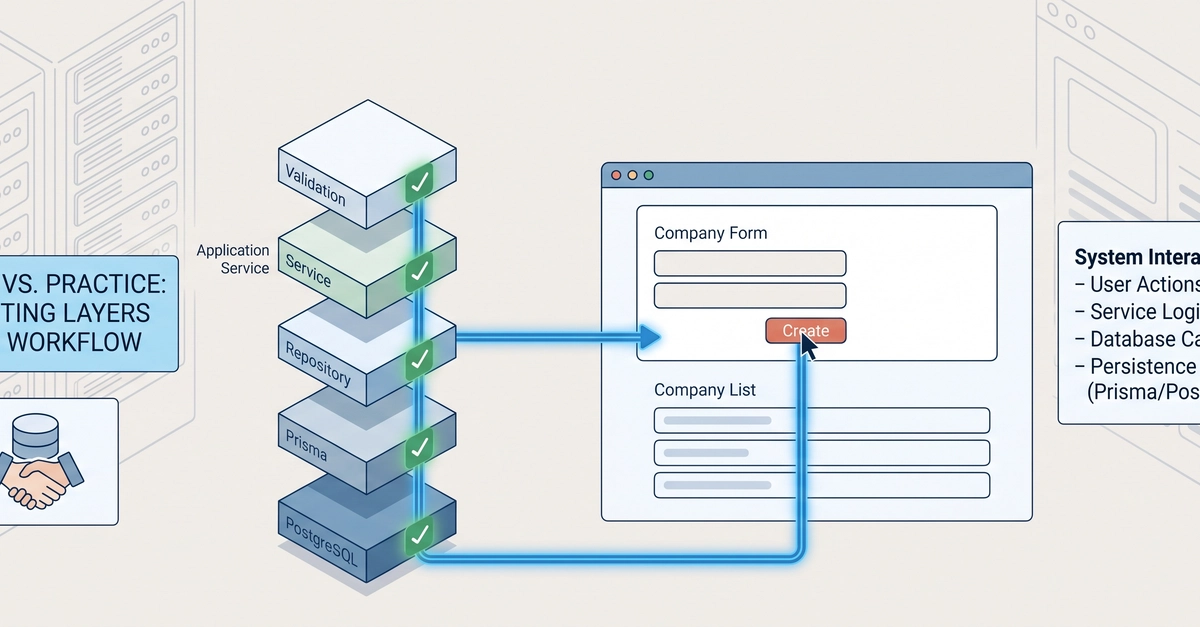
My TypeScript Candidate Tracker passed 100 tests before it had a page I could actually use. The repository contracts, Result types, validation services, Prisma adapter, and PostgreSQL integration all had value—but the project still felt like it was walking in place. Today I changed direction and connected one complete Company workflow to Next.js: FormData from the browser runtime shape validation business validation application service repository Prisma PostgreSQL refreshed Server Component The same application now lists, creates, displays, and edits real persisted Companies. Several earlier decisions finally became concrete: browser validation improves UX but cannot protect the server successful database absence becomes an explicit not-found outcome Server Actions are real public input boundaries a shared Prisma client matters under development hot reload database-generated UUIDs work beyond Prisma Client, including Studio and raw SQL The lesson was not that architecture is useless. It was that architecture needs a consumer. Once a real user workflow crossed every layer, the abstractions stopped feeling theoretical and started explaining their cost.
Architecture starts paying rent when a user workflow reaches it
Full Article
Original Source
Read the full article at Dev →KhanList aggregates and links to publicly available news content. We do not host full articles from third-party sources. Always verify important information with original sources.