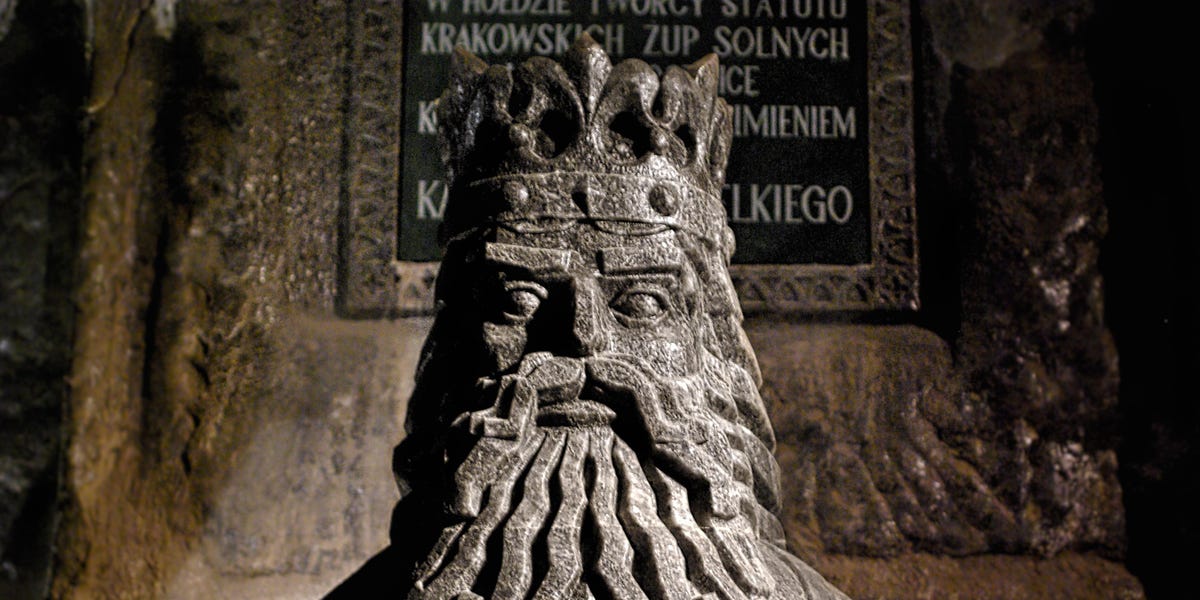
3 min readHere’s what you’ll learn when you read this story:Decades after the legendary “mummy’s curse” struck King Tut’s excavators, archaeologists in 1973 suffered a similar tragedy.Shortly after unsealing the tomb of Polish King Casimir IV Jagiellon in 1973, ten researchers mysteriously died.The true culprit was likely a massive concentration of fungal spores festering inside the sealed tomb, which proved fatal when inhaled.Poland’s national news buzzed with excitement in 1973 as archaeologists prepared to open the tomb of the revered Polish monarch Casimir IV Jagiellon. While the state strictly limited access to ancient monuments, Archbishop of Krakow Karol Wojtyła (the future Pope John Paul II) granted a research team special permission to enter the crypt of the king, who ruled until his death in 1492.That decision turned out to have deadly consequences.Mere days after opening the tomb, four of the 12 researchers who’d entered the crypt were dead. That number jumped to 10 weeks later. Eventually, after a few years, 15 people who’d either been inside the tomb or who worked on the body in a laboratory were dead. Was it another mummy’s curse?The modern myth of a “mummy’s curse” began in 1922 with the opening of King Tut’s tomb. After expedition leader Lord Carnarvon died just five weeks after breaching the famous Egyptian pharaoh’s burial chamber, the public became convinced the site was cursed. Carnarvon’s demise is often blamed on a bizarre combination of an infected mosquito bite and pneumonia, but the medical community isn’t so sure. Reviewing his symptoms, a 2003 study in The Lancet concluded that a fatal infection from the invasive fungus aspergillosis—inhaled directly from the tomb—“remains a possibility.”Unaware of the fungal possibilities from 1922, the Polish researchers allegedly joked about the curse before entering King Casimir Jagiellon’s crypt in Wawel Royal Castle’s chapel in 1973. It wasn’t funny, though, after the deaths started piling up.A 2015 study published in the Journal of the Air & Waste Management Association sampled air and surfaces across a range of crypts, including Wawel and others in Poland. “Fungal numbers within the crypt exceed recommended limits for occupational exposure,” the study’s authors wrote. “Employees working in the crypts should know about these hazards.”Funeral practices at the time of the king’s death contributed greatly to the growth of the deadly fungal spores. King Casimir IV Jagiellon, born in 1427, first became the Grand Duke of Lithuania in 1440 and then the King of Poland in 1447. Considered one of the great kings of the era, he led Poland’s ascension in status throughout Europe during his reign. He died at the age of 65 in 1492. The days following his death were extremely hot and his body was already decomposing by the time it was covered with a cloth and buried in a basic wooden coffin.When researchers opened the tomb nearly 500 years later on April 13, 1973, the coffin had rotted away. But fungus was thriving.A later sampling of Casimir’s tomb revealed a dense mixture of fungi, including Aspergillus, Penicillium rubrum, and Penicillium rugulosum. Ordinarily, these spores only cause fevers and inflammation. But when inhaled in the massive concentrations found inside a sealed crypt, this fungal cocktail becomes a killer. If a victim’s immune system is weakened by another infection, the fungi can colonize deep inside the lungs, turning allergy-like symptoms into a fatal condition that can strike in a matter of days—or silently fester for years.Tim Newcomb is a journalist based in the Pacific Northwest. He covers stadiums, sneakers, gear, infrastructure, and more for a variety of publications, including Popular Mechanics. His favorite interviews have included sit-downs with Roger Federer in Switzerland, Kobe Bryant in Los Angeles, and Tinker Hatfield in Portland.
Archaeologists Opened a 500-Year-Old King’s Tomb. Most Didn’t Live to Tell the Tale.
Full Article
Original Source
Read the full article at Popularmechanics →KhanList aggregates and links to publicly available news content. We do not host full articles from third-party sources. Always verify important information with original sources.