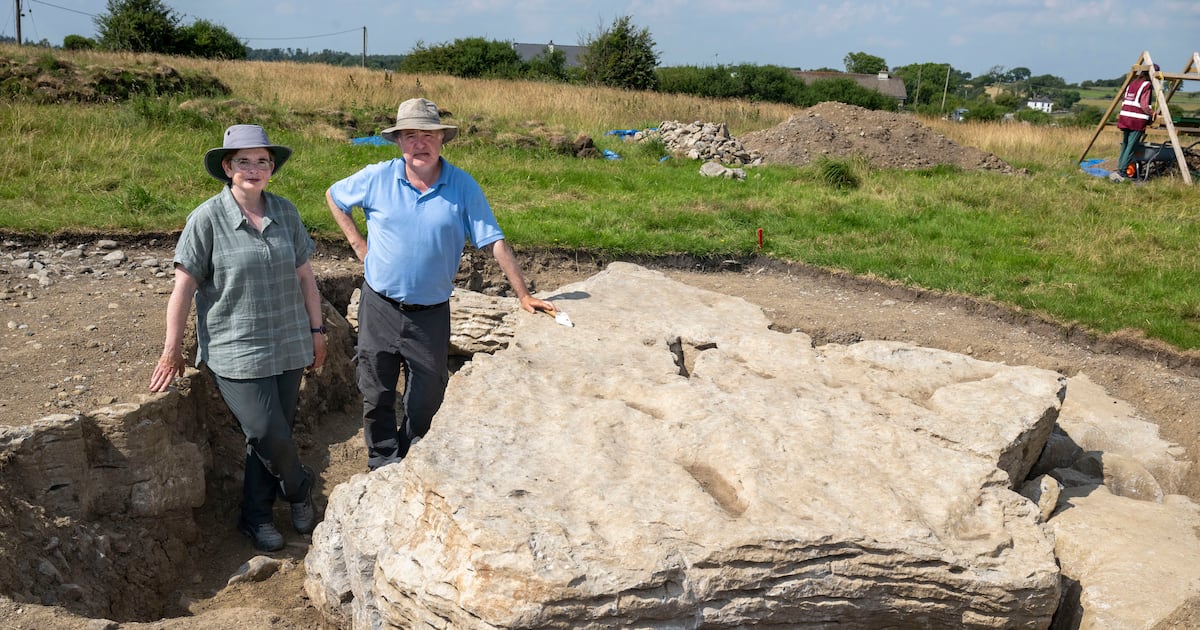
Archaeologists have located a previously unidentified Neolithic tomb and “rediscovered” a second previously lost site during excavations at a prehistoric site in Co Galway. The discoveries reveal new evidence about the earliest farming communities in the west of Ireland.Led by Michelle Comber and Noel McCarthy at the University of Galway, the excavation in the Maree area has revealed two different types of megalithic tombs dating back almost 6,000 years.Researchers believe the site represents the only known example in Ireland where a court tomb and a portal tomb are found together, offering important new evidence about the people who built them during the early Neolithic period – the first farmers in this part of the world.READ MORECourt tombs were burial monuments with an open area or “court” for ritual and ceremonial activities, while portal tombs were stone-built burial chambers marked by a large capstone.The discovery of these two monument types side by side provides an opportunity to examine different approaches to burial, ritual and monument building in the Ireland of the Stone Age.An amethyst pendant uncovered during University of Galway archaeological excavations. Photograph: Michelle Comber Comber, a lecturer in archaeology at the University of Galway, said: “The chance to find and excavate sites like these within the area of our larger research project provides a golden opportunity to locate – and attempt to understand – the first farmers of this place.” “The size and scale of the tombs, and the effort required to construct them, reflect a sizeable community living in and farming this part of coastal Galway. Their location right next to each other represents a meeting of two traditions, raising new questions about the nature of that interactions,” she said. McCarthy, who also lectures in archaeology at the university, said “the opportunity to investigate a site like this is not something that occurs very often. Discovering the second monument has added a layer of complexity that informs our understanding of culture and society in the Neolithic period and beyond”. The excavation site at Prospecthill, Co Galway, with the portal tomb capstone in the foreground and the outline of the court tomb behind. Photograph: Andrew Downes Excavation at Prospecthill megalithic tombs, Co Galway. Photograph: Andrew Downes Once thought to have been completely destroyed, the court tomb at Prospecthill, Maree, is one of the largest discovered, at about 30m in length.Beside it, and previously unrecorded as a burial monument, the remains of a large portal tomb have also been discovered. Its impressive capstone measures almost 4m in length, weighing an estimated 14 tonnes.Archaeologists on the site also identified a large bedrock pit in which the portal tomb was originally constructed. This enabled the exceptional preservation of the original burial deposits, providing a rare opportunity to investigate evidence from the monument’s earliest use, offering fresh insights into how the communities honoured and buried their dead.The excavation uncovered stone tools, prehistoric pottery and cremated bone, including a small amethyst pendant from the portal tomb. While quartz beads are known from a few megalithic sites, nothing like the amethyst pendant is known from anywhere in Ireland.Both tomb types are dated to the early Neolithic period.The latest discoveries build on the project’s first excavation season in 2025, when archaeologists confirmed Rathgurreen Ringfort as a high-status early medieval settlement occupied by rulers and nobles. That excavation uncovered links to trade and contact extending to Rome, Scotland, France and Scandinavia.
Archaeologists discover and ‘rediscover’ two neolithic tombs in Galway
Full Article
Original Source
Read the full article at Irishtimes →KhanList aggregates and links to publicly available news content. We do not host full articles from third-party sources. Always verify important information with original sources.