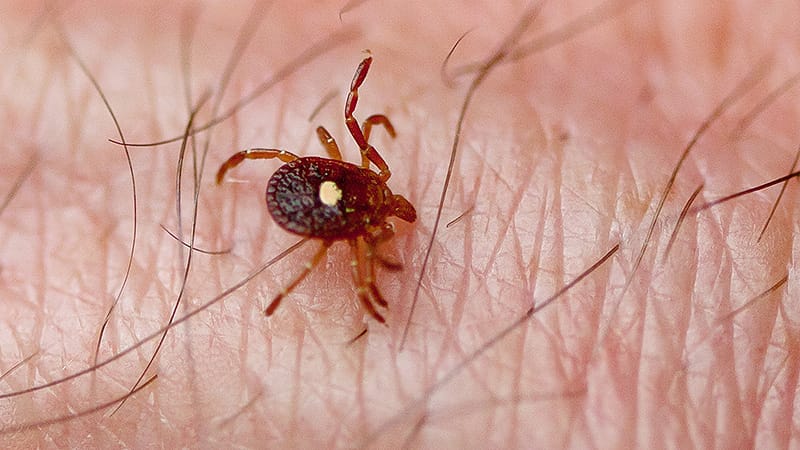
The CDC is alerting clinicians that individuals taking anti-CD20 therapies are especially vulnerable to neuroinvasive disease from tick- and mosquito-borne viruses.The CDC said it is issuing the warning now because the US “had an early and strong start to this year’s West Nile virus season and many weeks of the arbovirus transmission season remain.”Anti-CD20 monoclonal antibodies — which include rituximab and its biosimilars, ocrelizumab, ofatumumab, ublituximab, obinutuzumab, and ibritumomab tiuxetan — have warnings in labeling of the potential for serious infections, including West Nile virus.Arboviruses — short for arthropod-borne viruses — are continuing to spread in the US. West Nile virus, transmitted by mosquitos, is the most common. Thirty states have reported disease so far in 2026. Of the 181 cases reported through August 11, 129 were neuroinvasive. Historically, West Nile cases peak in August and September.Other arboviruses being tracked by the CDC include Powassan, Eastern Equine Encephalitis, Jamestown Canyon, dengue, chikungunya, and Zika. Lyme disease — also carried by an arthropod — is caused by transmission of a bacteria, not a virus, so is not part of the warning.Arboviral neuroinvasive disease can be particularly serious and deadly in people taking B cell-depleting or B cell-modulating anti-CD20s, used to treat non-Hodgkin lymphoma, several leukemias, rheumatoid arthritis, pemphigus vulgaris, some types of vasculitis, multiple sclerosis (MS), and prevention of transplant rejection.In a 2023 literature review, CDC researchers identified 21 patients on recent rituximab therapy who had an arboviral illness. All had neuroinvasive disease. Molecular testing was necessary for diagnosis in 20 patients. Median illness duration was 36 days, ranging from 12 days to 1 year; 15 of 19 patients who had an outcome reported died from the disease.There have been other case reports of arthropod-borne bacterial or viral infections in people taking anti-CD20 therapies, including one in which a patient with MS on ocrelizumab contracted neoehrlichiosis from a tick. Another case report described a patient with MS on ocrelizumab who was infected with Babesia microti, a parasite transmitted by ticks.Because patients who take anti-CD20s have an impaired antibody response, diagnosis of arboviral infections usually requires molecular testing (reverse transcription polymerase chain reaction) to detect viral RNA in serum, cerebrospinal fluid, and/or tissue specimens, according to CDC guidance. The specialized PCR arboviral diagnostic must be requested, as it usually is only available through state public health, the CDC, or other diagnostic reference laboratories.The agency also warned that there are no known effective treatments for West Nile virus or other arboviral diseases.It advised clinicians and patients to be aware of which ticks are most common in their geographic area and to take precautions against tick and mosquito bites, including using Environmental Protection Agency-registered insect repellents and treating clothing and gear with a 0.5% permethrin product.The CDC also has a patient brochure on anti-CD20 immunosuppression and the risk for arboviral disease.Alicia Ault is a Saint Petersburg, Florida-based freelance journalist whose work has appeared in many health and science publications, including Smithsonian.com. You can find her on X @aliciaault and on Bluesky @aliciaault.bsky.social.
Arbovirus Surge Prompts CDC Warning for Anti-CD20s
Full Article
Original Source
Read the full article at Medscape →KhanList aggregates and links to publicly available news content. We do not host full articles from third-party sources. Always verify important information with original sources.