
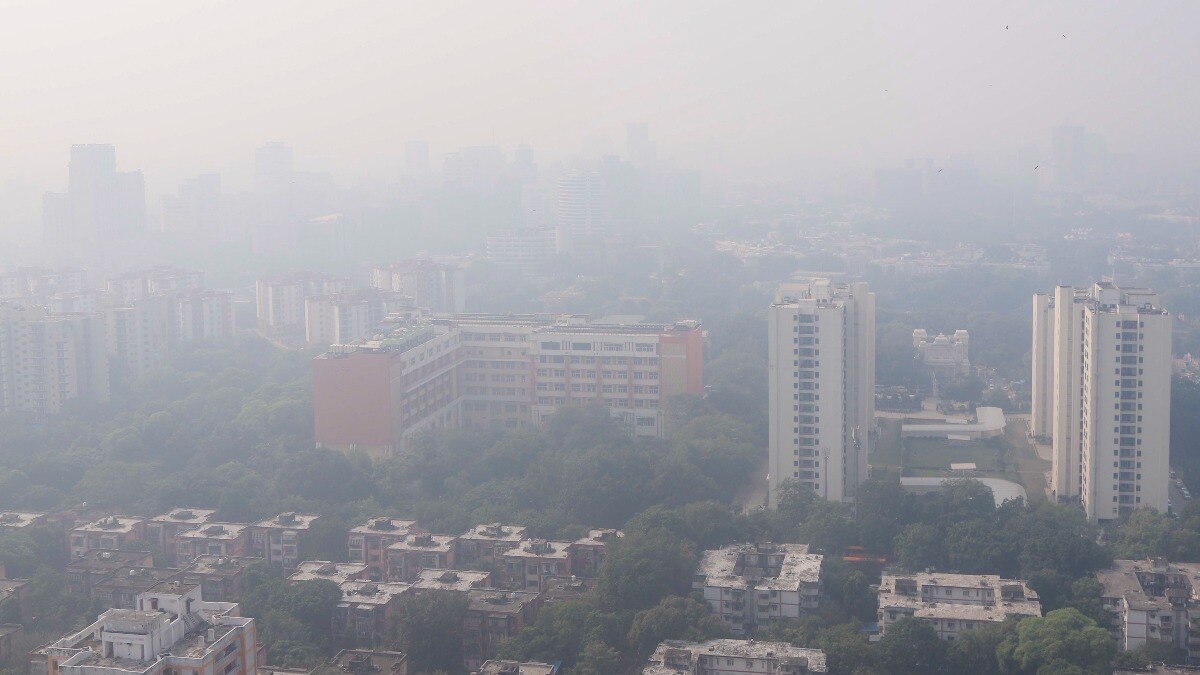
With air quality deteriorating across Delhi NCR ahead of Diwali, a survey of over 19,000 residents finds that nearly nine in 10 households have at least one member experiencing pollution-related health problems.Toxic air sickens Delhi NCR households (PTI photo)New Delhi,Nov 6, 2026 14:46 ISTDelhi NCR's air pollution crisis is no longer just about hazy skies, reduced visibility or uncomfortable mornings. For thousands of families, the deteriorating air quality is increasingly becoming a health concern, with people reporting respiratory problems, irritated eyes, headaches and even difficulty sleeping. With Diwali approaching and air quality remaining in the severe category across several parts of the region, concerns about the impact of toxic air on everyday life are growing.A new survey by LocalCircles has found that nearly nine in 10 households in Delhi NCR have at least one member experiencing health problems linked to high levels of air pollution. The findings come at a time when pollution levels have remained dangerously high across Delhi, Noida, Gurugram, Faridabad and Ghaziabad. The situation is particularly concerning as the festival of Diwali falls on November 8, raising fears that firecracker emissions could add to the already polluted air.According to the survey, 56 per cent of respondents said they or their family members were experiencing a sore throat and/or cough. Breathing difficulties or asthma were reported by 33 per cent, while another 33 per cent complained of a runny nose or nasal congestion. The findings suggest that the effects of pollution are being felt across households, with respiratory complaints emerging as the most common problem.AQI REMAINS SEVERE ACROSS DELHI NCR AHEAD OF DIWALIOn November 6, Delhi's Air Quality Index (AQI) stood at 391 at 9 am, according to Central Pollution Control Board (CPCB) data. This was an increase from 389 recorded at 8 am. Around 30 monitoring stations across the city were in the severe category, with Rohini recording an AQI of 475 and IIT Delhi reporting 472. Private air quality monitors, which follow the US AQI scale, reported even higher readings. On the morning of November 6, Delhi recorded 728, while Noida and Greater Noida reported 804 and 807, respectively. Gurugram's reading stood at 622.The situation could remain difficult over the Diwali weekend. The Early Warning System of IITM Pune has forecast air quality between very poor and severe through the weekend. Farm fires are also adding to the pollution burden. Stubble burning contributed 15.6 per cent of Delhi's PM2.5 pollution on November 5, with the contribution expected to increase to 19.2 per cent on November 6. Nearly 9 in 10 Delhi NCR households report pollution related health problems as Diwali approaches COUGH AND BREATHING DIFFICULTIES TOP THE LIST OF HEALTH COMPLAINTSThe LocalCircles survey received 19,322 responses to the question about health problems experienced by residents and their family members due to high pollution levels.The findings showed that respiratory symptoms were among the most frequently reported complaints. While 56 per cent reported sore throat and/or cough, 33 per cent experienced breathing difficulty or asthma. Another 33 per cent reported a runny nose or congestion.Other health concerns were also reported. Around 22 per cent of respondents said they were experiencing difficulty sleeping. Burning eyes, headaches and anxiety or difficulty concentrating were each reported by 11 per cent of respondents.Interestingly, only 11 per cent said that they or their family members had no health issues due to air pollution.The survey, conducted through the LocalCircles platform, received over 19,000 responses from residents of Delhi, Gurugram, Noida, Faridabad and Ghaziabad. According to its demographic details, 62 per cent of respondents were men and 38 per cent were women. Participants were registered and validated citizens on the platform.CHILDREN AND ELDERLY PEOPLE FACE HIGHER HEALTH RISKSDoctors across Delhi NCR have reported an increase in patients complaining of persistent cough, sore throat, nasal congestion, wheezing and breathlessness.Children, elderly people and those with existing respiratory conditions are particularly vulnerable. Fine particulate matter, especially PM2.5, can travel deep into the lungs and enter the bloodstream. This can contribute to inflammation and increase the risk of cardiovascular problems.Doctors have also reported worsening symptoms among people living with asthma and chronic obstructive pulmonary disease (COPD). Even individuals without a previous history of respiratory illness have reported breathing difficulties.Health experts advise people to avoid unnecessary outdoor exposure when pollution levels are high. Those stepping outside are advised to use well-fitted N95 or N99 masks. People experiencing persistent cough for more than two weeks or oxygen saturation below 94 per cent should seek medical attention.POLLUTION CONCERNS EXTEND BEYOND RESPIRATORY HEALTHThe survey findings indicate that the impact of poor air quality is not limited to the lungs. Difficulty sleeping, headaches, burning eyes and anxiety suggest that pollution is affecting several aspects of everyday well-being.Previous research has also highlighted the long-term health burden of air pollution. A CPCB study conducted with the Chittaranjan National Cancer Institute found reduced lung function in 43.5 per cent of 11,628 schoolchildren in Delhi, compared with 25.7 per cent of children in rural areas.Meanwhile, government data presented in Parliament in December 2025 recorded more than two lakh acute respiratory illness cases at six state-run hospitals in Delhi between 2022 and 2024.EXPERTS CALL FOR STRONGER POLLUTION CONTROL MEASURESAuthorities have introduced several measures to control pollution, including restrictions under the Graded Response Action Plan (GRAP). Stage I was invoked on October 21, followed by Stage II on November 2.However, Stage III restrictions had not been introduced as of the morning of November 6.The Commission for Air Quality Management (CAQM) has also directed offices in Delhi and neighbouring districts to operate with no more than 50 per cent physical attendance between November 5 and 20.For Diwali, the Supreme Court has permitted the use of approved green crackers on November 7 and 8 during specified hours. Firecracker use has also been prohibited within 300 metres of schools and hospitals.However, the latest LocalCircles survey highlights the need for stronger and more consistent action. Construction dust, road dust, garbage burning, vehicle emissions and stubble burning continue to contribute to the pollution problem.With air quality expected to remain poor through the festive weekend, the findings serve as a reminder that Delhi NCR's pollution crisis is not merely an environmental concern. It is increasingly becoming a public health challenge affecting families across the region.- Ends
AQI above 500 leaves Delhi-NCR families battling cough, breathing issues and poor sleep
Full Article
Original Source
Read the full article at Indiatoday →KhanList aggregates and links to publicly available news content. We do not host full articles from third-party sources. Always verify important information with original sources.