
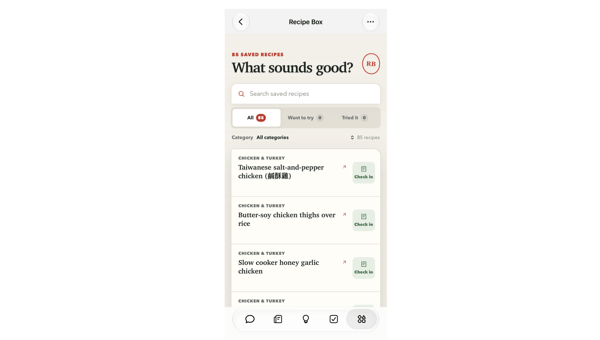
Three revolutionary products — you know the line. A wide-screen iPod with touch controls, a revolutionary mobile phone, and a breakthrough Internet communications device. That was how Steve Jobs introduced the iPhone: Today, we’re introducing three revolutionary products of this class. The first one is a wide-screen iPod with touch controls. The second is a revolutionary mobile phone. The third is a breakthrough Internet communications device. So, three things: a widescreen iPod with touch controls, a revolutionary mobile phone, and a breakthrough Internet communications device. An iPod. A phone. And an Internet communicator. An iPod. A phone. Are you getting it? These are not three separate devices, this is one device, and we are calling it iPhone. Today, Apple is going to reinvent the phone. I’ve linked to this snippet before, usually to note how the audience didn’t really understand what an “Internet communications device” was, even though that was the iPhone’s most revolutionary capability. The phrase I’m thinking of right now, however, is “Are you getting it?” Are you getting that messaging — chatbots now, natural interfaces later — is how we will communicate with AI? Are you getting that not only will we not program computers, we won’t use them — AI will? Are you getting that pre-built UI — write once, run everywhere, for everyone — is dead? These are not three separate predictions: this is reality, right now, in 2026. The future is here, even if it’s not widely distributed. Or is it? Messaging and Jobs to Be Done I wrote on February 18, 2014 that Messaging was Mobile’s Killer App; I specify the date because I fortuitously published that Article the day before Facebook acquired WhatsApp. My thesis was that phones may have started out as convenient information devices, but the killer use case was a very human one: Seven years ago, the computer became pocketable, but the original use cases were about making the passive presentation of information accessible not just at a time convenient to the viewer, but also at any place: the web was now everywhere. Still, it’s only recently that the killer app for this era, when the nodes of communication are smartphones, has become apparent, and it is messaging. While the home telephone enabled real-time communication, and the web passive communication, messaging enables constant communication. Conversations are never ending, and friends come and go at a pace dictated not by physicality, but rather by attention. And, given that we are all humans and crave human interaction and affection, we are more than happy to give massive amounts of attention to messaging, to those who matter most to us, and who are always there in our pockets and purses. Meta’s WhatsApp acquisition was actually a step back in ambition; a year earlier the company had launched its own interface for Android called Facebook Home; CEO Mark Zuckerberg told Wired at the time: Home turns your phone into a Facebook device. Even with the lock screen on, a photo stream of your friends’ activities fills the screen. Updates appear on your home screen, too. What’s more, Home makes Facebook the primary means of communication on your device. The company’s messaging software merges with SMS, and you can continue using its “chat heads” to text while inside another app. Zuckerberg believes that the social network plays too big a role in its users lives to be drowned out by a vast sea of apps. “Apps aren’t the center of the world,” he says. “People are.” I stridently disagreed, writing in Apps, People, and Jobs to Be Done: Apps versus People. According to Zuckerberg, that’s the dichotomy. And he’s wrong. He forgot about jobs to be done. Here are my (carefully curated) home screens: My iPhone Home Screens Focus on how many of the icons are about “People”…four in total across three screens. People matter to me, but I use my phone for so much more. So what if I consider “Jobs to be Done”?…Total tally: 151 apps, 80 jobs to be done, 4 foci on people Apps aren’t the center of the world…But neither are people. The reason why smartphones rule the world is because they do more jobs for more people in more places than anything in the history of mankind. Facebook Home makes jobs harder to do, in effect demoting them to the folders on my third screen. Who is Facebook to prioritize my jobs? Those screenshots show 151 apps; today my phone has 689. No, I rarely open most of them, but hey, if I again need the random app I downloaded for whatever reason in the past, it’s there. More generally, those numbers speak to what the iPhone and the App Store made possible: customized interfaces for a whole host of activities that were previously inaccessible on the go. Still, the core set of apps has remained remarkably consistent: messaging apps, including WhatsApp, social media, primarily X, and now ChatGPT and Claude. A Computer for AI I got a new app yesterday, inspired, coincidentally enough, by a WhatsApp group chat. I have been all-in on agents for a while. First coding agents, then an overall idea tracker agent I fashioned from a dedicated Claude thread, and most recently an agent specifically tuned to my company’s needs. It was that experience that made me instantly excited about Muse, which actually gave people the infrastructure necessary to have an agent of their own. The key thing to understand about agents is that they are not just AI: they are an AI that has access to a computer. It was clear very early on in the ChatGPT era that AI would not replace computers, but rather operate them; from 2023’s ChatGPT Gets a Computer, on the occasion of ChatGPT adding plugins, including one from Wolfram|Alpha: The fact this works so well is itself a testament to what Assistant AI’s are, and are not: they are not computing as we have previously understood it; they are shockingly human in their way of “thinking” and communicating. And frankly, I would have had a hard time solving those three questions as well — that’s what computers are for! And now ChatGPT has a computer of its own. The idea was not that probabilistic LLMs would somehow become deterministic, but rather that LLMs would be able to leverage deterministic computers to do computer things; that’s exactly what an agent does, augmented by its ability to write things down. It follows, then, that to actually deliver an agent that is usable by people unable or unwilling to set up a computer for their agent, you have to give people not just an agent but also a computer for their agent. This is why the aspect of the Muse launch I latched onto was not the Muse Spark model that undergirded Muse, but rather the fact that Meta was provisioning every user in the U.S. (and presumably, eventually the world) with a virtual machine with a 2-core processor, 8GB of RAM, and 8GB of storage. That’s a real-deal computer, which is pretty remarkable, and also the only way to make agents work for most people. Of course the question remains what you actually use this computer for, which is where my new app comes in: after hearing about how a friend used Muse to look at his Instagram favorites, I asked Muse: Can you organize all of the recipes I’ve saved in Instagram? After first delivering a PDF (“Hmm, a PDF isn’t very useful. You can’t store them in a more accessible format?”), I got myself a new app: It took 5 minutes, and the entire conversation took place while I was walking my dog. The app’s not perfect: right now it’s really a way to categorize Instagram videos; I asked Muse to actually read the captions and watch the videos; it’s working on it, subject to Instagram rate-limiting: I can be patient; I have 689 other apps to look at in the meantime. Of course I’m not going to do that; in fact, the number of apps I look at are plummeting. I understand why the idea of giving agents access to your own computer is scary, but every app with a command-line has been usable by agents for a long time; starting with GPT-5.6 Sol, every app with a user interface was usable too, albeit slowly. Astra made it fast. And, well, that’s it: AI can basically use any app or any website that I don’t want to. And frankly, I’m fine with it. The reason why I had 689 apps was because I had that many services or games that I did, at least at some point, want or need to interact with; all of them required learning how they worked to get done what I wanted to get done. That, after all, was the point: I’m not a professional app user, I’m just someone who wants to get things done. And AI gets it done. From Discovery to Inspiration I framed my new Muse-built Recipe Box app as number 690 on my phone. In fact, however, it represents the infinite app: the agent of my choosing can create any app that I want on command, even if that app is only for me. This is the earliest manifestation of another future that has been clear with the rise of LLMs: truly customized UI. From 2024’s The Gen AI Bridge to the Future: This is where you start to see the bridge: what I am describing is an application of generative AI, specifically to on-demand UI interfaces. It’s also an application that you can imagine being useful on devices that already exist. A watch application, for example, would be much more usable if, instead of trying to navigate by touch like a small iPhone, it could simply show you the exact choices you need to make at a specific moment in time. Again, we get hints of that today through deterministic programming, but the ultimate application will be on-demand via generative AI. Of course generative AI is also usable on the phone, and that is where I expect most of the exploration around generative UI to happen for now. We certainly see plenty of experimentation and rapid development of generative AI broadly, just as we saw plenty of experimentation and rapid development of the Internet on PCs. That experimentation and development was not just usable on the PC, but it also created the bridge to the smartphone; I think that generative AI is doing the same thing in terms of building a bridge to wearables that are not accessories, but general purpose computers in their own right. Last week’s Meta Connect was, as it is every year, about new Meta devices, primarily glasses; what was notable about this year, however, was how Muse made everything make sense. Meta’s devices are not AR or VR devices, or even AI glasses: they are Muse delivery mechanisms. Indeed, the general purpose computer I was talking about exists: Meta gave it to every user for Muse to use. And, as we saw with my recipe box app, generative UI is here. No, it’s not the just-in-time UI that I do still think is coming, but it’s certainly on that path: I had custom UI generated just for me, with no need that the app be shared with anyone else. It’s effectively disposable, because it’s infinite. This is a replay of what happened with websites. Publications used to be scarce, dependent as they were on printing presses and delivery trucks; then, distribution became free, and the web became abundant. That, by extension, meant the most important problem to be solved was discovery; the companies that solved discovery aggregated demand, giving them power over suppliers, and in the case of Meta and Google in particular, incredible advertising businesses (this is Aggregation Theory). What remained scarce, however, was actually doing things on the web, or in apps. What is happening with agents is that the ability to do stuff is becoming abundant; what is scarce is volition. The problem to be solved is not discovery, but rather inspiration; the companies who solve inspiration will gain power over every entity that has things that need to be done. Once the user is focused on solving a problem, every app and service required to do so is abstracted away into an implementation detail, mere suppliers facing the fate of publications under Aggregators, scrapping for crumbs from the Agent, the ultimate gatekeeper of not just user demand, but desire. A Platform for Aggregation From The Verge: After teasing its new Copilot “super app” last month, Microsoft is officially unveiling it today. The redesigned Copilot app bundles three AI capabilities into a single interface of chat, coding, and agents…The Code tab is the surprise addition to this so-called “super app,” and not one you’d typically associate with an app designed for knowledge workers. It will let anyone create an app, tracker, dashboard, or automation and share the results with colleagues as cloud-hosted internal apps… Autopilot is a new addition to the Copilot experience, and one that [Microsoft VP Jared] Spataro describes as a “digital teammate.” Previously called Scout and available initially as a desktop app, Autopilot is the cloud equivalent that enables a personal AI assistant to keep running while you’re asleep. Like many other AI agents, Autopilot has its own cloud computer instance that can be tasked to do things like watch Teams channels, run recurring work tasks, or handle follow-ups. The real difference against some other AI agents is that Microsoft has made Autopilot enterprise grade, appealing to businesses that rely on its Office and identity management suites. “Autopilot lives in your tenant with its own identity, memory, computer, and workspace, and it’s built on Microsoft IQ so it understands how your organization actually works,” says Spataro. “It shows up where people already work — Teams, Outlook, chats, channels, and documents — so you can @mention it like a colleague, with permissions, audit, and governance behind it.” Satya Nadella made clear on X that Microsoft’s strategy was the same as it ever was: be the OS for work. We’re building Copilot as a new OS for work that spans every model, every form factor, and every task. Today, we’re announcing our biggest update to Copilot to date, bringing four things together:· Autopilot: proactive and long-running agent built for the enterprise· Code:… pic.twitter.com/W2ClHHkCK3— Satya Nadella (@satyanadella) September 25, 2026 I wrote years ago that the best way to understand Teams was as Microsoft’s OS for SaaS; the new Copilot is the obvious new iteration of that. The point has always been to own the interface, and to force everyone else to integrate into that interface on your terms. To that end, it’s not a surprise that the new Copilot isn’t dissimilar to Muse — note that bit about Autopilot including its own cloud computer instance — just with all of the enterprise controls you would expect tied into it. This is the new prize in technology, and it is the ultimate one: not just a platform like Windows, or an Aggregator like Facebook. What Muse and Copilot are making a bid to be is both: the only interface you need for everything, using a computer on your behalf, and generating whatever UI you need when you want it, and doing stuff without you but for you the rest of the time. The Distributors What is weird about writing this all down — and why I come back to Jobs’ “Are you getting it?” — is that if you are actually using agents, all of this is very obvious. And yet, so many are not, which raises the question as to whether they ever will. I think, in the fullness of time, the answer is yes: no one wants to use apps because they are apps, apps were just the vehicle for people to accomplish something or entertain themselves; once people realize they can get straight to the job to be done it will seem odd they did it any other way. Meanwhile, definitely no one wants to use enterprise UI; those inscrutable interfaces were just the way to expose arcane functionality and lock people in. Once people realize they can simply say what they want — and that, with computer use, you don’t need to depend solely on an underdeveloped and intentionally limited API — it will seem barbaric they did it any other way. Some enterprise companies can see this future coming. I watched the most recent Dreamforce with interest: Salesforce is going to try and charge a three-digit premium to make their flagship product a Claude plugin; I salute the audacity of the cash grab in the face of computer use that will ensure the Salesforce UI is never interacted with by a human again. What will draw the most attention, however, is the fight to be the agent users talk to. Models are relatively substitutable; agents, however, operate better the more context they have about you, and the more access they have to things like your logins and files. That increases their stickiness, and thus the stakes: most people and companies will only have one agent, not multiple. The challenge everyone else will face is that the two companies first out the door with agent products that actually fit the use case — broad exposure to a person or employee’s life and environments, established messaging services, a computer per agent, etc. — are the two companies who have distribution and experience leveraging it. Meta reaches nearly every person on earth; Microsoft reaches nearly every employee. The future may be distributed more rapidly than you expect.
Apps, Agents, and Aggregation
Full Article
Original Source
Read the full article at Stratechery →KhanList aggregates and links to publicly available news content. We do not host full articles from third-party sources. Always verify important information with original sources.