
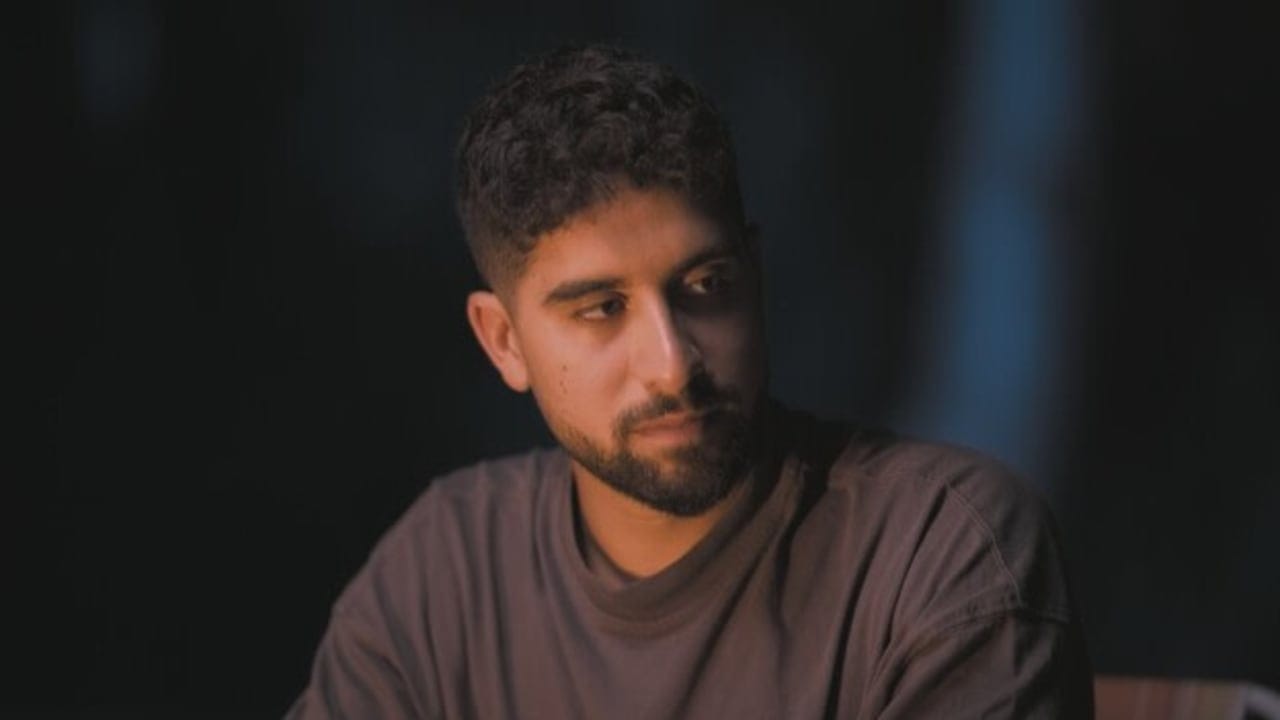
OCTOBER 9, 2026 23:55At the Nova Music Festival, Evyatar David was surrounded by his closest friends, radiant spirits, and an energy he had never felt before. He had come to have fun. What he remembers is how quickly that world disappeared.For more stories from The Media Line go to themedialine.org“So, I went to the party, and it was probably the most beautiful party I’ve been in, the most beautiful people, the best energy I felt.”“And at 6:29 am, everything changed drastically.” Within seconds, he said, “it was pure chaos, people dying, screaming, a lot of panic in the air, a lot of explosions in the sky from rockets.”His friends scattered under fire, and he became separated from them.His best friend, Guy Gilboa-Dalal, ran in another direction. He, too, was kidnapped. Two other friends were murdered.A HAMAS propaganda video shows 24-year-old Evyatar David, who was kidnapped from the Nova music festival on October 7, 2023, a haunting image of a starved hostage published by subhuman terrorists. (credit: Embassy of Israel to the USA/X)Evyatar David, childhood friend freed after 738 days in Hamas captivityDavid, from Kfar Saba in central Israel, was 22 when Hamas terrorists abducted him from the festival on October 7, 2023. He remained a hostage in Gaza for 738 days, until his release on October 13, 2025, as part of a ceasefire agreement. Gilboa-Dalal, his childhood friend, was released the same day. Speaking to The Media Line on October 7, 2026, the third anniversary of the Hamas attacks, David described both the violence of that day and the psychological assault of the two years that followed. The interview took place at the Davidson Center in Jerusalem, where he was addressing the Friends of Zion Ambassador Summit, a gathering of Christian leaders and supporters of Israel.But when asked what weighed most heavily on his heart, he returned to the friends who never came home.“There’s too much to say. There’s a lot with me from this specific day, from the 7th of October and from the whole captivity. I think the thing that probably goes with me the most until now is my dear friends that got murdered at the Nova Music Festival.”“It’s Ron Zarfati and Idan Haramaty. They got murdered. So, for me it’s the hardest.”Then he repeated it.“It’s the hardest thing.”Their names brought the conversation back to the personal loss at the center of his account. Alongside everything he endured in captivity, David carries the absence of the friends with whom he had gone to celebrate.His memories of being taken into Gaza included beatings in the streets. He described participation not only by Hamas but also by people living there, including children.“And ... they took us around the streets, beat us. It doesn’t matter if it’s Hamas or it’s people that live there, it was children, it was anything.”David linked what he witnessed and experienced to his view of how children in Gaza are raised.“This is how they’re growing up, and this is how they’re being educated over there in Gaza.”Evyatar David recalls Hamas captors' threats to kill Jews in IsraelHe also recalled what Hamas told him about its intentions. “Hamas told me that they will kill until the last Jew is out of Israel because this is the only way for peace for them.”For much of his captivity, David was held in the tunnels beneath Gaza. His condition became known internationally in August 2025, when Hamas released propaganda footage showing him severely emaciated, his ribs protruding as he sat in a narrow underground passage. In one video, he described receiving almost no food and displayed a makeshift calendar on which he had recorded the days he had eaten. The most disturbing images showed David holding a shovel and digging a pit in the tunnel. He said he feared he was digging his own grave. The footage provoked international condemnation and intensified concerns about the treatment and survival of the hostages still held in Gaza.David later recounted that his captors had ordered him into the pit and told him it would be his grave. So physically weakened that digging was almost impossible, he feared he might die of starvation. The images of his skeletal body became among the most widely recognized symbols of the hostages' suffering.When asked to identify the worst experience of his time in Gaza, he spoke about the effort to make the hostages believe they had been abandoned.“I guess the psychological terrorism they did to us. They tried to make us much weaker, mentally weaker. And they tried to tell us that the government doesn’t want us, and the United States doesn’t want us, and our family doesn’t want us.”The message extended from rejection to the prospect of years without freedom.“Nobody wants us, and we’re going to stay there for a lot of years. So, this was probably the hardest thing to deal with because we knew nothing that happens outside,” he explained.Without knowing what was happening beyond captivity, he could not see the efforts being made on the hostages’ behalf.“So, ... we didn’t know how much people were advocating for us.”“And that was maybe the hardest for me.”Against that uncertainty, the release of other hostages offered something concrete: evidence that going home was possible.Release of fellow hostages gave Evyatar David hope of returning homeIn reply to a question about his most hopeful moment beyond his own departure from Gaza, David recalled the time immediately before he returned home, and also the first hostage release. Watching others leave allowed him to imagine himself following them.“The most hopeful moment, probably the days before I got released. But also on the first deal, hostage deal, I understood, OK, it’s happening. It might take some time, but people are going out home.”“I’m seeing right now how it’s going to be me in the future. So, it gave me hope.”His return has not diminished his concern about threats outside Gaza. When the conversation turned to other attacks, including the recent Flydubai attack, and what the world was failing to recognize, David’s warning centered on terrorist organizations and their determination to kill.“I think we just need to open our eyes and understand that the whole radical Islamic, all the terrorists, all these organizations, they will try always to eliminate us in any way. There’s no limit for it. We saw it on the 7th of October,” he said.He also invoked September 11.“So, we know that we have to understand that everything is possible and always keep our eyes open. It’s very important,” he emphasized again.When pressed on whether the world understood, he drew a distinction between those who experienced the violence and those observing it.“It depends what world. I think most of the world don’t understand that. Because if they were, it would be different because they are not the victims here.”“It’s us. It’s all around us. It’s inside us.”David sees ideology as central to the attack and believes the danger extends far beyond Israel.“All the radical Islamic organizations, they did this 7th of October massacre because of their ideology. And you can see it all around the world. It happens in Paris, it happens in London, it happens in a lot of places, and it slowly grows and grows.”“And I hope the world will understand it fast enough, so it won’t be too late,” he said.Evyatar David urges people to appreciate life's simple momentsBut his message about the life ahead of him was not only a warning. Asked what he wanted to share as a young person who had experienced so much, David turned to the things people can have around them every day without stopping to appreciate them.“It’s very simple. Just appreciate everything. Your family, your parents, your brothers, your sisters.”His list moved beyond loved ones to simple pleasures.“The sunlight, the stars, every little thing you can think of right now ... you’re sitting on your couch, on your chairs. Appreciate it. Because anything can be taken in seconds.”The thought returned him to the suddenness with which his own life had changed: friends together at a festival, then gunfire, separation, murder, and captivity.“It’s unexpected. But this is how this world works. So, anything can happen.”At Nova, David had wanted nothing more than to enjoy time with the people closest to him. After 738 days in captivity, the message he offered was about recognizing the value of such moments while you can.“Appreciate it.”Follow us on Google
'Appreciate everything': Evyatar David on Hamas captivity, three years after Oct. 7 - interview
Full Article
Original Source
Read the full article at Jpost →KhanList aggregates and links to publicly available news content. We do not host full articles from third-party sources. Always verify important information with original sources.